

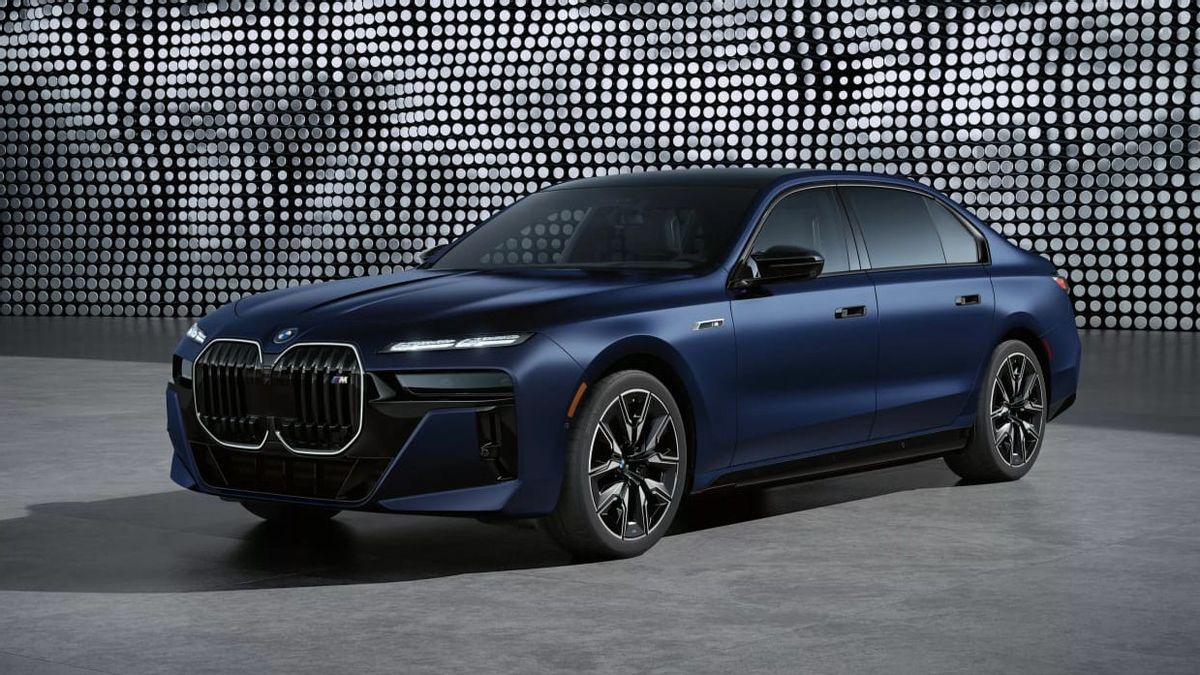


JAKARTA - The price war in the Chinese automotive industry is getting hotter and is now not only played by local manufacturers. BMW, for example, last week announced a massive price cut for 31 models marketed in China, as an aggressive step against increasingly fierce competition in the world's largest automotive market.
The largest price cut occurred on the BMW i7 M70L, a high-performance variant of the electric-powered 7 Series family. Starting last week, the price of the sedan was cut to 301,000 yuan or around Rp736 million.
Reported by Carscoops, Monday, January 12, although the i7 is the model with the largest nominal decline, the sharpest percentage reduction is experienced by the iX1 eDrive25L. BMW has cut the price of the long wheelbase variant of the compact SUV by 24 percent.
Alhasill, makes the price to be 228,000 yuan or only Rp550 million. BMW calls this adjustment as part of regular price management and emphasizes that the final transaction price still depends on negotiations between BMW official dealers and customers.
However, the momentum of applying the discount indicates a bigger reason than just a routine adjustment. November was the second consecutive month that car sales in China fell, according to data from the China Passenger Car Association.
This trend has prompted a number of automotive manufacturers to adjust their pricing strategies. On the other hand, according to a Bloomberg report, local authorities have also begun to implement measures to dampen excessive price wars.
Among them is through a ban on the sale of vehicles below production costs, as well as limiting dealer incentives that encourage prices to fall below a certain threshold. BMW's latest price reduction is said to also aim to adjust official prices to reality in the field.
Automotive Foresight Managing Director Yale Zhang, , assessed that this new price was actually closer to the transaction pattern that had been taking place so far. "This new price is not lower than the dealer's selling price in general," said Zhang.
It is estimated that even greater discounts will follow. Ahead of Chinese New Year in February, many manufacturers are predicted to launch additional incentive programs to pursue sales in the first quarter.
Until early 2026, at least 14 car brands have run discount or incentive programs in China. Zhang assessed that this trend is not just a momentary phenomenon, but a reflection of structural pressures in the market. "Various types of promotional activities may ebb and flow from time to time, but the activity will remain," said Zhang.
Meanwhile, Chinese authorities are said to have taken a more vigilant stance as many manufacturers choose to cut prices, regulators are worried that the emerging chain effect could be more widespread. Starting from the potential for deflation, disruption of the automotive supply chain, to pressure on labor wages due to prolonged price competition.
The English, Chinese, Japanese, Arabic, and French versions are automatically generated by the AI. So there may still be inaccuracies in translating, please always see Indonesian as our main language. (system supported by DigitalSiber.id)


