

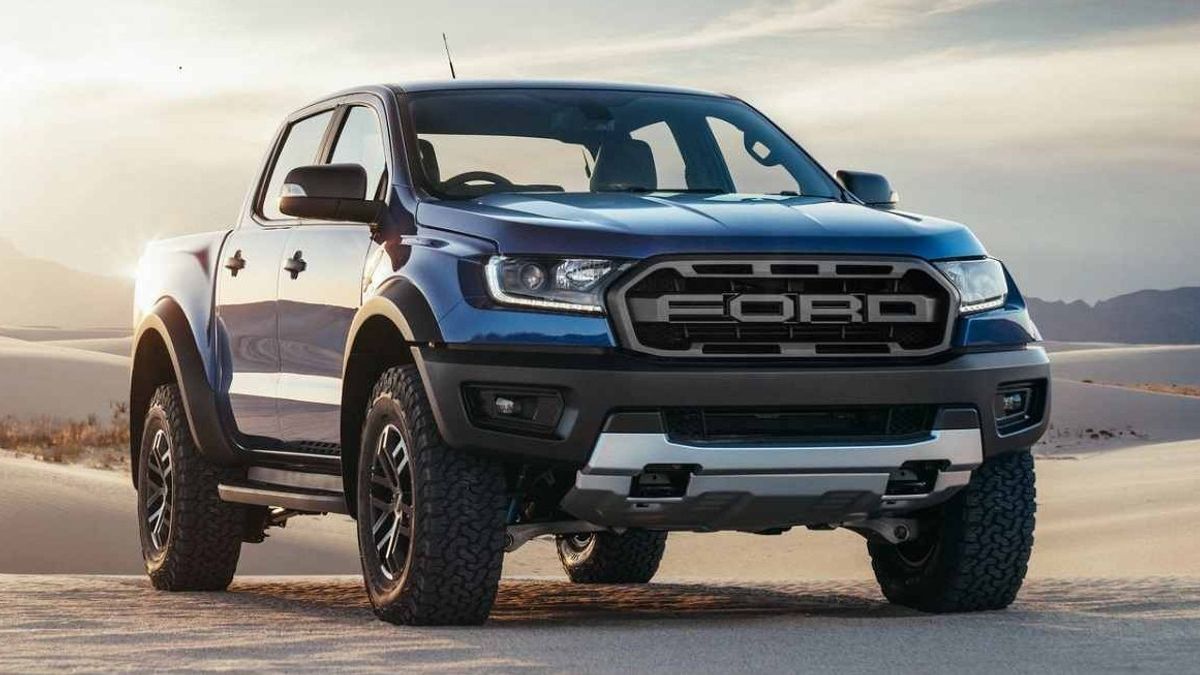


JAKARTA - The beginning of the new year is usually an event for automotive manufacturers to showcase sales achievements throughout 2025. However, for Ford, the spotlight is actually directed at the record of massive vehicle recalls.
Throughout 2025, Ford recorded 153 recalls affecting nearly 13 million vehicles. This figure is not just a new record, but almost double the previous high, namely 77 recalls recorded by General Motors in 2014.
It should be noted that the data is still provisional because the National Highway Traffic Safety Administration (NHTSA) only released a report as of December 23 when the publication was made. At a glance, the statistics illustrate a manufacturer that is experiencing serious problems.
However, the narrative built by Ford is different. Instead of indicating a decline in quality, the company claims that this wave of recalls is a consequence of a new strategy that is more open and aggressive in dealing with potential defects.
Ford said it was doubling its safety team, expanding testing, conducting a thorough software audit, and accelerating the identification and correction of errors. The goal is to detect problems early before they develop into lawsuits, vehicle fires, or even viral videos that damage reputation.
"I want consumers to know that we support our products," Ford Chief Operating Officer Kumar Galhotra told The Detroit News, reported by Carscoops, Tuesday, January 6.
"Our initial quality has improved substantially this year, and if something goes wrong with their vehicle, I want them to know that we will act quickly to handle it," he continued.
The role of software is a crucial factor in the recall spike. About 40 cases turned out to be a recall, after Ford realized that there was no truly reliable method to ensure that previous updates had been properly installed on consumer vehicles.
Although it sounds contradictory, Ford claims that this cleaning effort is starting to show results. The company says warranty costs have decreased, a condition that generally only occurs when the level of vehicle damage decreases.
"Our warranty costs are decreasing. And it is clearly directly related to the improvement of the initial quality of the vehicles we sell, as well as the improvement of the cost efficiency of repairs, including the reduction of costs for vehicles that are already in the hands of customers," said Galhotra.
The claim is also supported by a number of external indicators, Consumer Reports places Ford in the upper half of the reliability ranking for the first time in years. Meanwhile, J.D. Power also noted improvements, although Ford is still below the overall industry average.
However, the impact in the field is not entirely positive. A number of dealers complain that the backlog of service work due to recalls, while compensation from the manufacturer is considered not commensurate with the workload borne. In some cases, new vehicles are even held up in delivery because they have to undergo repairs first.
The English, Chinese, Japanese, Arabic, and French versions are automatically generated by the AI. So there may still be inaccuracies in translating, please always see Indonesian as our main language. (system supported by DigitalSiber.id)
Most Popular Tags
#Prabowo Subianto #donald trump #2026 World Cup #Febrie Adriansyah #8791Popular


