


JAKARTA The competition for electric vehicles (EVs) in China is getting fiercer, and the latest data shows one thing that is getting clearer, local producers are increasingly dominating. Meanwhile, outsiders, such as Tesla, must work harder to maintain their position.
The November sales report released by the China Passenger Car Association (CPCA) shows how BYD has again set a high standard that is difficult for anyone to match. BYD, which relies on a pure electric car line and plug-in hybrid, closed November as market leader with retail sales reaching 306,561 units of new energy vehicles (NEV).
This achievement gives them a 23.2 percent market share, slightly increasing from October but enough to assert its dominance in the world's EV largest market. Behind it, Geely Auto also recorded an impressive performance with sales of 172,169 NEV units.
These results rose 4.8 percent compared to the previous month and shot up 42.4 percent year on year. This figure further confirmed Geely's position as one of the most aggressive local players.
Meanwhile, Tesla has finally returned to the top 10 list after October being one of its worst months in the last two years. In November, Tesla shipped 73,145 units to Chinese consumers, or jumped 181.3 percent from October.
However, this spike is not enough to remove less encouraging annual records, as sales are still down 5 percent compared to the same period last year. Tesla is now in fifth position with a market share of 5.5 percent.
The tightness of the Chinese market is also reflected in the many alternatives of interest to consumers. SAIC GM-Wuling secured third place with sales of 96,194 units and a market share of 7.3 percent.
SEE ALSO:
-
 | OTOINFO
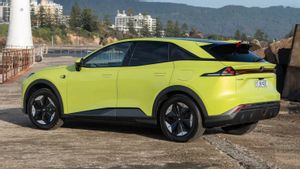
Mobil Listrik Deepal SO7 Nyaris Gagal Raih Bintang Lima Keselamatan
11 Desember 2025, 10:18 -
 | OTOINFO
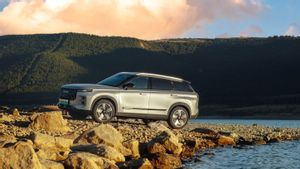
Sabet Gelar Family Car of the Year 2025, Jaecoo J7 Kian Diakui Global
11 Desember 2025, 09:43 -
 | MOBIL
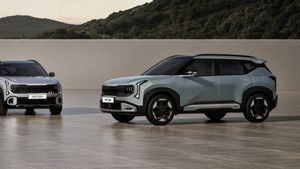
Kia Resmi Perkenalkan Seltos Generasi Kedua dengan Desain dan Teknologi Baru
11 Desember 2025, 09:13
While the ambitious newcomer, Xiaomi EV, has again shown its defenses through the SU7 sedan and the YU7 SUV until it entered 10th position with 46,249 units sold and a market share of 3.5 percent. If withdrawn throughout the year, the dominance of local players is even more undeniable.
Data from January to November 2025, BYD has sold a total of 3,144,671 NEV units, controlling 27.4 percent of the market. Geely followed with 1,428,573 units (12.5 percent), and Changan was in third place through sales of 727,511 units (6.3 percent).
Tesla, which used to be the global EV Qibla, only ranked fifth with 531,855 units and a 4.6 percent market share, as reported by ArenaEV, Thursday, December 11. Tesla's biggest problem comes as annual figures start to count.
In 2024, Tesla closed the year with 657,105 units sold in China. To match that figure, the company had to send 125,250 units just in December. The challenge is that Tesla's record highest monthly shipments in its sales history in China were 82,927 units by December 2024, and this makes the target almost impossible.
Even if Tesla manages to set a new record, for example, 85,000 units in December, its annual sales will still drop by about 6 percent. This trend indicates that markets for Model 3 and Model Y are getting bored, while local brands such as Xiaomi and XPeng are growing rapidly with a three-digit increase in sales.
The English, Chinese, Japanese, Arabic, and French versions are automatically generated by the AI. So there may still be inaccuracies in translating, please always see Indonesian as our main language. (system supported by DigitalSiber.id)


