


JAKARTA driving safety continues to be a top priority for the global automotive industry. Imagine a future where seat belts are not only protecting, but also thinking. Or cars that can brake automatically even before you realize the danger. These things are being worked on and are expected to become standard in 2029, bringing a new era of safety on the highway.
It was reported that Motorrend, Saturday, August 30, the legendary safety innovator, Volvo, creators of modern three-point seat belts, did not stop innovating. They are developing an intelligent "Volvo Multiadaptive Safety Belts". The system uses artificial intelligence (AI) and advanced sensors to adjust the way the belt holds passengers, based on size, weight, and body type. When an accident occurs, another sensor will analyze the strength and direction of the impact, allowing seat belt retractors to work more precision, providing maximum protection with minimal impact. Amazingly, this algorithm can be updated over-the-air as Volvo continues to learn more accident data.
On the other hand, in terms of regulation, the National Highway Traffic Safety Agency (NHTSA) in the United States is making significant changes that will have a global impact. Starting September 1, 2029, all new light vehicles must have the ability to detect other vehicles, objects, and pedestrians, as well as be equipped with automatic emergency braking (AEB). This feature is designed to prevent collisions or at least reduce the impact of injuries if the collision is not completely avoided.
The NHTSA New Car Assessment Program (NCAP) will also update its star ranking system, by starting to test these active safety features. This will force manufacturers to improve the performance of existing safety features, especially in conditions of lack of light. Apart from AEB, new testing will also include the Line Keeping Assist program, the Blind Point Warning System (Blind-Spot Warning System), as well as interventions to prevent switching lanes to filled lanes.
SEE ALSO:
-
 | OTOINFO
Produksi Audi A7 dan S7 Disetop Hanya Raja Performa RS7 yang Tetap Bertahan
30 Agustus 2025, 13:45 -
 | MOTOR
BMW R1300GS Cetak Rekor Mendaki Bukit, Kalahkan Motor Super Tanpa Modifikasi Ekstrem!
30 Agustus 2025, 11:23
Not only that, starting September 2027, rear seat seat seat seat seat reminders will be mandatory on all new passenger vehicles. This rule aims to increase the use of seat belts in rear seats, which are shown to significantly reduce mortality and injury. With a combination of smart technology and strict regulations, we can hope that future roads will be much safer.
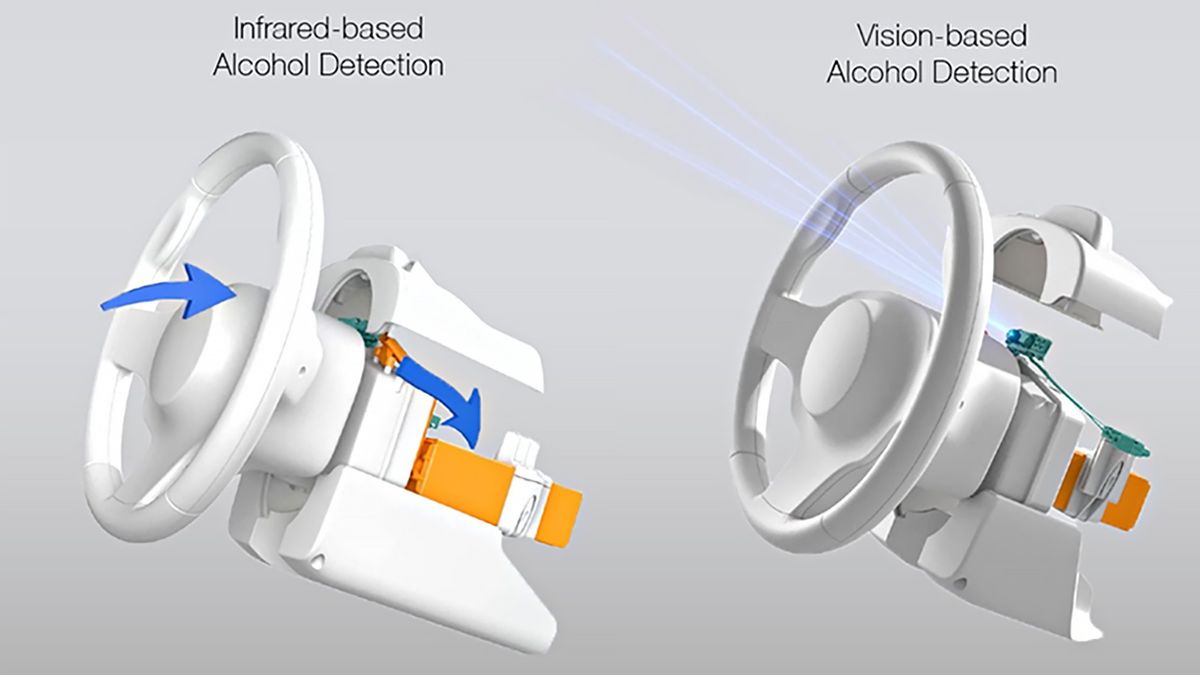
However, there is one area that is still a big challenge: the detection of drunk or disturbed drivers. Various approaches have been proposed, ranging from passive breathalyzer which takes air samples near the steering wheel, infrared sensors on the start button, to eye tracking and steering wheel motion analysis. The big unanswered question is what a car should do with that information. Does a car have to lock the engine if a driver is detected drunk before leaving? Or what if drunk is detected in the middle of the trip? This is a complicated issue that still requires a mature solution.
Despite the challenges, advances in driving safety technology that will come in 2029 promise a brighter future for all road users. With cars getting smarter and regulations getting tighter, we can be optimistic that the number of accidents and fatalities will continue to decline, creating a safer driving environment for all.
The English, Chinese, Japanese, Arabic, and French versions are automatically generated by the AI. So there may still be inaccuracies in translating, please always see Indonesian as our main language. (system supported by DigitalSiber.id)
Most Popular Tags
#Prabowo Subianto #donald trump #2026 World Cup #Febrie Adriansyah #8791Popular


