
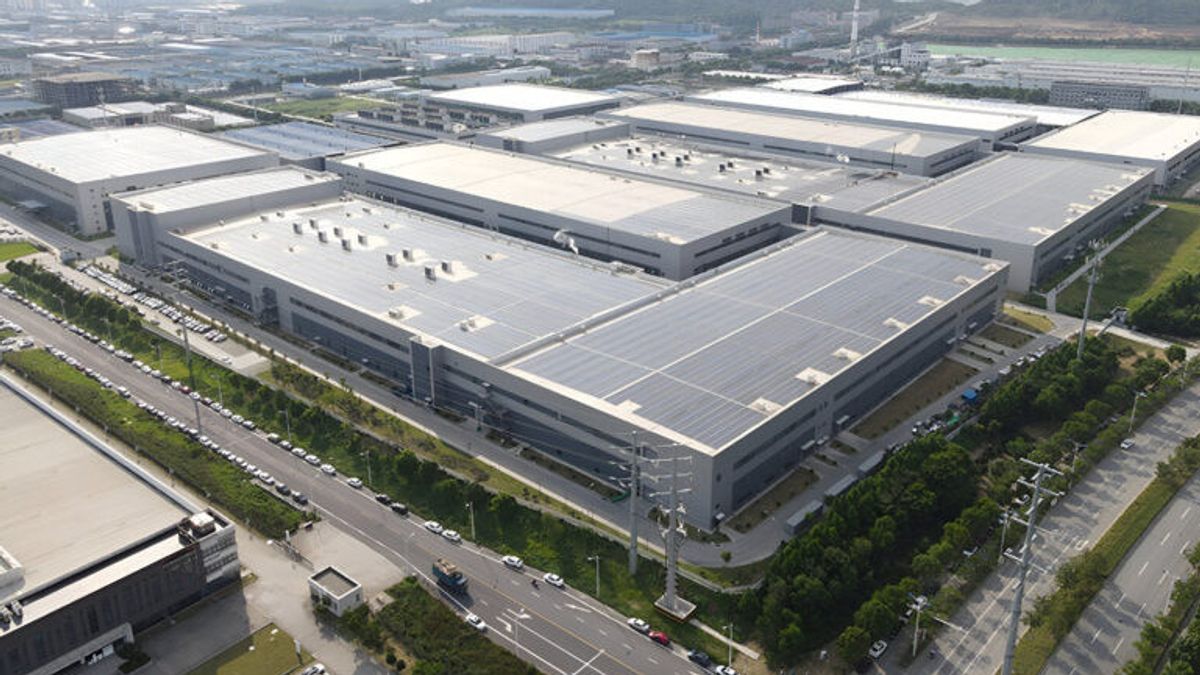


JAKARTA The future of electric vehicles (EVs) is getting brighter with an important announcement from Farasis Energy, a Chinese battery manufacturer backed by Mercedes-Benz.
Farasis Energy was founded in 2009, known as a high-performance lithium-ion soft-pack battery manufacturer. They led the delivery of domestic soft-pack batteries for seven consecutive years (2017'2023). Apart from Mercedes-Benz, Farasis also has a strategic partnership with Geely and Togg. The company supplies battery cells to current EV Mercedes-Benz models, such as EQE and EQS, directly from their factories in China.
The partnership between Mercedes-Benz and Farasis Energy itself has started in 2020. Farasis is also developing a second battery platform based on electrolyte composite oxides/polymers. This version uses lithium metal anodes and high-inell cathodes, targeting energy densities of up to 500 validity/kg. Farasis has completed the development of compatible composite electrolyte materials and introduced an exclusive process for producing ultra-thin electrolyte layers.
The company on Monday, July 21 announced that its solid-state battery development has entered a pilot and delivery production phase, marking a significant step forward in battery technology.
SEE ALSO:



CarNewsChina reported, quoted Tuesday, July 22, Farasis Energy targets to complete the construction of a pilot production line with a design capacity of 0.2 GWh for a sulfide-based solid-state battery by the end of 2025. As part of this ambitious plan, they plan to send a 60Ah solid-state sulfide battery sample to strategic partner customers.
According to the company, there is great interest from some well-established new energy vehicle manufacturers, beyond their current partners. Farasis hopes to expand the sample delivery to additional clients in the near future. Based on market feedback and internal planning, Farasis projects to increase their production of all-solid-state batteries to the Gigawatt-hour (GWh) level by 2026. This is huge news that could potentially change the landscape of the battery and EV industries.
Sulfide-based solid-state batteries from Farasis use development routes that combine high-inell cathodes, soft-pack structures, and stacked cell architectures. The current design features high-nickel cathodes combined with high-anode-silicon or metallic lithium, with energy density targets exceeding 400 validity/kg. These cells have entered testing in the real world and are reportedly showing stable cycle performance.
In terms of security, Farasis stated that their solid-state electrolyte had passed a thermal puncture, slide and room test. Battery cells are also designed with a self-shutdown feature to reduce risk during the thermal runaway.
The English, Chinese, Japanese, Arabic, and French versions are automatically generated by the AI. So there may still be inaccuracies in translating, please always see Indonesian as our main language. (system supported by DigitalSiber.id)


