
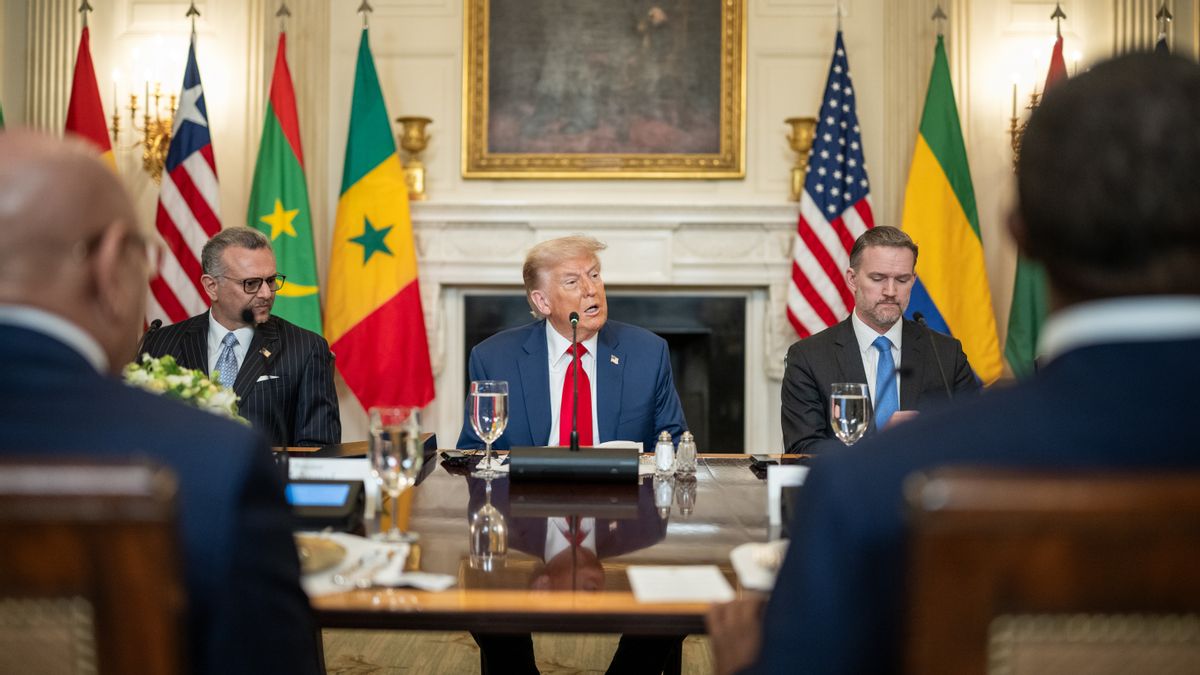


JAKARTA The United States Presidential tariff policy, Donald Trump, has again become a sharp spotlight on the global market. After a series of import duties on steel, aluminum, and cars and automotive parts, it is now the turn of the copper to be targeted. The 50 percent tariff on foreign copper imports that will take effect on August 1 is feared to trigger an increase in the price of thousands of dollars in each unit of new vehicles, both imported and produced in the US country.
Trump, through his Truth Social account @realDonaldTrump, said this Thursday, July 10, that the decision on the high tariff of copper was based on national security considerations.
It is known, copper is now a strategic metal that is the main component of modern weapons ranging from drones and radar to missiles, copper is also a resource for communication, electronic, and energy systems.
In addition, electric vehicles use 2.5 to 4 times more copper than conventional cars. Copper is found in motorcycles, batteries, cables, and chargers.
Paul Eisenstein from Autoblog, reports that if this tariff threat is really realized, buyers can spend more than hundreds, even thousands of dollars, for each new vehicle both conventional and electric cars. Copper is an essential raw material in various automotive components, ranging from voltage cables, electric seat motors, windows, and mirrors, to radios, alternators, and cooling fans. In fact, electric vehicles that are increasingly popular today require copper cable drones.
SEE ALSO:
-
 | MOTOR
Cara Honda Gali Bakat Ribuan Modifikator di Indonesia Lewat Acara HMC 2025
09 Juli 2025, 21:42


The Impact Of The Copper Tariff Party
Copper is a very common element in modern society and most of its supply is imported. The US Commerce Department noted the import value of copper reached around $17 billion last year. Although some exotic metals for electronics are from China, Chile is the largest copper supplier to the US, with a shipment value of US$6 billion by 2024. This dependence makes the US very vulnerable to upcoming tariff policies.
The increase in raw material costs will significantly burden automotive manufacturers, which will eventually be forwarded to consumers. This condition forces buyers to reconsider their vehicle options, possibly even switching from new cars to used vehicles.
The English, Chinese, Japanese, Arabic, and French versions are automatically generated by the AI. So there may still be inaccuracies in translating, please always see Indonesian as our main language. (system supported by DigitalSiber.id)


