

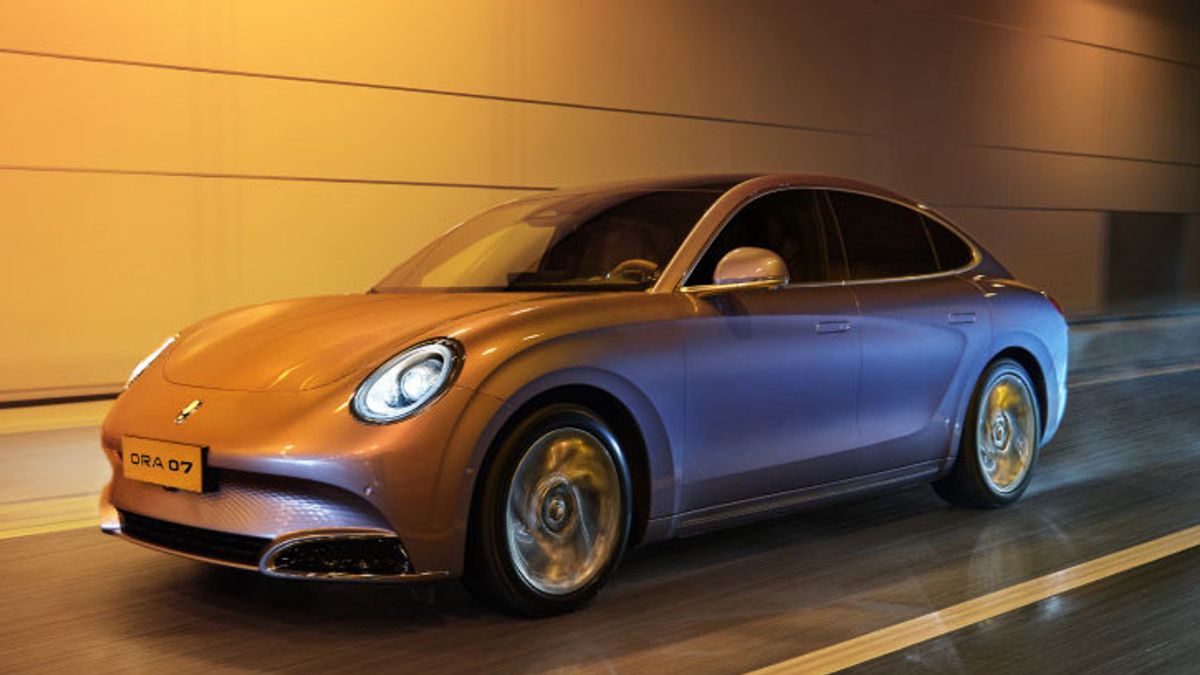


JAKARTA - A number of Chinese automotive manufacturers are currently busy developing environmentally friendly vehicles by providing various options, one of which is the range-extender (EREV).
The EREV system works just like other pure electric vehicles (EVs), but still relies on gasoline engines as an additional generator to charge batteries.
This innovation is considered efficient because vehicle owners do not need to bother charging batteries like EVs in general. However, manufacturers like Great Wall Motor (GWM) have other views.
GWM Senior Vice President, Mu Feng said the system was said to have "expired" and strongly rejected the use of the technology.
"We'd better 'let go' than have to make a range-extender vehicle", said Mu Feng quoted from CarNewsChina, Saturday, April 26.
SEE ALSO:

This is also in line with the statement made by the Chairman of GWM, Wei Jianjun, who said that the range-extender is only 'temporary' and is not in accordance with the company's long-term development strategy.
Wei melanjutkan bahwa GWM akan berfokus pada jalur teknologi hybrid dan listrik murni-insteadah menginvestasikannya ke kendaraan range-extender.
According to manufacturers, range-extender technology has a number of drawbacks, including dependence on fossils, small battery capacities with less distance, lower fuel efficiency, to lower performance than pure EVs.
Currently, range-extender technology has been adopted by a number of other brands from China such as BYD, Jetour, Geely, DFSK, Li Auto, to Neta.
Not only that, foreign automotive manufacturers such as Ford and RAM plan to design heavy-duty pickup truck vehicles by relying on the system.
The English, Chinese, Japanese, Arabic, and French versions are automatically generated by the AI. So there may still be inaccuracies in translating, please always see Indonesian as our main language. (system supported by DigitalSiber.id)
Most Popular Tags
#Prabowo Subianto #donald trump #2026 World Cup #Febrie Adriansyah #8791Popular


