
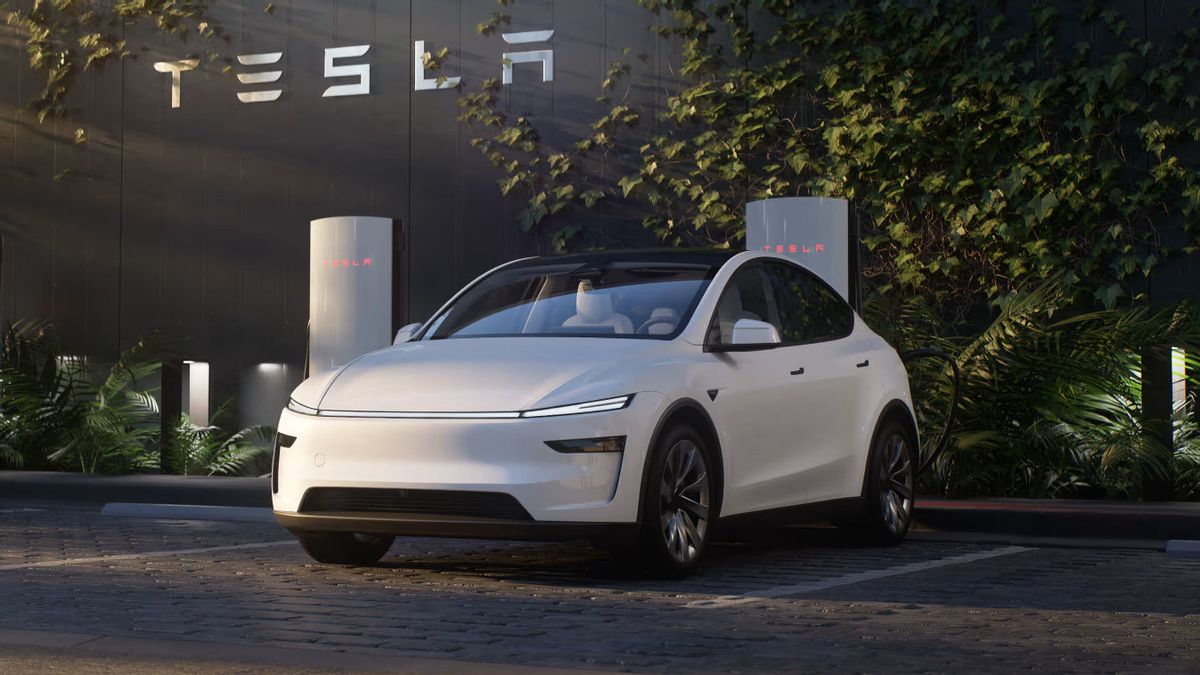


JAKARTA - It's like roller knowledge, 2025 seems to be a challenging period and a very fast change for automakers including electric cars like Tesla. Instead of setting record sales, the company made by Elon Musk is actually grappling with a significant downward trend in demand and shipments. What really happened behind this phenomenon?
According to a report from Carscoops quoted Monday, April 21, a number of analysts identified several key factors that triggered Tesla's decline in demand. One of them is the sharp spotlight on Elon Musk's controversial role in political dynamics in the United States, which is allegedly affecting brand images in the eyes of some consumers. Not only that, fierce competition in the global market, especially in China, which is Tesla's second-largest market, is exacerbating the situation. Local rivals in the Bamboo Curtain Country are constantly launching innovations and offering more competitive prices.
However, a glimmer of hope arises from the planned launch of the Model Y 'Juniper'. The promised electric SUV comes with this more affordable price tag expected to be a breath of fresh air to boost Tesla's sales figures. Information from the company's internal leak that the Model Y with project code E41 is designed to have a production cost of 20 percent lower. A significant efficiency measure.
SEE ALSO:

Unfortunately, the good news from the 'Juniper' was slightly tarnished by the launch delay of the cheapest version of the Model Y in the domestic market of the United States. A trusted source told Reuters that production, originally scheduled for early 2025, will most likely only be realized in 2026. Tesla has a big ambition to produce around 250,000 units of the US Model Y Entry Level by 2026, with a wide market target, including Europe. This delay certainly raises questions, can the expensive version of 'Juniper' withstand the onslaught of competitors until the affordable version arrives?
Not only the 'Juniper' Model Y, Tesla is also reportedly preparing another surprise: A simpler version of the 3rd. Although details remain secret, speculation leads to a rear-wheel drive model as its base. The move clearly aims to reduce production costs and offer a more competitive price.
The efficiency measures that Tesla might take to cut the production costs of the Model 3 are quite interesting to watch. Some of the options that arise include replacing an impurity-based ventilated seat with more economical cloth material, as has been applied to the model in Mexico. In addition, the reduction in battery size is also a realistic option, although the consequence is a decrease in distance. The question is, how far does Tesla dare to "compromise" features in order to reduce prices without losing traction in the eyes of consumers?
The English, Chinese, Japanese, Arabic, and French versions are automatically generated by the AI. So there may still be inaccuracies in translating, please always see Indonesian as our main language. (system supported by DigitalSiber.id)


