
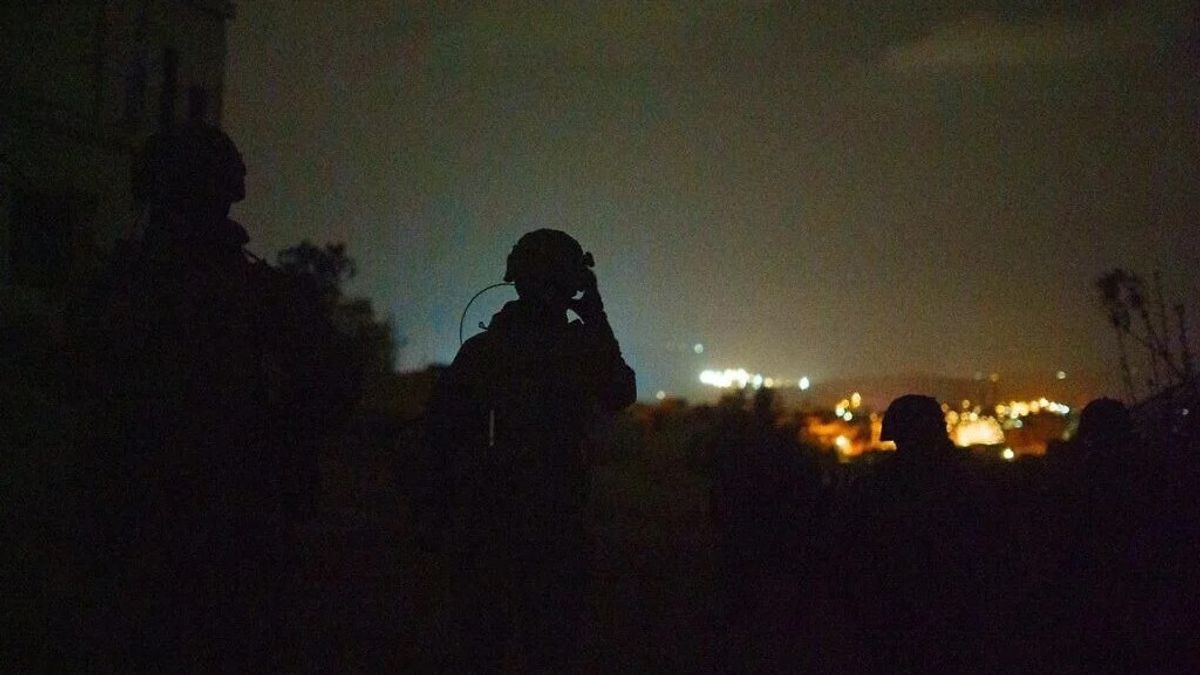


Israel on Wednesday declared all areas south of the Lebanese Zahrani River, which stretches about 40 kilometers (25 miles) from the border, as a "battle zone" and urged residents to evacuate ahead of an attack on Hezbollah.
The first comprehensive warning since the April 17 ceasefire came as the Israeli military launched a major offensive in the south and east of the country, and as Hezbollah said its fighters clashed with Israeli forces outside the "Yellow Line" declared by Israel in the south.
This also happened when many Lebanese tried to celebrate Eid al-Adha.
Israel this week vowed to intensify its operations in Lebanon and said it was expanding its ground operations there, a move it made ahead of Friday's talks between Lebanese and Israeli military delegations at the Pentagon and a new round of direct negotiations next week aimed at ending hostilities.
"We advise southern Lebanese residents to evacuate to the north of the Zahrani River, as all areas south of the river are considered a combat zone," the Israeli military said on social media, warning that they would "act with great force" against Hezbollah, launching Al Arabiya from AFP (28/5).
Previously, Israel had issued evacuation warnings for the southern city of Nabatieh, as well as most of the coastal city of Tyre and its surrounding areas.
An AFP correspondent said residents of the threatened Tyre area had gathered in parts of the city not covered by the warning. However, authorities warned that shelters were full and urged people to head to Beirut instead.
The state-run National News Agency (NNA) later reported the attacks in Tyre and its surroundings, while the Israeli army said it was attacking "a Hezbollah command center."
NNA also reported Israeli strikes elsewhere in the south of the country and in the eastern Bekaa valley, with the Israeli military saying they were targeting "Hizbullah infrastructure sites."
Meanwhile, Iran-backed Hezbollah said its fighters "clashed with enemy forces at close range" in the town of Zawtar al-Sharqiyah, just outside Israel's declared "Yellow Line" in southern Lebanon where its forces operate.
The city is strategically located just six kilometers (four miles) from Nabatieh.
An Israeli military official said on Tuesday that the army had begun operating outside the "Yellow Line," which extends about 10 kilometers into Lebanese territory.
Lebanon's Health Ministry on Wednesday announced the total number of deaths since the war erupted on March 2 to 3,269, an increase of 56 compared to the previous day, which witnessed a massive Israeli attack.
At the site of the attack in Burj al-Shemali, southern Lebanon, an AFP correspondent saw rescuers carrying body bags from the ruins, which were filled with items including carpets and pillows.
NNA, citing a statement by the mayor, said 15 people were killed in Tuesday's attack.
After Hezbollah dragged Lebanon into the Middle East war with rocket attacks on Israel in retaliation for a US-Israeli attack that killed Iran's top leader, Israel has repeatedly attacked Lebanon's eastern Bekaa valley and warned residents to evacuate.
Attacks have escalated in recent days, with a focus on the town of Mashghara in Western Bekaa.
Mayor Iskandar Barakeh expressed concern that the Western Bekaa region would become the site of further confrontation between Israel and Hezbollah.
The area links southern Lebanon with Hezbollah's stronghold in the northern Bekaa and is a key supply route for the group.
Lebanese military expert Hassan Jouni told AFP that Western Bekaa "is a corridor that Hezbollah members need if they want to move between Bekaa and the south" and could be the focus of further Israeli attacks.
He said Israeli operations may soon expand to "intensively target northern Bekaa or even the southern outskirts of Beirut," both areas that have been relatively spared from attacks since the ceasefire.
The English, Chinese, Japanese, Arabic, and French versions are automatically generated by the AI. So there may still be inaccuracies in translating, please always see Indonesian as our main language. (system supported by DigitalSiber.id)
Most Popular Tags
#Prabowo Subianto #donald trump #Febrie Adriansyah #8791 #giias 2026Popular


