



JAKARTA - The Ministry of Higher Education, Science, and Technology (Kemdiktisaintek) is investigating the alleged forgery of identity and research by a number of Indonesian citizens in the International Society of Pneumonia and Pneumococcal Diseases (ISPPD) scientific conference in Copenhagen, Denmark, on May 17-21, 2026.
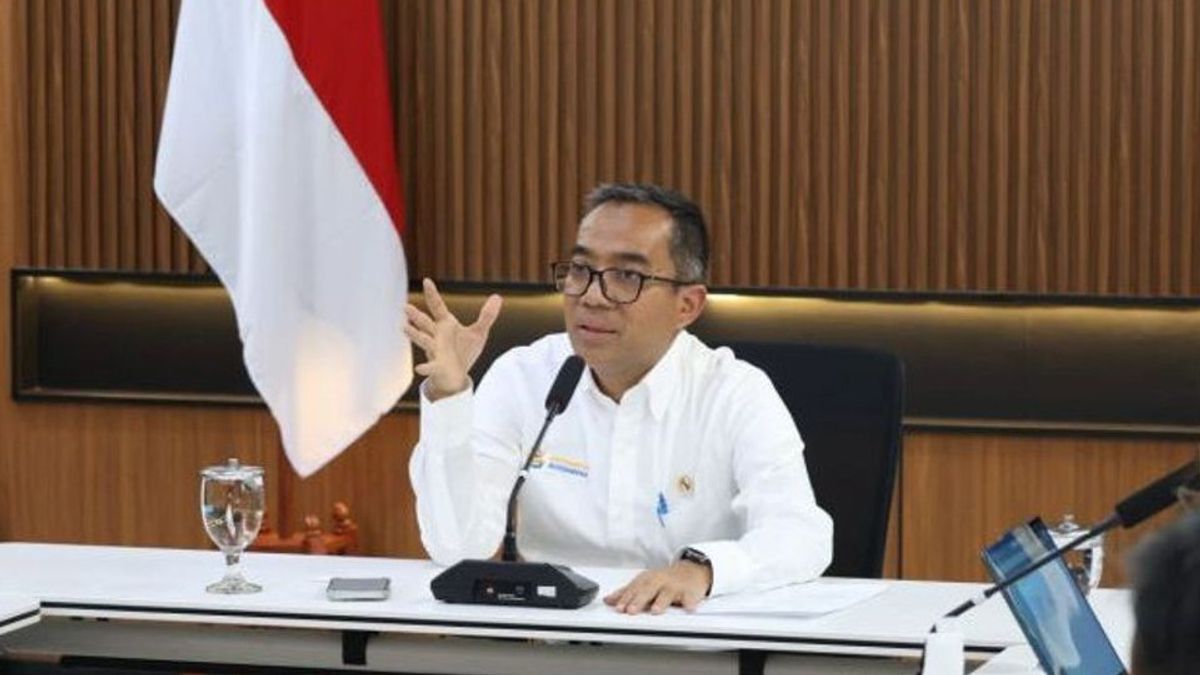
Minister of Higher Education, Science, and Technology Brian Yuliarto said the government was still investigating the facts related to the case, including the status of the parties suspected of being involved, the affiliation used, and its connection with higher education institutions and research institutions in Indonesia.
"Based on the initial information we have obtained, the parties mentioned in this case are not indicated as active lecturers or researchers at Indonesian universities. However, this issue remains a concern because it can affect the perception of the wider national research ecosystem," said Brian in a written statement, Wednesday, May 27.
The two names mentioned in the alleged academic ethics violations are Prihantini and Rivaldy Fajar. Brian emphasized that the ministry still prioritizes the principle of caution and opens up space for clarification for the parties concerned.
According to him, every alleged violation must be objectively verified based on evidence and mechanisms that apply in the academic and research environment.
Brian reminded that cases involving a handful of parties should not cover the achievements of the Indonesian scientific community, which has always maintained ethical standards and produced internationally reputable research.
"Therefore, academic integrity must be the main foundation of our higher education and research ecosystem. The practice of data fabrication, falsification, and abuse of academic affiliation is certainly not justifiable," he said.
He explained that Indonesia has a number of mechanisms for monitoring research integrity, ranging from universities, ethics committees, Research and Community Service Institutions (LPPM), academic quality assurance systems, to monitoring by the Ministry of Research and Technology and the National Research and Innovation Agency (BRIN).
According to Brian, the process of research by lecturers and researchers has gone through the stages of evaluation from proposal submission, research implementation, to final reports which are monitored periodically.
"Research activities must also comply with applicable academic ethics provisions. The ethics committee is tasked with ensuring that research is carried out in accordance with ethical principles, including the appropriateness of methodology, data use, protection of research subjects, and compliance with scientific standards," he said.
He added that research involving humans and animals must also comply with the provisions of ethical clearance that apply nationally and internationally.
Meanwhile, in the international publication stage, scientific articles must go through the editorial process, peer review, to the correction or retraction mechanism if violations of ethics are found.
"However, if these processes are skipped or not carried out properly, of course it can have an impact on the quality of research and make research data not scientifically accountable," said Brian.
The case of alleged manipulation of identity and research was first revealed by epidemiologist Wa Ode Dwi Daningrat who attended the ISPPD conference representing the Oxford University team.
Dwi admitted that he found a woman named Prihantini claiming to be Dimas Fajar Prasetyo while giving a scientific presentation at the spotlight poster session on the second day of the conference.
According to Dwi, before getting on the podium, Prihantini took off the identity card which read "Riana Dwi Kurniawati" and replaced it with a business card "Dimas Fajar Prasetyo".
Dwi's suspicions grew stronger when Prihantini was said to have changed her hijab again when she entered another presentation room and claimed to be Riana Dwi Kurniati in a different session which was only about 10 minutes away.
Dwi also assessed that Prihantini's name was not included in the abstract or poster of the research, but appeared in the presentation material.
After the presentation session was completed, Dwi asked for an explanation regarding the research on the Pneumococcal Conjugate Vaccine (PCV) vaccine which was claimed to have been written by five people, including Prihantini and Rivaldy Fajar. However, according to him, Prihantini was unable to explain the substance of the research.
According to Prihantini's confession to Dwi, the group sent 19 research abstracts with cross-country coverage such as Peru, Ethiopia, Guatemala, Lebanon, to Nepal without any ethical approval or collaboration with local researchers.
Dwi suspects that the abstract and research poster contain data fabrication and are compiled using artificial intelligence or artificial intelligence (AI).
He suspected that the group's goal was to obtain travel grants to attend international conferences without actually conducting research.
The ISPPD 2026 committee is said to have canceled the group's travel grants on May 21, 2026 after receiving a report two days earlier.
In addition to Denmark, the research group is also suspected of having attended a number of other international conferences, including the International Conference on Resource Sustainability 2025 at the University of Adelaide, Australia, the Outstanding Research Abstract Award in Kyoto, Japan, and the Asian Pacific Association for the Study of the Liver Single Topic Conference 2025 in Tokyo.
The alleged ethical violations were also voiced on social media by Dwi along with lecturers from the Faculty of Marine and Fisheries, Udayana University, Ida Bagus Mandhara Brasika, who is currently pursuing a doctoral degree at the University of Exeter.
The English, Chinese, Japanese, Arabic, and French versions are automatically generated by the AI. So there may still be inaccuracies in translating, please always see Indonesian as our main language. (system supported by DigitalSiber.id)
Most Popular Tags
#Prabowo Subianto #donald trump #2026 World Cup #Febrie Adriansyah #8791Popular


