
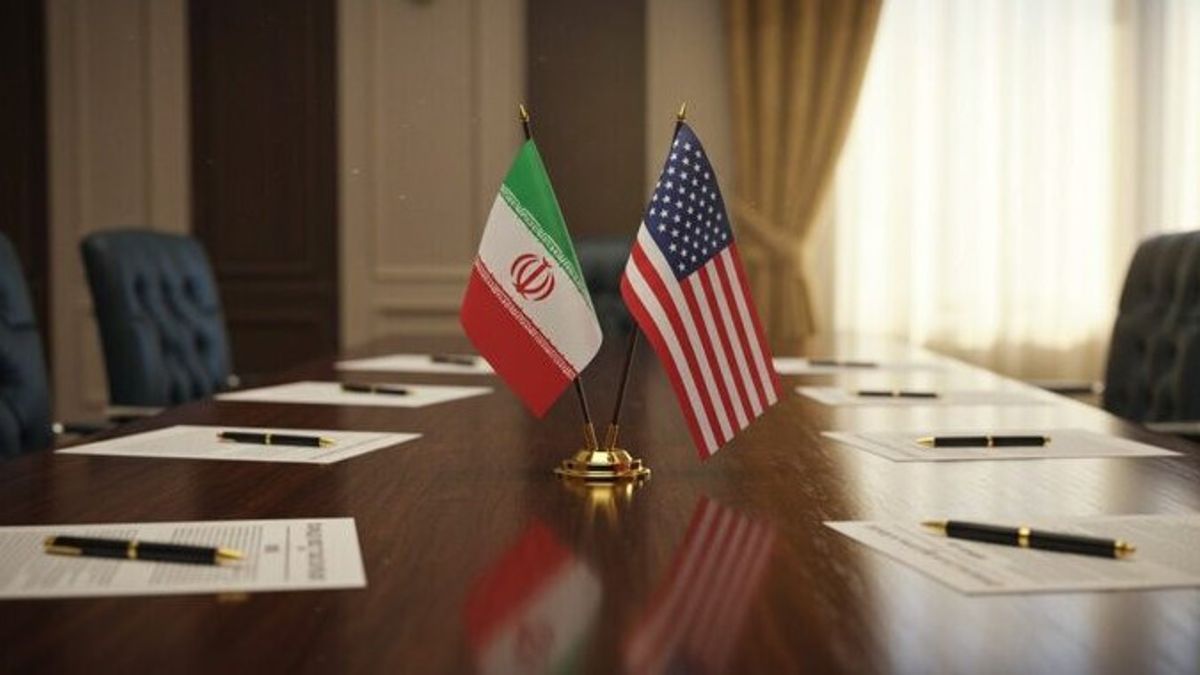


JAKARTA - US President Donald Trump announced an extension of the ceasefire with Iran, but continued the blockade carried out by the US Navy.
The indefinite extension of the ceasefire was announced on Tuesday, hours before the previously agreed two-week ceasefire ended, opening up the opportunity to give the two countries time to continue peace talks.
In a statement on social media, Trump said he had agreed to Pakistan's request to mediate to delay the attack and extend the ceasefire.
"Given that the Iranian government is undergoing a severe split - which is not too surprising - and at the request of Field Marshal Asim Munir and Prime Minister Shehbaz Sharif of Pakistan, we were asked to postpone the attack on Iran until the leaders and their representatives can submit a united proposal. Therefore, I have ordered our Armed Forces to continue the blockade and, in all other respects, to remain ready and alert, and will extend the ceasefire until the moment their proposal is submitted, and the talks are completed, however it is," wrote President Trump on Truth Social as quoted (22/4).
The extension of the truce on the other hand marks a change in the threat made by President Trump.
Hours before his social media post, Trump said he was against extending the ceasefire, warning Iran that time was running out before the US launched a massive attack on its infrastructure, quoted from Al Jazeera.
Previously, he also threatened to attack bridges, power plants and other civilian infrastructure in Iran.
After the announcement, Pakistani Prime Minister Shehbaz Sharif expressed gratitude for agreeing to extend the ceasefire, saying Islamabad would continue to push for a resolution of the conflict through negotiations.
"I strongly hope that both parties will continue to abide by the ceasefire and can conclude a comprehensive 'Peace Agreement' during the second round of talks scheduled in Islamabad to permanently end the conflict," PM Sharif said in a post on X.
Despite the extension of the ceasefire, it is unclear whether Iran is willing to continue negotiations due to the continuation of the US Navy blockade.
Yesterday, Iranian Foreign Minister Abbas Araghchi called the blockade of Iranian ports a "war act" and a violation of the existing ceasefire.
"Iran knows how to neutralize restrictions, how to defend its interests, and how to fight intimidation," said Foreign Minister Araghchi.
Meanwhile, an adviser to the Speaker of the Iranian Parliament and chief negotiator Mohammad Bagher Ghalibaf said the extension of the ceasefire was a "tactic to buy time" for a surprise attack, quoted by Al Arabiya and Reuters.
Ghalibaf's adviser said in a post on X, the continuation of the US blockade of Iranian ports "is no different from bombing and must be responded to with a military response."
It is known that Israel and the US attacked the capital Tehran and a number of cities in Iran on February 28, before President Trump's announcement of a two-week ceasefire on April 8.
Iran retaliated by launching attacks on Israeli territory and targeting US-related infrastructure in neighboring Middle Eastern countries, causing regional tensions.
At least 3,375 people were killed as a result of the Israeli-US aggression, according to the head of the Iranian Medical Organization Abbas Masjedi as reported by Tasnim, including the late Supreme Leader Ayatollah Ali Khamenei and a number of senior civil and military officials.
The English, Chinese, Japanese, Arabic, and French versions are automatically generated by the AI. So there may still be inaccuracies in translating, please always see Indonesian as our main language. (system supported by DigitalSiber.id)
Popular


