
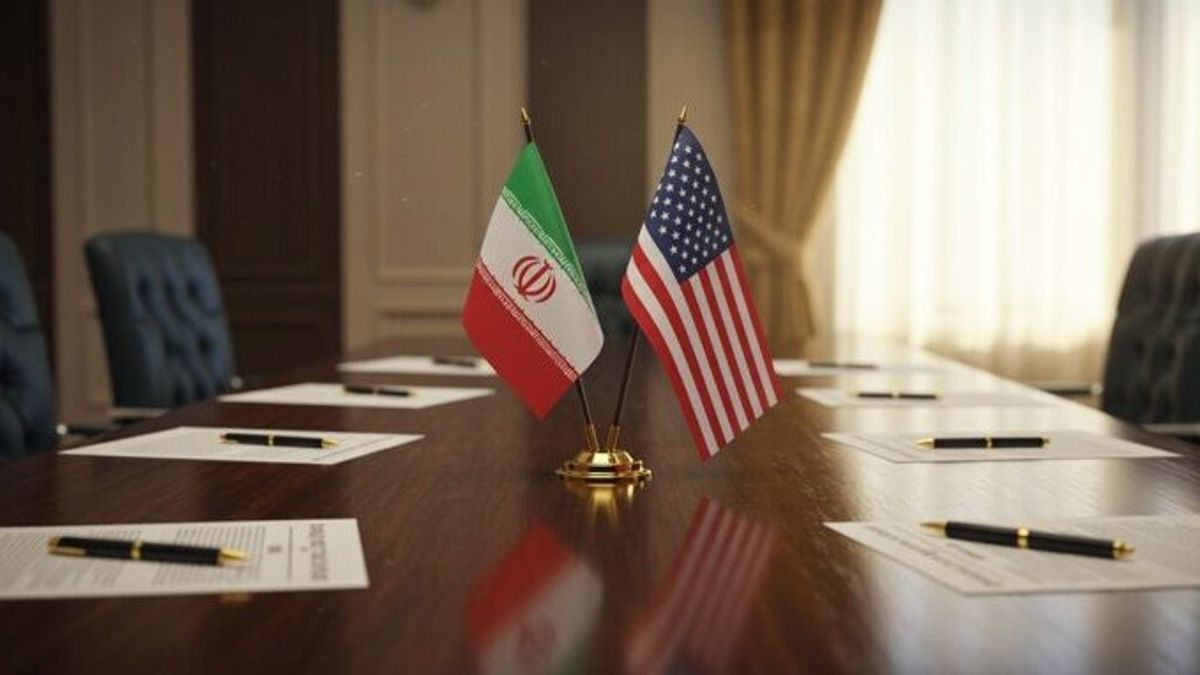


Iran is reluctant to negotiate with the United States in the shadow of threats, including time pressure, and will not accept any terms outside international law, two senior officials said.
A two-week ceasefire between Iran and the US that eased tensions in the Middle East will end on Wednesday. There is no sign that it will continue, while Pakistan continues to try to host a second round of negotiations between Tehran and Washington.
Parliament Speaker Mohammad Bagher Ghalibaf said on Monday he rejected negotiations with the US "under the shadow of threats."
Ghalibaf, who played a key role in the talks, sharply criticized President Donald Trump for his decision to impose a blockade on the Strait of Hormuz, which Tehran says is a violation of the already fragile ceasefire.
In a post on the social media X, he wrote that Trump had tried to use threats to change the conversation "into a table of surrender or to justify an escalation of war provocations," Anadolu reported (21/4).
He said Iran had prepared new military options if the two-week ceasefire mediated by Pakistan ends this week.
Earlier, President Trump on Sunday announced that representatives would fly to Islamabad for negotiations, although Tehran has not officially confirmed its participation and demanded the lifting of the blockade.
The comments come as the US maintains a naval blockade on vessels entering and leaving Iranian ports since last week.
Tehran described the blockade as a violation of the ongoing ceasefire.
He also warned on Sunday that the US would target Iranian infrastructure if Tehran failed to accept US terms to end the conflict, adding to market jitters as the ceasefire ends Tuesday night Washington time.
Meanwhile, Iranian Deputy Foreign Minister Saeed Khatibzadeh said Tehran would not accept any terms outside international law in its relations with the US.
Speaking in an interview with state television station IRIB, Khatibzadeh said: "Time should not put pressure on Iran."
He added that Iranian officials, including Parliament Speaker Ghalibaf and Foreign Minister Abbas Araghchi, had presented what he called "fair and practical proposals" within the framework of Iran's legal rights.
Khatibzadeh also said many statements by US officials are aimed at domestic audiences and influence markets, rather than reflecting a consistent policy approach.
He stressed that the strategy of the State of the Mullahs was not formed by US rhetoric, both positive and negative, reiterating that Tehran will not accept anything outside of international law."
He said diplomacy remained the only viable path to resolving the crisis, calling on the United States to abandon what he called a "maximalist approach" and engage with Iran on the basis of mutual respect.
Concerns over shipping increased after Iran, which on Friday said the Strait of Hormuz had reopened to maritime traffic, reversed course on Saturday and again restricted the movement of ships through the strategic waterway, with state media saying the US had not fulfilled its obligations.
Pakistan hosted the first direct high-level meeting between the US and Iran in Islamabad on April 11-12, the first contact since the two countries severed diplomatic ties in 1979, but the talks ended without an agreement.
The US-Israel launched an attack on Iran on February 28 that killed about 3,375 people, according to the head of the Iranian Medical Organization Abbas Masjedi as reported by Tasnim, including the late Supreme Leader Ayatollah Ali Khamenei and a number of senior civil and military officials.
Iran retaliated by carrying out attacks on Israeli territory and targeting a number of US-related targets in neighboring Middle Eastern countries.
The English, Chinese, Japanese, Arabic, and French versions are automatically generated by the AI. So there may still be inaccuracies in translating, please always see Indonesian as our main language. (system supported by DigitalSiber.id)
Most Popular Tags
#Prabowo Subianto #donald trump #Febrie Adriansyah #8791 #giias 2026Popular


