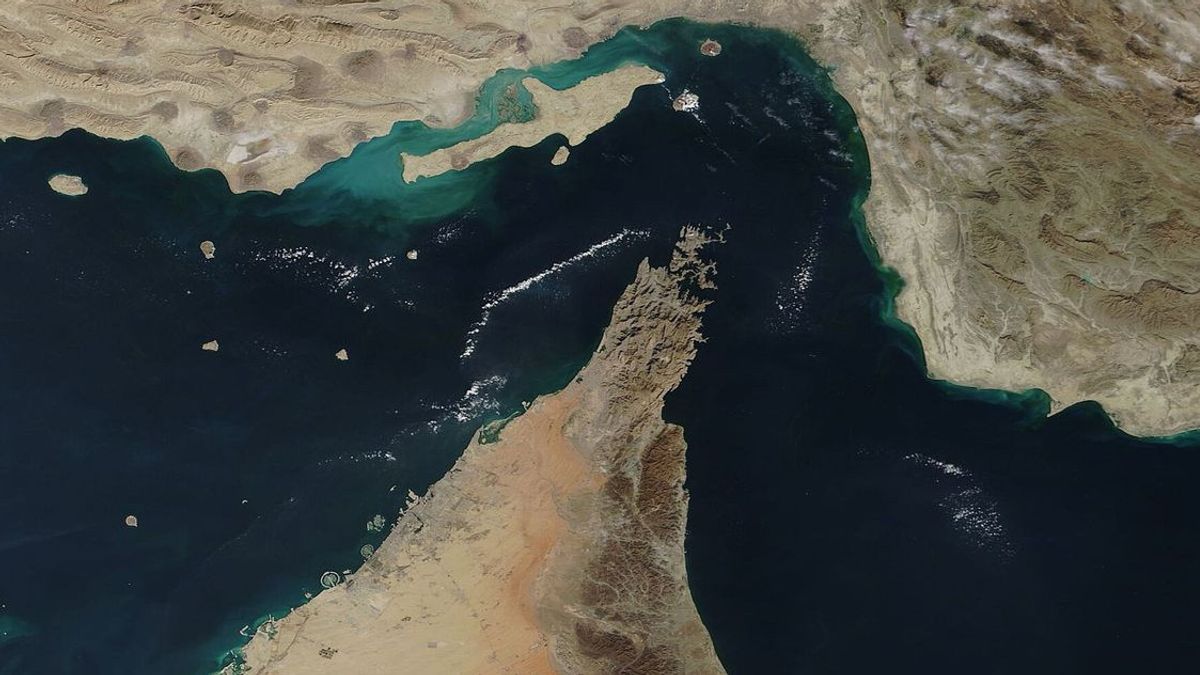


JAKARTA - Iran has begun tightening traffic for foreign ships in the Strait of Hormuz by asking for details of the load and destination of Thai ships that are about to pass. In the midst of the negotiations, conflicts in the region still have an impact, including three Indonesian citizens who are still reported missing.
Anadolu Agency, quoted on Friday, April 10, reported that Thailand's Foreign Minister Sihasak Phuangketkeow said Tehran asked for detailed information on the cargo and destination of Thai ships to ensure safe navigation through the Strait of Hormuz. The request came as Bangkok was still negotiating with Iran to allow Thai cargo ships and oil tankers to pass through the strategic sea route.
According to a report by the Thai Enquirer quoted by Anadolu, Thailand is preparing the details of the data requested by Iran. The data will be discussed further with Oman during Sihasak's visit from Wednesday to Thursday. Bangkok also asked Oman for support to help communicate with Tehran.
The negotiations are aimed specifically at ships carrying cargo directly to Thailand without stopping at other ports. This shows that shipping access in the Strait of Hormuz is now tightening, as the region is still overshadowed by tensions.
In addition to trying to keep its logistics routes safe, Thailand is also reviewing the option of buying oil from Russia. Local authorities are assessing whether Russian crude is suitable for Thailand's domestic refineries, as well as calculating a secure payment scheme amid the risk of international sanctions.
On Wednesday, the United States and Iran agreed to a two-week ceasefire. The Pakistani-mediated deal is a first step towards a broader agreement to stop the conflict launched by Washington and Tel Aviv against Tehran since February 28.
However, the humanitarian impact of the conflict has already spread. Based on Anadolu's calculations, at least 27 citizens from Asian countries have been killed or are still missing since the conflict began.
The victims include nine Indians, including one who is still missing; four Bangladeshis; four Pakistanis; three Thais; two Filipinos; one each from China and Nepal; and three Indonesians whose fate is still unknown.
The English, Chinese, Japanese, Arabic, and French versions are automatically generated by the AI. So there may still be inaccuracies in translating, please always see Indonesian as our main language. (system supported by DigitalSiber.id)