

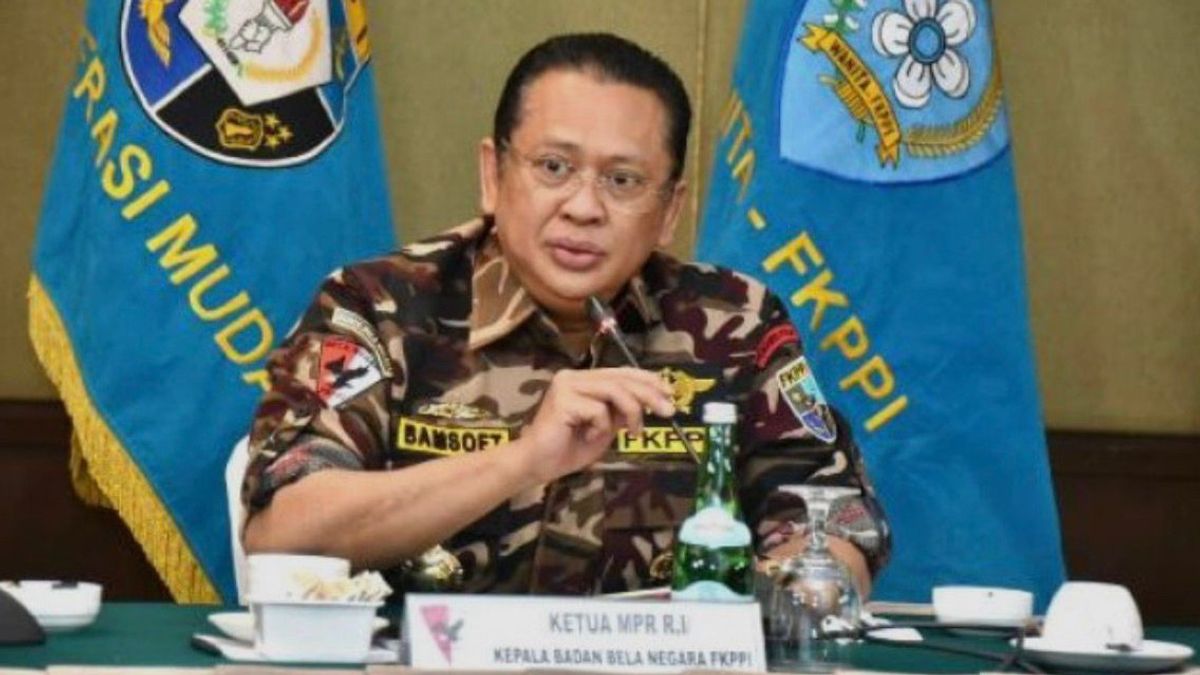


JAKARTA - Bambang Soesatyo (Bamsoet) reminded Indonesia not to feel safe even though Iran and Israel are now in a ceasefire phase. According to him, the pause cannot be read as a sign that the war is really over. Rather, at this point, the economic and security impacts can still move to many countries, including Indonesia.
This member of the Indonesian House of Representatives assessed that the ceasefire should be read more as a strategic pause. In such a situation, each party can use the time to strengthen their position, fill logistics, and prepare the next step.
"Indonesia must see this ceasefire clearly and strategically. A ceasefire in the geopolitical intelligence perspective cannot be interpreted as a sign of the end of the conflict," said Bamsoet in Jakarta, Thursday (9/4/2026).
He highlighted that the Iran-Israel tension at the beginning of 2026 had already triggered global concerns. Disruptions in the Middle East region are said to have an impact on the world's energy distribution routes, especially in the Strait of Hormuz, which is an important route for world oil supplies. Crude oil prices have even reached USD 95 per barrel, while shipping costs and risk premiums have increased due to maritime security threats.
According to Bamsoet, the effects of the conflict do not stop in the energy sector. Global uncertainty also puts pressure on the financial market, triggering exchange rate volatility, and adding inflationary pressure in many developing countries, including Indonesia. He said the rupiah exchange rate in recent weeks has also been pressured by global sentiment. The cost of logistics and international shipping insurance has also increased.
"We must not regard the ceasefire as the end of the tension. In fact, in many cases, this phase is the most crucial point," said Bamsoet.
He added that in a geopolitical perspective, ceasefires are often used to build an image on the international stage. In public it looks peaceful, but behind the scenes each party can still strengthen its position through military, economic, and political channels.
Therefore, Bamsoet asked the government to strengthen cross-sectoral vigilance. Indonesia must maintain energy resilience, thicken strategic reserves, and anticipate global supply chain disruptions so that they do not directly hit the domestic economy.
He also emphasized the importance of maintaining an active and free foreign policy, while still prioritizing peaceful diplomacy without losing vigilance.
The English, Chinese, Japanese, Arabic, and French versions are automatically generated by the AI. So there may still be inaccuracies in translating, please always see Indonesian as our main language. (system supported by DigitalSiber.id)


