



JAKARTA - If Eid al-Fitr in Turkey is only seen as a family holiday with baklava and candy, it feels too shallow. Behind the warm atmosphere, there is a long history. Many Ramadan and Eid traditions in Turkey are not born from new habits, but from the Ottoman legacy that still survives, even though it is no longer intact.
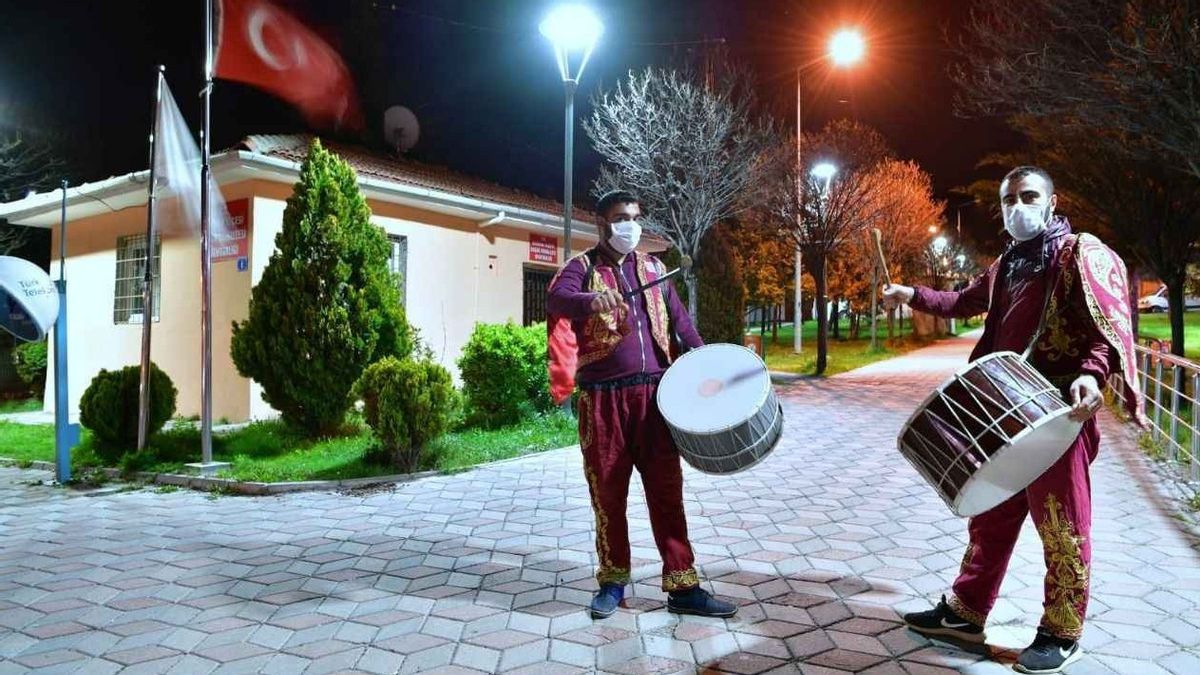
Anatolia Report noted that Ramadan in Turkey has long been built by strong symbols. There is mahya, a lamp hung between the mosque tower to mark the holy month. There are sahur drummers who go around the village. There are cannons fired when breaking the fast.
There are also iftar tents that feed many people in city points. All of this shows that Ramadan in Turkey from the beginning is not just a personal matter between man and God. It is present in the public space. It is heard, seen, and felt together.
What is even more interesting is its social character. In the Anatolia Report's records, during the Ottoman era, the tradition of "tooth rent" or "tooth rent" was known. Rich people opened their houses for breaking the fast, then gave guests gifts or coins before going home. There is also the habit of paying off other people's debts secretly in the market. Here, fasting does not stop at hunger and thirst. It translates into concrete solidarity.
But that's where the question lies. When such a big tradition enters the modern era, what is left? Some do survive. Turks still know warm pide before iftar, güllaç in shop windows, and the term Şeker Bayramı for Eid. But others are slowly changing functions. What used to live as a social habit, now lives more often as a cultural marker.
For Indonesians, Turkey gives a lesson that is not unfamiliar. We also have Ramadan that is crowded in mosques, markets, streets, and dining tables. We also know, traditions can still live, but their meaning can be diluted if they are only inherited as habits.
Turkey shows that a great holiday is not enough to be guarded with nostalgia. It needs to continue to be brought to life through social practices, namely sharing, respecting the elderly, and ensuring that the atmosphere of Ramadan is not only festive, but also meaningful.
The English, Chinese, Japanese, Arabic, and French versions are automatically generated by the AI. So there may still be inaccuracies in translating, please always see Indonesian as our main language. (system supported by DigitalSiber.id)
Most Popular Tags
#Prabowo Subianto #donald trump #firearm #8791 #giias 2026Popular


