

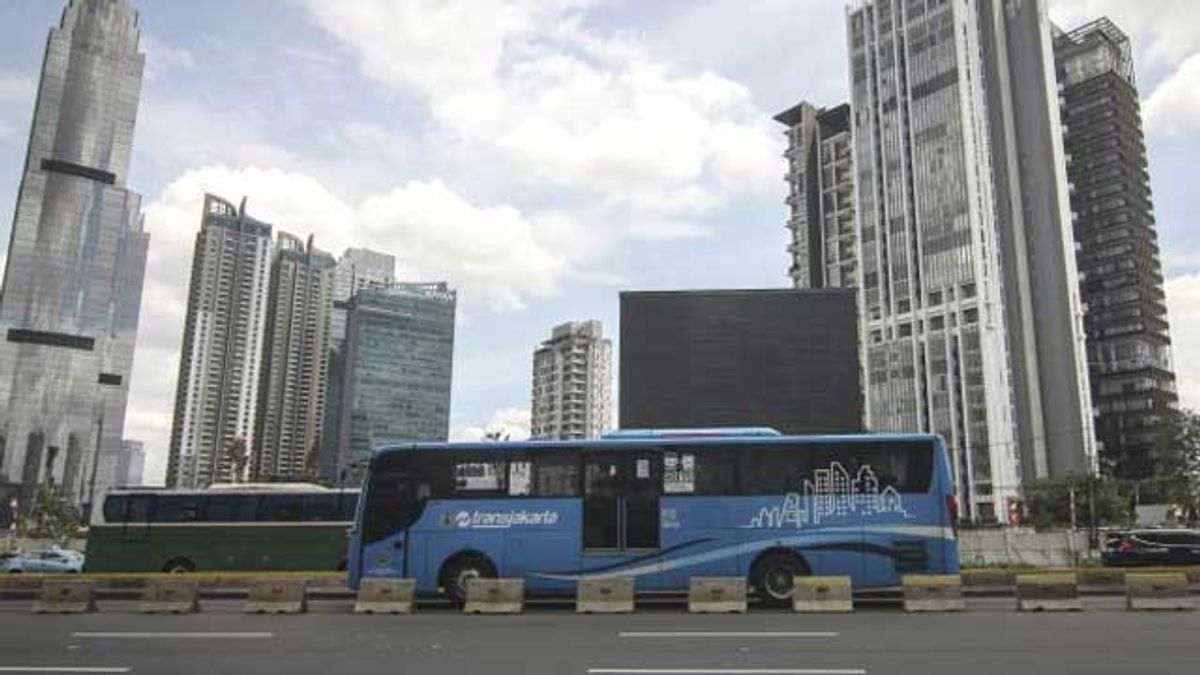


JAKARTA - PT Transportasi Jakarta (Transjakarta) has started to strengthen the operational safety system by utilizing driver monitoring technology based on artificial intelligence or artificial intelligence (AI).
This technology is part of the development of operational digital systems through the SYNTRA platform which is integrated with Advanced Driver Assistance System-Driver Monitoring System (ADAS-DMS) technology.
Director of Information Services and Technology of PT Transportasi Jakarta Raditya Rusdi said the technology was used to detect various potential risks during bus operations, ranging from fatigue to driver concentration disorders.
Considering that, in recent times, there have been frequent accidents involving Transjakarta buses. It is hoped that this technology will reduce the number of Transjakarta bus accidents.
"We don't want mitigation to rely solely on manual supervision. We strengthen it with technology through SYNTRA which is integrated with ADAS-DMS to help detect fatigue and potential microsleep in the driver in real time," said Raditya in his statement, Friday, March 13.
The system works by monitoring the condition of the driver while driving. If it detects any distraction, fatigue, or microsleep indication, the system will automatically provide an immediate warning to the driver.
At the same time, the operational control center also receives notifications so that it can immediately take mitigation steps if necessary.
"Currently, around 2,000 fleets have been equipped with this technology, and this year we will accelerate its implementation to all fleets," he said.
Overall, Transjakarta has more than 5,000 fleets operating in various corridors and service routes. Around 3,000 other fleets will be equipped with the monitoring device gradually.
This year, the company is targeting acceleration of implementation so that the technology-based safety system can be applied more widely across the fleet.
In addition to monitoring when the bus is operating, Transjakarta has also begun testing technology that can detect the driver's sleep patterns and stress levels.
This step is aimed at strengthening the prevention aspect so that the potential for fatigue can be known early, even before the pilot starts duty.
"At the same time, we are also conducting a trial of sleep pattern and stress level detection technology for pilots so that preventive measures can be taken earlier, even before the pilot starts duty," said Raditya Rusdi.
Through the implementation of this technology-based monitoring system, Transjakarta hopes that the safety standards of public transportation can continue to be improved while maintaining the reliability of services for passengers.
The English, Chinese, Japanese, Arabic, and French versions are automatically generated by the AI. So there may still be inaccuracies in translating, please always see Indonesian as our main language. (system supported by DigitalSiber.id)
Most Popular Tags
#Prabowo Subianto #donald trump #Febrie Adriansyah #8791 #giias 2026Popular


