

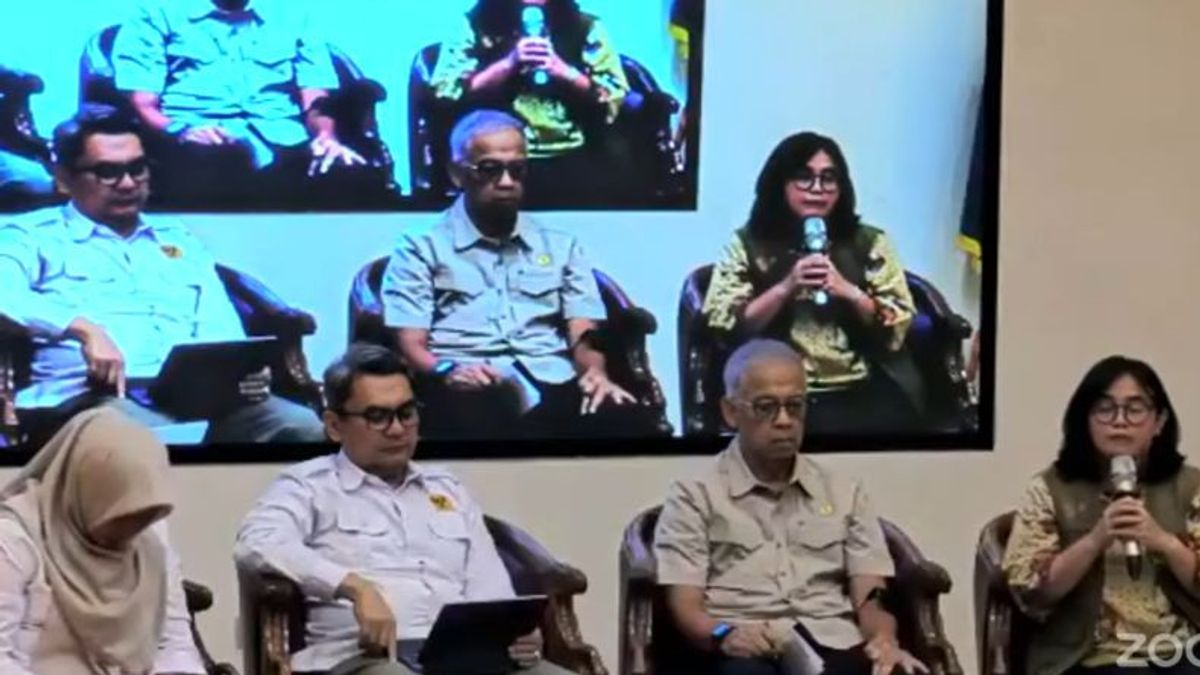


JAKARTA - The National Human Rights Commission (Komnas HAM) has identified North Sumatra, West Java, and Central Kalimantan as provinces with high levels of agrarian conflict vulnerability based on a study of natural resource conflicts for the period 2020-2025.
Commissioner for Research and Studies of the National Human Rights Commission, Uli Parulian Sihombing, said that the three regions were the focus of the study because of the high number of public complaints that entered the National Human Rights Commission related to land disputes.
"North Sumatra is the most frequently reported to Komnas HAM, so it is in the top three provinces that are often reported, including for agrarian conflicts," said Uli in a public discussion and the launch of a study on handling agrarian and natural resource conflicts by the National Police, reported by ANTARA, Monday, March 9.
According to him, agrarian conflicts in North Sumatra are generally related to overlapping land use rights (HGU) with community land and forest areas.
Disputes also often involve large plantation companies operating in areas that have previously been managed by communities for generations.
Meanwhile, in West Java, agrarian conflicts are more often triggered by issues of property legality in urban areas, including overlapping certificates, land ownership claims, to the eviction of residents.
Several cases that have emerged, including the Tamansari conflict in the City of Bandung and Dago Elos involving residents with developers.
Meanwhile, in Central Kalimantan, agrarian conflicts are heavily influenced by the inequality of land ownership between corporations and indigenous people living in the region.
"The characteristic is the inequality of land ownership, about 4 million hectares of corporate concessions facing much smaller customary areas," he said.
In the study, Komnas HAM also noted that agrarian conflicts are often triggered by overlapping permits, weak recognition of customary areas, and inconsistencies in land data between government agencies.
In addition to impacting land ownership, agrarian conflicts also have an impact on the fulfillment of people's rights to living space, access to food sources, water, and employment, especially for vulnerable groups such as indigenous people, women, and children.
Komnas HAM considers the mapping of conflict-prone areas to be important as a basis for the formulation of policies to resolve agrarian disputes in a more targeted manner, including through mediation, strengthening the land administration mechanism, and a human rights-based approach.
The English, Chinese, Japanese, Arabic, and French versions are automatically generated by the AI. So there may still be inaccuracies in translating, please always see Indonesian as our main language. (system supported by DigitalSiber.id)


