



JAKARTA - The US-Israeli attack on Iran is prone to trigger global uncertainty even on the price of beef in the country. Indonesia is known to still rely on imports to meet domestic meat needs.
Dharma Jaya President Director Raditya Endra Budiman said that Jakarta, which is not a producer of cows, has the potential to be affected. He said that Jakarta has always relied on supplies from abroad.
"This geopolitics is indeed confusing. As we know, Jakarta is not a producing area, but a consumption area. And for cattle, especially beef, 95 percent of Indonesia's needs, it is met by imports," Raditya told reporters, Friday, March 6.
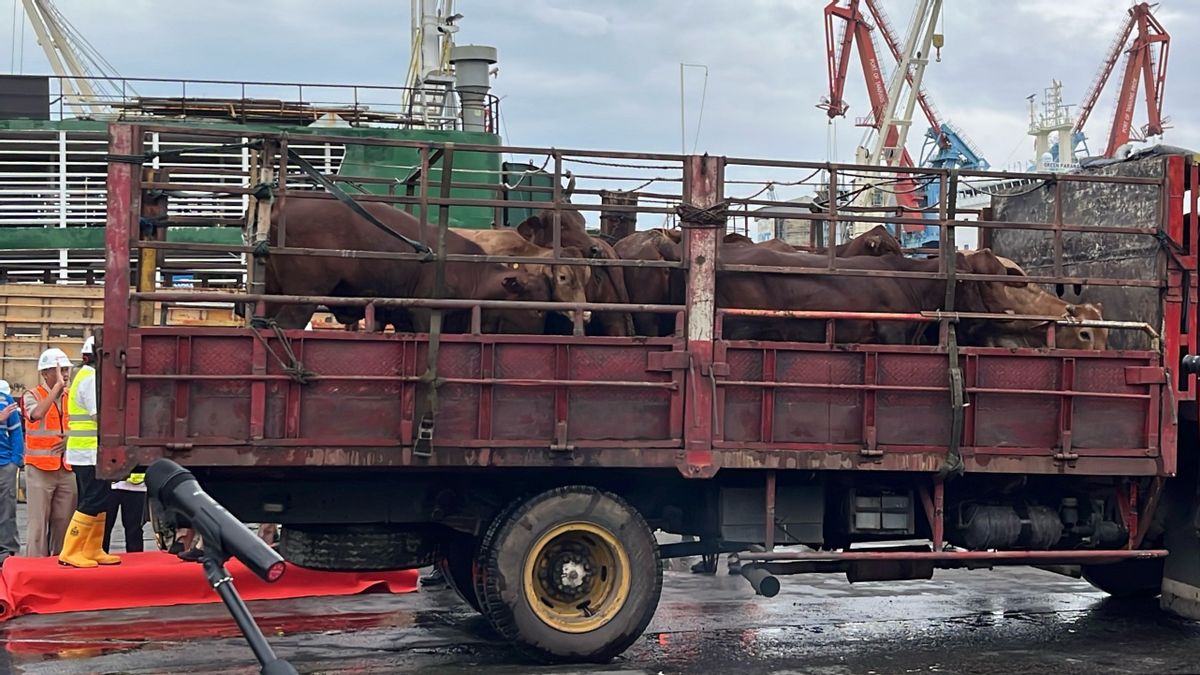
Raditya explained that most of the meat supply in Indonesia comes from a number of countries such as Australia, Brazil to India. Some are live cows, while others are frozen meat and buffalo meat.
Because import transactions use the United States dollar, fluctuations in exchange rates and global geopolitical situations have the potential to directly affect prices.
"All of these payments are in US dollars. So if the geopolitics are turbulent and the US dollar is strengthening, then the price will also be affected," said Raditya.
Raditya also highlighted the impact of the conflict on global energy distribution routes, including the potential for disruption in the Strait of Hormuz, which is one of the world's main oil trade routes.
According to him, the increase in oil prices has the potential to trigger an increase in logistics costs which will ultimately affect the price of food commodities. In the midst of this uncertainty, Dharma Jaya began to strengthen supplies from within the country by partnering with local farmers.
"Dharma Jaya is also now starting to buy from local cows," said Raditya.
He said that cooperation had been carried out with a number of farms in Java and Lampung to anticipate a spike in import prices. "So as a precaution, we have also worked with several local farms in Java and Lampung to ensure stocks in case the price is too high," he continued.
This step is also carried out to prepare supplies ahead of Eid al-Adha, which is usually followed by an increase in demand for cattle. Raditya said his party had started to increase stocks since now, including by expanding purchases from local farmers.
"Soon we will be preparing for Eid al-Adha and we have also started buying," he said.
The English, Chinese, Japanese, Arabic, and French versions are automatically generated by the AI. So there may still be inaccuracies in translating, please always see Indonesian as our main language. (system supported by DigitalSiber.id)
Most Popular Tags
#Prabowo Subianto #donald trump #2026 World Cup #Febrie Adriansyah #8791Popular


