

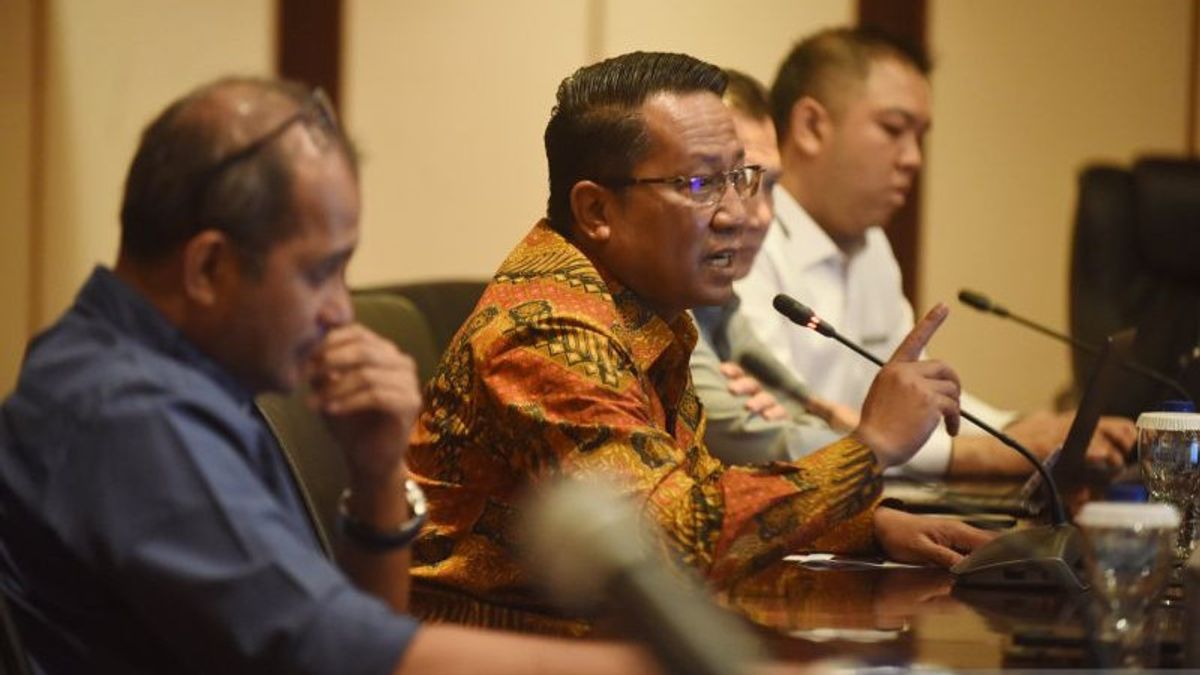


JAKARTA - The government is considering drafting rules so that the police use body cameras or body cameras in carrying out their duties, in line with the enactment of Law Number 20 of 2025 concerning the Code of Criminal Procedure (KUHAP) which regulates the use of surveillance cameras during examinations.
Minister of Law Supratman Andi Agtas said that the discussion on the use of body cameras is one of the options that the government is currently studying as part of strengthening the technology-based criminal justice system.
"Then the CCTV inspection, bodycam, maybe this can be a consideration," said Supratman at a press conference at the Ministry of Law Building, Jakarta, Antara, Tuesday, January 6.
Supratman explained that the idea would be discussed further with the team of drafters of the Draft Government Regulation (RPP) as a derivative rule from the Criminal Code.
"In the RPP, we will also try because it is based on information technology. Later we will discuss with Team 12 in order to prepare and improve the upcoming RPP," he said.
Currently, the government is drafting a derivative regulation of the Criminal Procedure Code in the form of a Draft Presidential Regulation on the Criminal Justice System Based on Information Technology. The regulation is expected to be a legal umbrella for the use of technology in all stages of the criminal justice process.
The KUHAP Law itself has been signed by the President of the Republic of Indonesia Prabowo Subianto and promulgated by the Minister of State Secretary Prasetyo Hadi on December 17, 2025. Based on Article 369, this new KUHAP has been in force since January 2, 2026.
In its provisions, Article 30 of the Criminal Procedure Code stipulates that the examination of a person suspected of committing a criminal act must be recorded using a surveillance camera during the examination process. The recording can be used for the purposes of investigation, prosecution, and defense for the suspect or defendant.
However, the use of the recording and the technical procedures for its implementation still require further regulation through a Government Regulation.
The Criminal Procedure Code also emphasizes the accountability mechanism of law enforcement officers. Article 23 paragraph (7) and Article 68 provide that investigators, investigators, to public prosecutors who violate the provisions of laws and regulations or codes of ethics may be subject to administrative sanctions, ethical sanctions, to criminal sanctions.
The English, Chinese, Japanese, Arabic, and French versions are automatically generated by the AI. So there may still be inaccuracies in translating, please always see Indonesian as our main language. (system supported by DigitalSiber.id)
Most Popular Tags
#Prabowo Subianto #donald trump #Febrie Adriansyah #8791 #giias 2026Popular


