


JAKARTA - In the midst of a wave of adoption of artificial intelligence (AI) and digital disruption that changes the way we work, the world of education faces an important question: how to prepare children for a future that is not only full of uncertainty, but also a great opportunity?
According to a recent report from the World Economic Forum (WEF), rapid changes in technology and automation will significantly overhaul the global work market. About 39% of current skills are predicted to be obsolete by 2030. While some administrative and routine work may be replaced by machines. But behind that, there are new opportunities, especially jobs that demand creativity, critical thinking skills, empathy, and human skills.
In this context, education that emphasizes only the academic aspect seems no longer adequate. Children need to be equipped with character, resilience, emotional intelligence, and thinking and adaptability, things that AI does not easily replace.
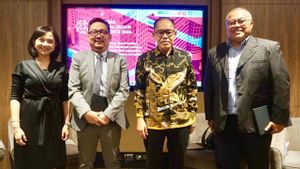
This view represents Warren Wessels' experience, IB Diploma Programme Coordinator at North Jakarta Intercultural School (NJIS). With more than sixteen years of experience, Warren emphasized that educational goals should not be just pursuing good grades, but wider than that, namely forming an identity, confidence, mental resilience, and social-emotional intelligence from students.
"Academic achievement is important, but the development of identity, confidence, resilience, and social-emotional intelligence are equally important. Education is a journey to become a complete person," Warren said, Wednesday, December 10.
According to Warren, students learn the most from what they see in everyday life. If teachers want to grow curiosity, courage to ask questions, critical thinking and empathy, then teachers themselves must consistently practice those values.
The International Baccalaureate Continuum framework, which has been implemented in NJIS, with pillars such as Theory of Knowledge (TOK) and Extended Essay, is believed to help students develop independent thinking, design research, question assumptions, and understand that learning is a lifelong process.
When AI and automation tend to take over routine tasks, it is precisely aspects of human sensitivity such as creativity, ethics, empathy and cultural understanding, will be a much more valuable added value. Therefore, according to Warren, currently NJIS is not only preparing students to 'resist' in the future, but also so that they can shape the future itself.
This philosophy is also the basis for NJIS to hold a scholarship program. This program is looking for students with strong character, high potential, leadership ability, and great willingness to learn. NJIS Excellence Scholarship is given to graded nine to twelve students who show strong academic achievements, leadership, and harmony with the values of IB Learnner Profile.
BACA JUGA:
-
 | EKONOMI
IFG Tunjuk Leonardo Henry Gavaza jadi Direktur Keuangan PT Askrindo
22 November 2024, 20:47

The scholarship includes school fees and capital charges during one academic year, with the opportunity for an extension, and the recipient is also the school's ambassador.
"Students are not just cost assistance, but the belief that a student has the capacity to develop and contribute," Warren said.
For Warren, the core of education is very clear. Education does not stop at good grades or prestigious universities. Education is a process of shaping a wise and empathetic individual, who is able to see the world with firmness and courage.
"These children are not only prepared to adapt to the future, but they are prepared to shape the future itself," he concluded.
The English, Chinese, Japanese, Arabic, and French versions are automatically generated by the AI. So there may still be inaccuracies in translating, please always see Indonesian as our main language. (system supported by DigitalSiber.id)
Most Popular Tags
#Prabowo Subianto #donald trump #2026 World Cup #Febrie Adriansyah #8791Popular


