

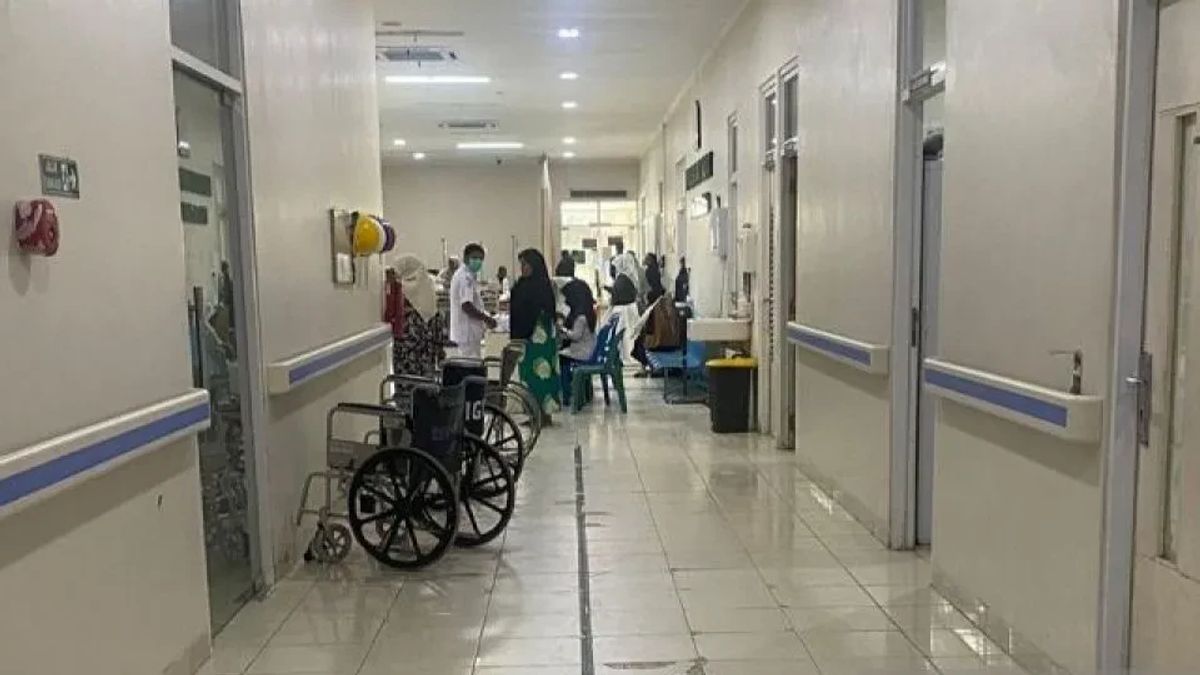


JAKARTA Member of the Indonesian House of Representatives from the Aceh electoral district, Irmawan, highlighted the number of health facilities that have not been able to operate after the floods and landslides hit Sumatra two weeks ago. One of them, Muhammad Ali Kasim General Hospital in Gayo Lues Regency, Aceh, which until Monday, December 8, has reportedly not returned to normal functioning.
He also asked the government to speed up the delivery of medical aid and medical personnel to disaster-affected areas.
"We are very concerned about the condition of health facilities that are paralyzed due to disasters. Health services at Muhammad Ali Kasim General Hospital are still not optimal because many areas are submerged in thick mud. Medicines are damaged, medical devices are covered in mud, and health workers are overwhelmed," said Irmawan, Tuesday, December 9.
"We ask the government to speed up the delivery of aid, both medicines, additional medical personnel, and cleaning teams to restore hospital operations," he continued.
The member of Commission V of the DPR emphasized that hospitals are a key infrastructure in the public health care system, especially in the midst of an emergency situation. According to Irmawan, when the hospital is paralyzed, health services are automatically stopped, while the need for treatment has actually increased due to disasters.
"Thousands of injured victims are in dire need of treatment. Infusion, bandages, patient mattresses, and basic medical equipment are urgent to distribute immediately," said Irmawan.
For information, the Aceh Tamiang Hospital was also completely paralyzed due to flash floods, but has now returned to operation in stages, including emergency and pharmaceutical services. Based on the Dashboard for Flood and Landslide Emergency Management of Aceh, North Sumatra, and West Sumatra Provinces as of Monday, December 8, at least 199 health facilities were reported damaged. The disaster also caused 929 people to die, 274 people were missing, and 5,000 people were injured.
In addition to medicines and medical personnel, Irmawan also highlighted the vital need for clean water to restore health services in hospitals. According to him, without clean water, the process of sterilizing equipment, wound care, cleanliness of treatment rooms, and sanitation of health workers cannot run optimally.
"Clean water is part of medical services. Without it, the risk of infection is getting higher, especially for injured patients due to floods and landslides. The government needs to ensure emergency clean water supply through tank cars or temporary installations," said the PKB legislator for the Aceh electoral district.
SEE ALSO:
-
 | BERITA
Libur Nataru Berisiko Tinggi, Pemerintah Ingatkan Warga Waspadai Cuaca Ekstrem
09 Desember 2025, 09:06 -
 | TEKNOLOGI
Taiwan Blokir Aplikasi RedNote Selama Satu Tahun karena Risiko Penipuan
09 Desember 2025, 09:05 -
 | EKONOMI
Kementerian PU: 2.058 Km Jalan Nasional Rusak imbas Banjir Bandang Sumatera
09 Desember 2025, 06:04
Irmawan also reminded that after the disaster, people are vulnerable to various diseases such as ARI, diarrhea, skin diseases, and other infections. Therefore, he asked the government to carry out comprehensive health care and provide full support to health workers.
Health workers are the vanguard. They are also affected, exhausted, and need support, both health facilities, food intake, and other basic necessities. The government must ensure they work in appropriate conditions," he concluded.
The English, Chinese, Japanese, Arabic, and French versions are automatically generated by the AI. So there may still be inaccuracies in translating, please always see Indonesian as our main language. (system supported by DigitalSiber.id)
Most Popular Tags
#Prabowo Subianto #donald trump #Febrie Adriansyah #8791 #giias 2026Popular


