
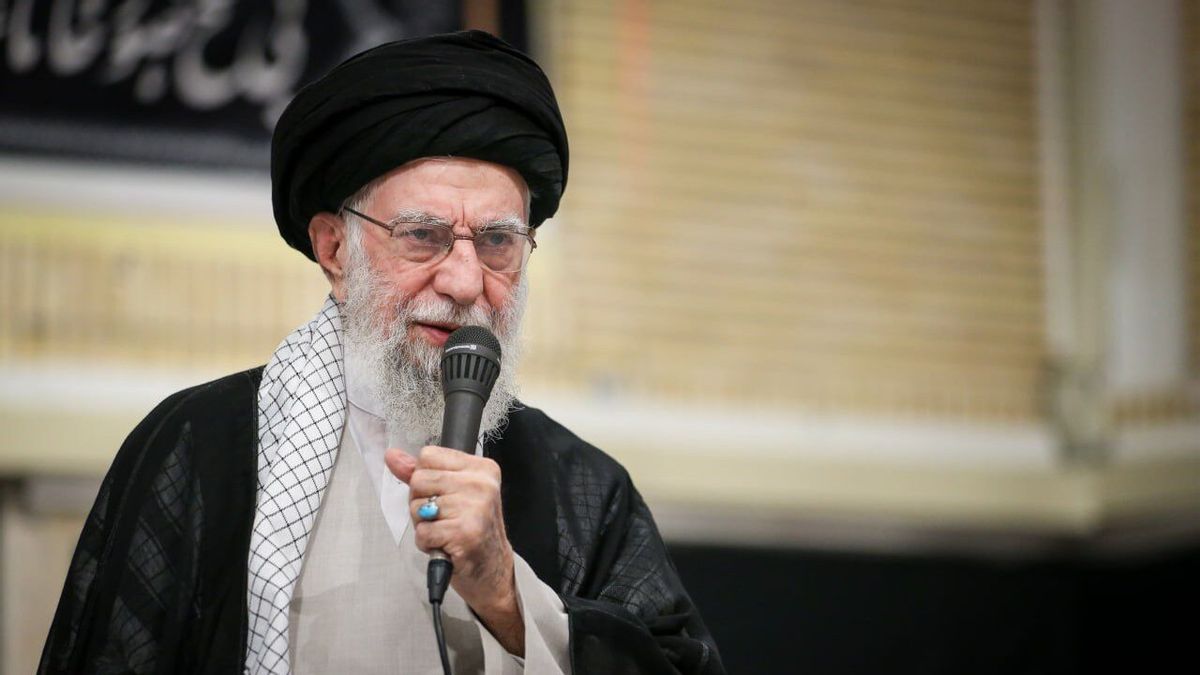


JAKARTA - Iran's Supreme Leader Ayatollah Ali Khamenei on Wednesday firmly defended the country's hijab use policy, as more and more women broke strict dress codes, sparking criticism from ultraconservatives.
His remarks came a day after more than half of Iran's conservative-dominated parliament accused the judiciary of failing to enforce mandatory hijab laws for women.
"In the Islamic Republic, it has been proven that a Muslim woman, who wears the hijab and upholds Islamic clothing, can be more advanced than others in all fields and play an active role both in society and at home," Khamenei said in a meeting with a group of women, reported Al Arabiya and AFP (4/12).
"With this vision, which was set in the Islamic Republic after the victory of the Revolution, women and girls we have advanced in many fields," he said.
Last week, Khamenei's Office faced criticism from some ultraconservative people after publishing in a newspaper photos of an Iranian woman who died in the fight against Israel in June.
In the photo, the woman is seen wearing a baseball hat, her hair is clearly visible.
It is known that covering the neck and head and dressed politely is an obligation for women in Iran after the Revolution that toppled US-backed Shah in 1979.
In recent years, women in Para Mullah Country have increasingly violated strict dress codes, especially since national protests following Mahsa Amini's death in detention in September 2022.
The 22-year-old Iranian Kurdish woman was arrested for allegedly violating the country's strict dress code for women.
Amini's death sparked months of unrest, with hundreds of people killed and thousands more arrested in what authorities called "corruption" provoked by foreign parties.
SEE ALSO:
-
 | BERITA
Ajudan Kremlin Ungkap Keanggotaan NATO Ukraina Jadi Pertanyaan Kunci Perundingan AS-Rusia
04 Desember 2025, 15:00 -
 | BERITA
Israel Konfirmasi Jenazah Sandera yang Dikembalikan Hamas Merupakan Warga Negara Thailand
04 Desember 2025, 14:30 -
 | BERITA
Calon Presiden Peru akan Diberikan Rompi Antipeluru Setelah Serangan Bersenjata
04 Desember 2025, 13:30 -
 | BERITA
PBB Sepakati Resolusi Pemulangan Anak-anak Ukraina, Rusia: Dukungan untuk Kebohongan
04 Desember 2025, 10:00

On the other hand, the Iranian government refuses to ratify a bill passed by parliament in 2023, which would exacerbate penalties for women who do not wear headscarves or dress inappropriately.
Since coming to power in July 2024, President Masoud Pezeshkian confirmed that women cannot be forced to wear headscarves.
In January, government spokesman Fatemeh Mohajerani said the bill was suspended because it "could have serious social consequences."
The English, Chinese, Japanese, Arabic, and French versions are automatically generated by the AI. So there may still be inaccuracies in translating, please always see Indonesian as our main language. (system supported by DigitalSiber.id)
Most Popular Tags
#Prabowo Subianto #donald trump #2026 World Cup #Febrie Adriansyah #8791Popular


