

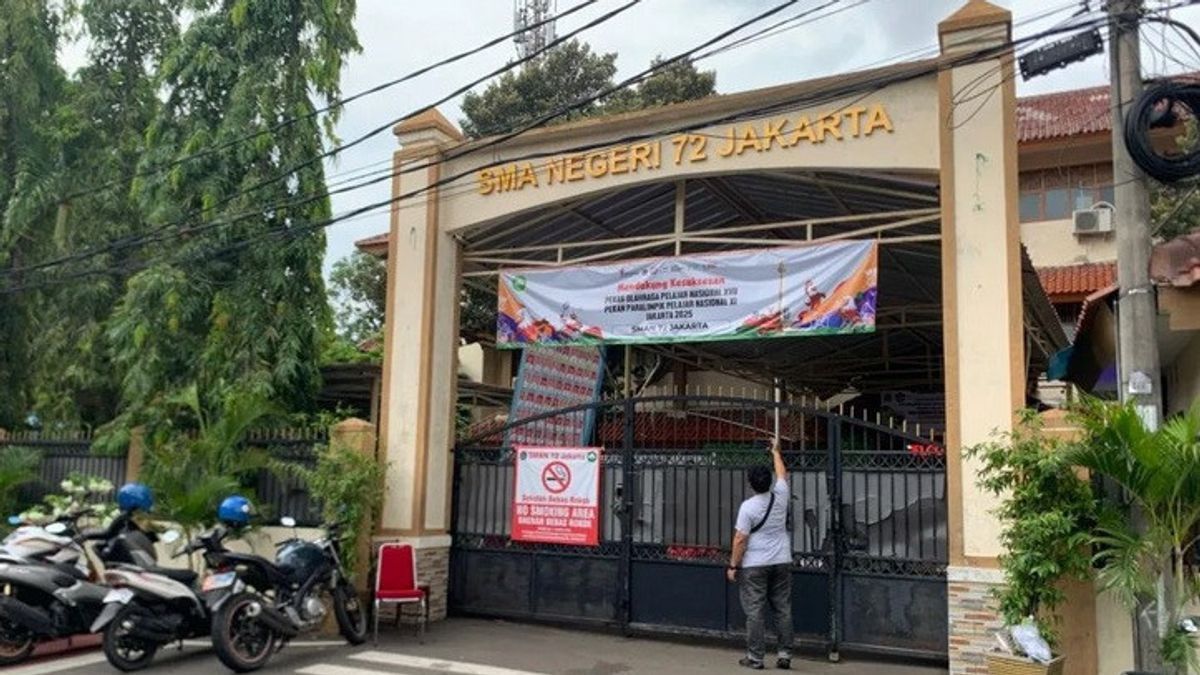


JAKARTA The sociologist from the University of Indonesia, Ida Ruwaida Noor, assessed that the reluctance of a number of students from SMAN 72 Jakarta to return to school after the explosion on Friday, November 7, 2025, was a very natural condition.
According to Ida, the incident that caused the injury has the potential to trigger deep trauma, especially for students who are at the scene and see firsthand the impact.
Ida explained that the psychological response of each child can be different. Therefore, schools need to collect comprehensive psycho-social data on all students, teachers, and staff who may also experience fear or anxiety after the incident.
Psychological support is very, very understanding of its needs. They are still teenagers, and those who are in mosques or suffer physical injuries certainly need more attention," Ida told VOI, Sunday, November 16.
Experience from various explosion cases related to extremism shows that the process of recovering victims usually takes a long time and intensive assistance. This situation is increasingly complex because the perpetrators of the explosion at SMAN 72 are students at the school.
"Students who have bullied perpetrators also need special assistance," he said.
Ida assessed that the school's policy of implementing distance learning (PJJ) was the right step as the initial stage of recovery. This period ideally lasts two to three months before students return to school gradually through extracurricular activities accompanied by psychologists.
As for students who experience acute trauma, he suggests temporary placement in other schools or relocation with parental agreement. The process, he said, must be fully facilitated by schools, including further psychological assistance.
"For students whose data collection results show acute trauma, they should be entrusted to other schools first, or with an agreement that parents can be transferred, of course their assistance or psychological therapy must be facilitated," he said.
Ida added that one of the school's heavy work and the government is to provide confidence and adequate facilities to parents who choose to move their children to other schools for security reasons.
"Even though the school is actually also a victim," he said.
He emphasized the importance of the involvement of all parents, not only school committees, in finding joint solutions for the benefit of students. Children, according to Ida, need intense assistance from families, especially to restore a sense of security and rebuild the courage to move.
Ida assessed that the SMAN 72 case should be a momentum for the state to build a more conducive education ecosystem for children's mental development. He encourages review of curriculum burdens so that they not only emphasize hard skills, but also soft skills.
It's better to review curriculum burdens, not only focus on hard skills, but actually soft skills. Moreover, these students are a digital generation that needs to be empowered with positive digital skills," he added.
In addition, the state needs to tighten supervision of child access to violent content, as media can be a factor that encourages imitation behavior at a young age.
"Media is often a source of inspiration, or a participating factor. In groups of children and adolescents, this can actually be a source of imitation (imitating behavior)," he said.
Ida also assessed that institutional communication between schools and parents must be strengthened so that students' development can be monitored in two directions in a sustainable manner. However, he emphasized that the warmth and involvement of the family remains the foundation for the formation of children's character and concepts.
"It's not enough for intellectual intelligence, children need emotional and social intelligence," he said.
SEE ALSO:
-
 | BERITA
Kabar Duka! Istri Wiranto, Rugaiya Usman Meninggal Dunia, Dimakamkan di Delingan
16 November 2025, 19:49 -
 | BERITA
Ledakan di SMAN 72, Polda Metro Sebut 3 Bom Tak jadi Meledak karena Pelaku Keburu Terluka
16 November 2025, 18:46 -
 | BERITA
Dansat Brimob Polda Metro Beberkan Jenis Bom dan Rangkaian yang Diledakan di SMAN 72 Jakarta
11 November 2025, 19:11

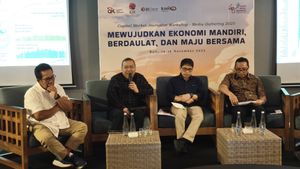
According to Ida, the root of the problem faced by Indonesian education is that there has not been a formal or informal ecosystem that really supports the development of psycho-social children.
"The case of SMAN 72 shows the importance of a safer, healthier, and more supportive education ecosystem that supports the growth of children's characters," he concluded.
The English, Chinese, Japanese, Arabic, and French versions are automatically generated by the AI. So there may still be inaccuracies in translating, please always see Indonesian as our main language. (system supported by DigitalSiber.id)
Most Popular Tags
#Prabowo Subianto #donald trump #2026 World Cup #Febrie Adriansyah #8791Popular


