

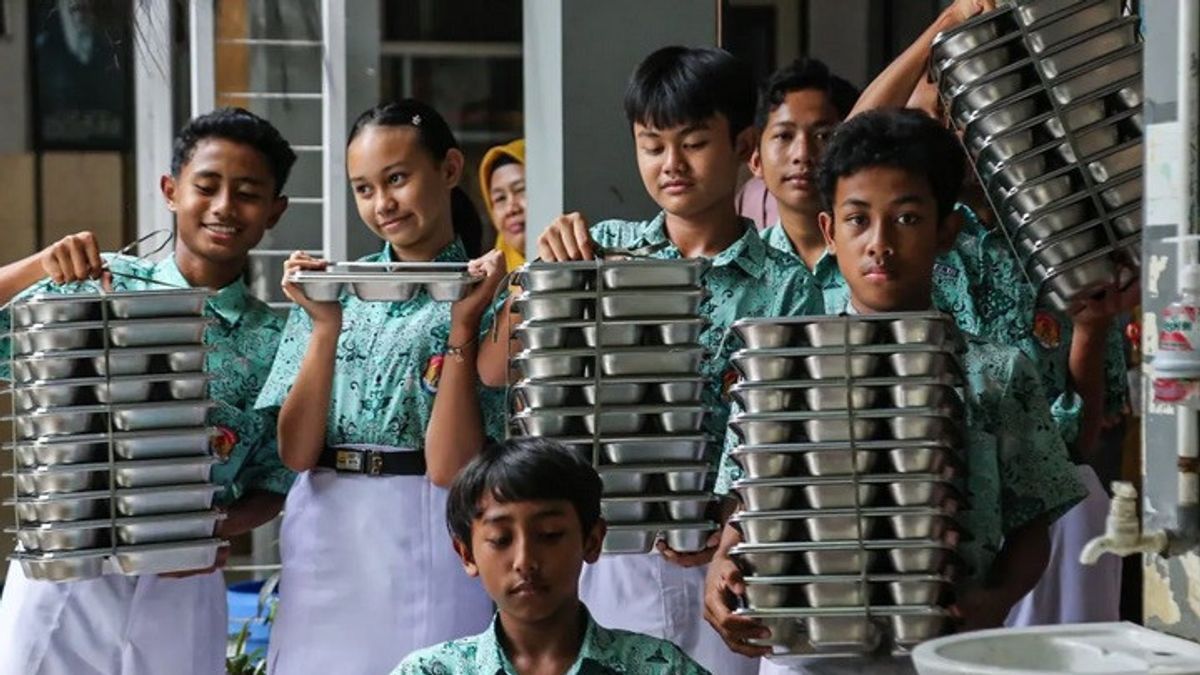


BOGOR - The mass poisoning case involving 24 students and one teacher at SDN 12 Benua Kayong, Ketapang, West Kalimantan, after consuming a menu containing fried shark has drawn serious attention. Nutrition experts have emphasized that shark is highly unsuitable for consumption, especially by children, due to its potentially deadly heavy metal content.
Rosyda Dianah, a lecturer in the Food Service Industry Management and Nutrition Study Program at IPB University's Vocational School, warned that shark is not a safe food for children due to its heavy metal content.
Rosyda explained that sharks are at the top of the food chain, making them highly susceptible to accumulating toxic substances such as mercury, arsenic, and lead through a process called biomagnification.
"Sharks are apex predators that easily accumulate mercury, arsenic, and lead through biomagnification. This accumulation makes shark meat dangerous for human consumption," Rosyda emphasized in her statement, quoted Monday, October 6, 2025.
Mercury, Arsenic, and Lead Threaten Children's Nervous System
According to Rosyda, the main danger lies in the toxic methyl mercury. Accumulation of this substance can trigger symptoms of nausea, vomiting, headaches, and even serious nervous system disorders.
"Children are the group most vulnerable to these toxic effects," she added.
In addition to mercury, shark fins are also known to contain high levels of arsenic, which can damage the liver, kidneys, skin, and lungs. Meanwhile, the lead content in shark meat has the potential to cause seizures, coma, and even death.
Rosyda also firmly believes that selecting shark for the Free Nutritional Meal (MBG) program menu is a wrong decision.
"The selection of shark as an ingredient in the Free Nutritious Meal (MBG) menu is clearly inappropriate, especially for school children," she stressed.
B2SA Concept Must Be Guideline
Furthermore, Rosyda recommended that children's menus be prepared based on the B2SA concept, which means diverse, nutritious, balanced, and safe.
"Food must be selected from ingredients that are safe, easily accepted by children, and within the community's purchasing power," she said.
In addition to ingredient selection, Rosyda also emphasized the importance of strict kitchen hygiene standards and food distribution systems. She highlighted the importance of a healthy kitchen free from cross-contamination, adequate handwashing facilities, and pest control standards.
"A systematic workflow, separation of raw and cooked ingredients, and timely food distribution significantly impact food safety," she explained.
The case in Ketapang, according to Rosyda, should serve as a valuable lesson. She concluded her statement with a stern warning: "Children should not be victims of negligence in menu preparation and food management. The B2SA concept must be the primary guideline."
The English, Chinese, Japanese, Arabic, and French versions are automatically generated by the AI. So there may still be inaccuracies in translating, please always see Indonesian as our main language. (system supported by DigitalSiber.id)


