

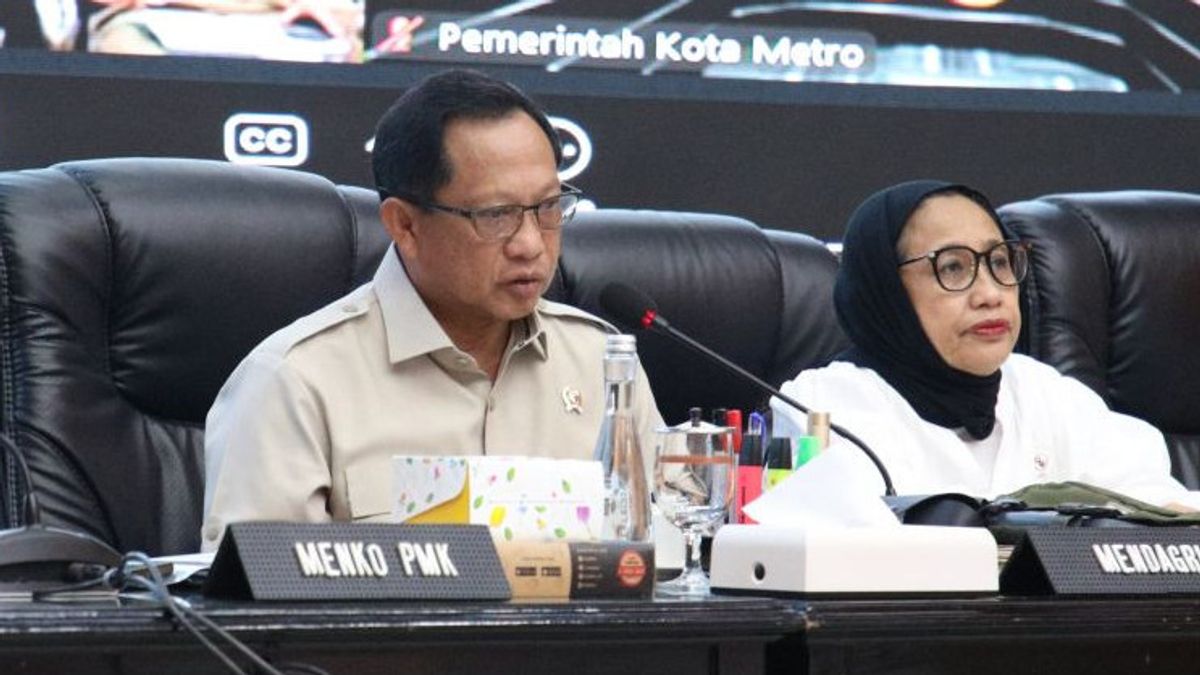


JAKARTA - Minister of Home Affairs (Mendagri) Tito Karnavian emphasized that local governments (Pemda) play an important role in supporting the implementation of the Waste Processing program into Electric Energy (PSEL), including providing land free of charge for the construction and operations of PSEL.
"The most important thing is how to form a collection system, starting from making trash bins in the community, after which it is collected with a transportation system carried up to the TPA," Tito said in a statement in Jakarta, Friday, quoted by Antara.
He explained that when the waste that had been collected was placed at the Final Disposal Site (TPA), the Regional Government also needed to ensure land availability for waste incinerators.
In that context, the local government needs to properly socialize the community about the function of the tool. Thus, the public can understand the policy.
The Minister of Home Affairs said that the PSEL program is an opportunity that needs to be welcomed by the local government, because this program will not only assist local governments in reducing waste, but also generate electrical energy.
"Well, this is opportunity. We convey to our friends the regional heads the opportunity given by the government is to be resolved," he said.
SEE ALSO:
-
 | BERITA
Aksi Penusukan di Sinagoge Manchester Lukai 4 Orang, Pelaku Ditembak Mati
02 Oktober 2025, 17:14 -
 | BERITA
KPK Temukan Kuota Petugas Disalahgunakan Usai Periksa Saksi Kasus Korupsi Kuota Haji
02 Oktober 2025, 13:26 -
 | BERITA
Korban Tewas Gempa M 6,9 Filipina Jadi 72 Orang, Warga Masih Trauma Susulan
02 Oktober 2025, 14:40 -
 | BERITA
Trump Ibaratkan 'Pangkas Kayu Mati' Terkait Ancaman PHK Usai Pemerintah AS Shutdown
02 Oktober 2025, 16:42 -
 | BERITA
Dasco soal Gugatan Uang Pensiun Anggota DPR: Kita Akan Ikut Putusan MK
01 Oktober 2025, 17:36 -
 | BERITA
Festival Bir Terbesar Dunia Oktoberfest Disetop Polisi karena Ledakan Bom Tewas 1 Orang
01 Oktober 2025, 17:26
Furthermore, in order to support the success of the PSEL program, the Minister of Home Affairs will assign the Director General (Dirjen) of Regional Administration Development (Adwil) of the Ministry of Home Affairs Safrizal Zakaria Ali and the Director General of Regional Development Development (Bangda) of the Ministry of Home Affairs, Restuardy Daud, to oversee the program directly.
Later, they will strengthen the policies of the Ministry of Environment, especially in ensuring the readiness of a number of local governments to support PSEL.
On that occasion, the Minister of Home Affairs also revealed the transformation of waste management policies and strategies in Indonesia. Initially, many parties implemented a strategy from downstream to upstream, then starting to change from upstream to downstream.
In other words, the volume of waste deposits that initially contained in the TPA was changed to a minimum, perhaps reaching the TPA through the reduction, reuse, and recycle (3R) processes by the community. With the upstream (downstream) basis, the waste is reduced, to the TPA it's a little bit," he said.
The English, Chinese, Japanese, Arabic, and French versions are automatically generated by the AI. So there may still be inaccuracies in translating, please always see Indonesian as our main language. (system supported by DigitalSiber.id)


