

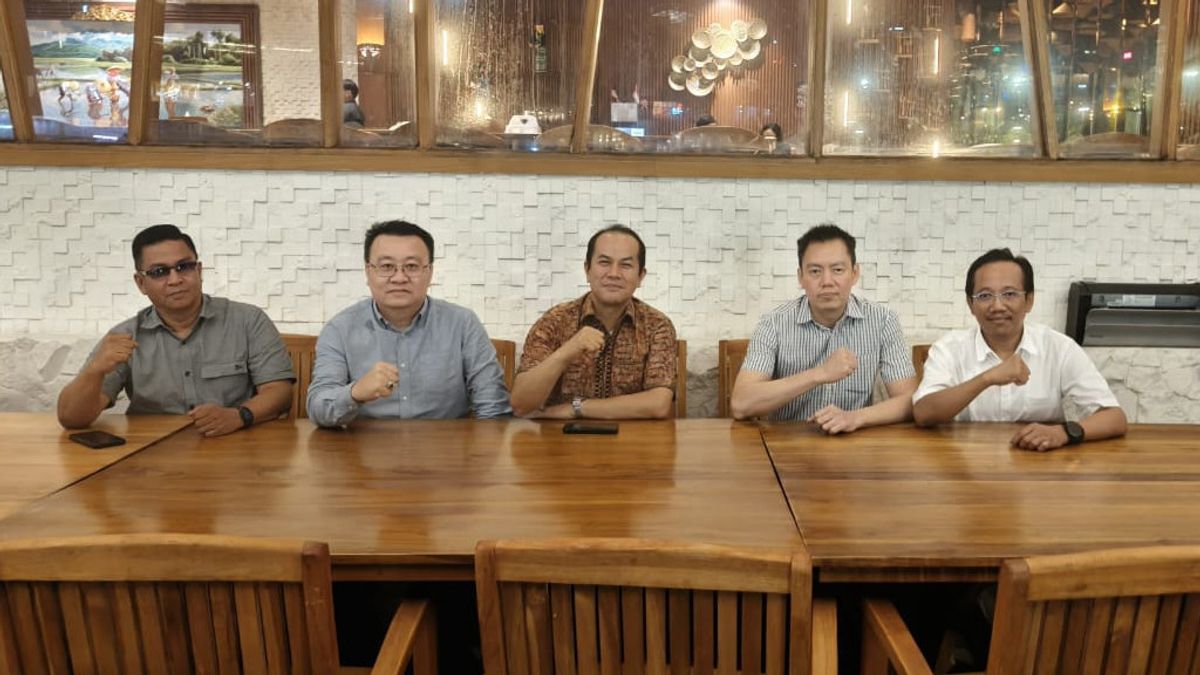


JAKARTA Three employers' associations expressed full support for the recommendations of the Indonesian Ulema Council (MUI) regarding the importance of halal guarantees in the implementation of the Free Nutritioning Program (MBG). This support came from the Association of Indonesian Nutritioned Food Kitchen Entrepreneurs (GAPEMBI), the Indonesian Food Forum Entrepreneurs Association (APMAKI), and the Association of Kitchen and Food Equipment Producers (ASPRADAM).
In a press conference in Telaga Senayan, Jakarta, Friday evening, September 12, the three associations emphasized the readiness to collaborate with the government, the National Nutrition Agency (BGN), and other stakeholders. They are committed to providing hygienic, safe, halal, and supporting the smooth running of the MBG program.
"Our support includes the provision of food routes and other food supplies that are safe for health, according to the Indonesian National Standard (SNI) and halal certification," said the Secretary General of APMAKI, Ardy Susanto.
Ardy said domestic producers were able to meet the needs of the MBG food route program. The current national industrial production capacity reaches around 10 million units per month or 100 million units per year. This figure is considered sufficient to reduce dependence on imports while ensuring halalness and product quality.
"With this capacity, domestic producers are ready to take over most of the supply from abroad. We make sure all products are in accordance with the recommendations of MUI, SNI, and BGN needs," he said.
The three associations also emphasized the importance of using original and certified products. According to Ardy, the national industry cannot dare to produce counterfeit goods or use SS 304 materials that do not meet specifications. This also prevents the circulation of fake products in the market.
"By involving domestic producers, the quality of eating utensils in the MBG program will be more secure and the community will be protected," said Ardy.
The General Chairperson of GAPEMBI, H. Alven Stony, added that his party is ready to support the provision of hygienic kitchens, according to nutritional standards, and comply with MUI recommendations. He also encouraged the head of the SPPG to proactively ensure that the food and kitchen utensils used were certified halal.
Meanwhile, the chairman of APMAKI, Alie Cendrawan, said that the food forum industry under his organization is capable of producing 8.5 million sets per month, and is ready to increase capacity when needed. Similar support also comes from ASPRADAM which has a production capacity of 2 million sets per month, with readiness to add facilities so that the supply of kitchen utensils is maintained.
The MBG program itself has a large scale with a target of 82.9 million beneficiaries by 2025 and 74.56 million beneficiaries by 2026, spread across 38 provinces and 509 regencies/cities. The government prepared a budget of IDR 71 trillion in 2025 and increased to IDR 268 trillion in 2026, the majority for the provision of nutritious food for school children and vulnerable groups.
With massive logistical needs, demand for food routes and eating utensils is ensured to continue to increase. "We, three employers' associations together with the national industry, are ready to take a strategic role with a production capacity of millions of units every month, so that the MBG program runs effectively while strengthening the independence of the domestic industry," concluded Alie.
The English, Chinese, Japanese, Arabic, and French versions are automatically generated by the AI. So there may still be inaccuracies in translating, please always see Indonesian as our main language. (system supported by DigitalSiber.id)


