
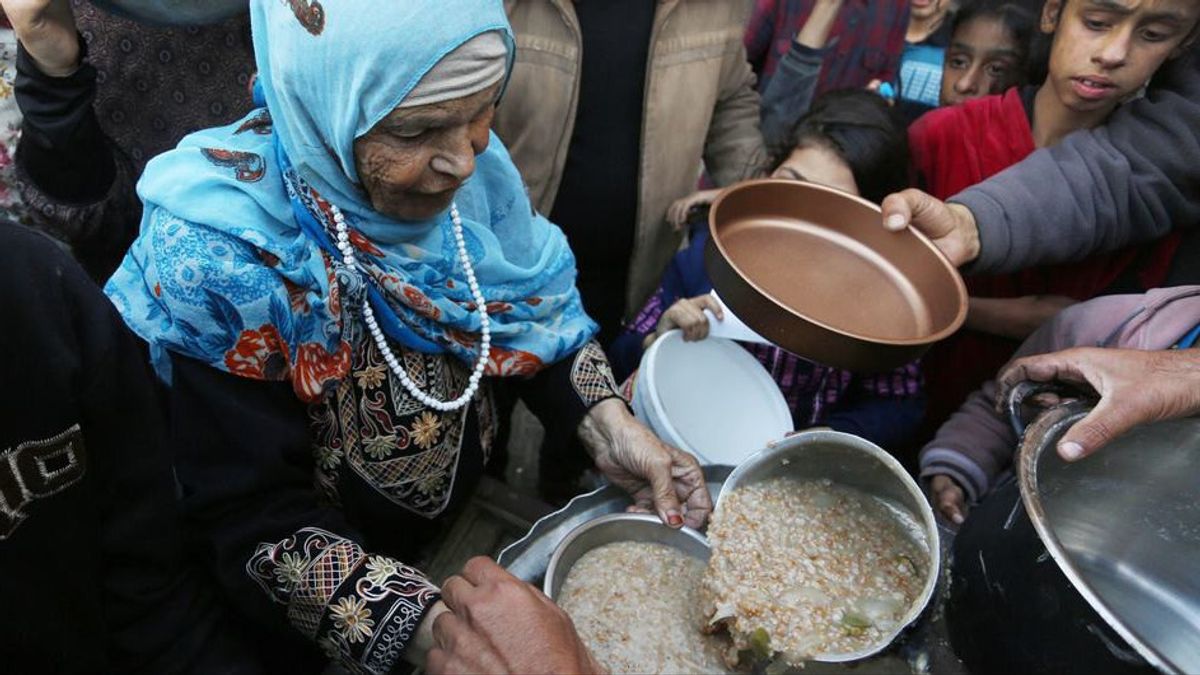


UNICEF spokesman Tess Ingram warned of the increasing risk of starvation in Gaza City, which could spread to the central part of the Gaza Strip in the coming weeks, if immediate intervention is not carried out.
Speaking from Gaza, Ingram said the threat of hunger in Gaza City was still severe, with many families now unable to provide food for their children. He described the overall situation in the Gaza Strip as "disaster".
Ingram emphasizes that Palestinians in Gaza, especially in the eastern and northern regions of Gaza City, continue to live under the threat of persistent and intensive Israeli bombings.
He explained that many residents fled from shooting to the west to the sea, where the number of camps and tents along the coast increased, quoted from WAFA September 8.
Hospital directors have reported an increase in the number of children suffering from fractures, burns, and injuries caused by recent Israeli attacks, he added.
Ingram noted that many Gazans are considering moving to the southern part of the Gaza Strip, but are aware that conditions there are as bad, with a persistent shortage of food, drinking water, and airstrikes.
"There is no safe place in Gaza," he stressed.
He warned hunger could spread to the central Gaza Strip within weeks unless immediate action was taken.
He further explained that health workers, humanitarian personnel, and journalists had warned about hunger in Gaza for months, but "Nothing has changed." Families live in despair, knowing that the worst has yet to come, while "there is not enough international pressure to change this reality."
Ingram also reports that UNICEF-backed clinics are overwhelmed by parents seeking a nutrition assessment for their children, many of whom have received treatment.
SEE ALSO:
-
 | BERITA
Spanyol Larang Pengiriman dan Pesawat Pengangkut Senjata ke Israel dari Wilayahnya
08 September 2025, 16:30 -
 | BERITA
Kesehatan Mantan Pemimpin Myanmar Aung San Suu Kyi yang Ditahan Militer Memburuk
08 September 2025, 15:35 -
 | BERITA
WHO Minta Taliban Cabut Pembatasan Pekerja Bantuan Perempuan Pasca-gempa Bumi
08 September 2025, 15:00


He stressed, if conditions do not improve, more children in Gaza will face the risk of starvation.
He confirmed more than 110 children had died so far due to malnutrition, nearly half of it was only this year.
Calling this death "human-made" and avertible, Ingram emphasizes the urgent need for food, water and medicine.
He expects hundreds of trucks to enter Gaza every day to meet basic needs, "but that hasn't happened yet."
The English, Chinese, Japanese, Arabic, and French versions are automatically generated by the AI. So there may still be inaccuracies in translating, please always see Indonesian as our main language. (system supported by DigitalSiber.id)
Most Popular Tags
#Prabowo Subianto #donald trump #2026 World Cup #Febrie Adriansyah #8791Popular


