

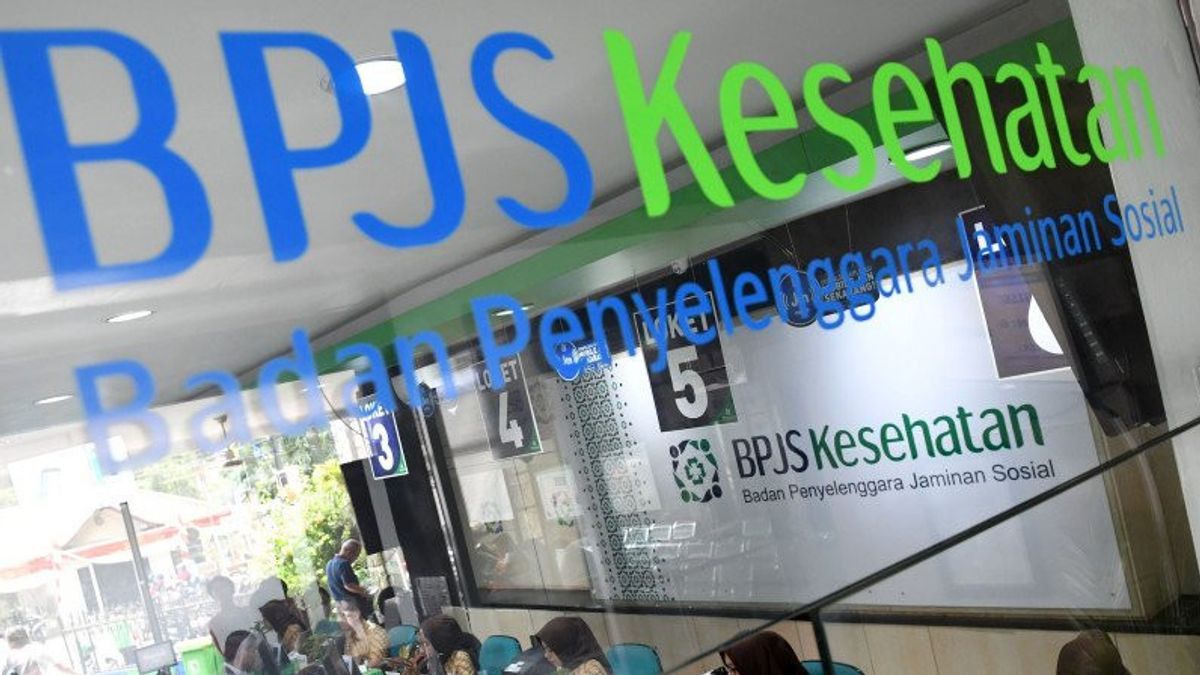


JAKARTA - Member of Commission IX of the House of Representatives Nurhadi responded to the discourse on increasing BPJS Health dues next year, as stated by the government in Book II of the Financial Note and the 2026 State Revenue Budget Draft (RAPBN). If this discourse is implemented, Nurhadi reminded not to have an impact on subsidies for the community.
"If the dues burden is increased, subsidies for the poor or vulnerable must be strengthened, not cut," Nurhadi told reporters, Wednesday, August 20.
According to Nurhadi, the increase in BPJS Kesehatan contributions is not just a number, but also concerns the sustainability of access to people's health services, especially the poor and vulnerable groups.
"The state must not give up its responsibilities just because of fiscal calculations," said Nurhadi.
Nurhadi reminded that the government cannot use an efficient reason to close public access to get JKN.
"Health is the basic right of citizens, not commodities. Therefore, financing policies must not close public access to JKN for reasons of efficiency alone," said the legislator from the East Java VI electoral district.
Nurhadi also assessed that the Government must fix the governance and efficiency of BPJS Kesehatan first, not make the increase in contributions a shortcut. According to him, there are many potential leaks, inefficiency, and overlapping health programs that must be taken care of.
"The principle of fiscal justice demands the weak side of the state," said Nurhadi.
He also encouraged a comprehensive audit of BPJS Health management. In addition, said Nurhadi, integrated services with a digital system that is transparent, and improving service quality are also needed.
"Don't let the people be forced to pay more expensive for services that are more complicated and disappointing. The government must be able to ensure that the increase in BPJS Health contributions must be in line with improving health services and facilities," concluded Nurhadi.
Previously, Minister of Finance Sri Mulyani stated that BPJS Kesehatan contributions needed to be adjusted in order to maintain the sustainability of the National Health Insurance (JKN) program, which has been the mainstay of millions of Indonesians.
SEE ALSO:
-
 | BERITA
Pemerintah Bantah Kenaikan PBB di Daerah Akibat Efisiensi Anggaran Pusat
20 Agustus 2025, 07:06 -
 | EKONOMI
Bos BGN Sebut Anggaran Makan Gratis Rp335 Triliun Buat Beli Bahan Baku
20 Agustus 2025, 05:35 -
 | LIFESTYLE
Ahn Hyo Seop Bicara Potensi Sekuel KPop Demon Hunters, Perankan Jinu Lagi?
20 Agustus 2025, 03:25
However, the Government said it would not increase BPJS fees simultaneously, but rather gradually by considering people's purchasing power and state fiscal conditions.
The Minister of Finance also explained that the financing scheme must be comprehensively drawn up so that it remains balanced between the three main pillars, namely participants, the central government, and local governments. The increase in contributions is also expected not to cause turmoil in the community, therefore the Government chooses a gradual approach so that adjustments remain measurable.
The English, Chinese, Japanese, Arabic, and French versions are automatically generated by the AI. So there may still be inaccuracies in translating, please always see Indonesian as our main language. (system supported by DigitalSiber.id)
Most Popular Tags
#Prabowo Subianto #donald trump #2026 World Cup #Febrie Adriansyah #8791Popular


