
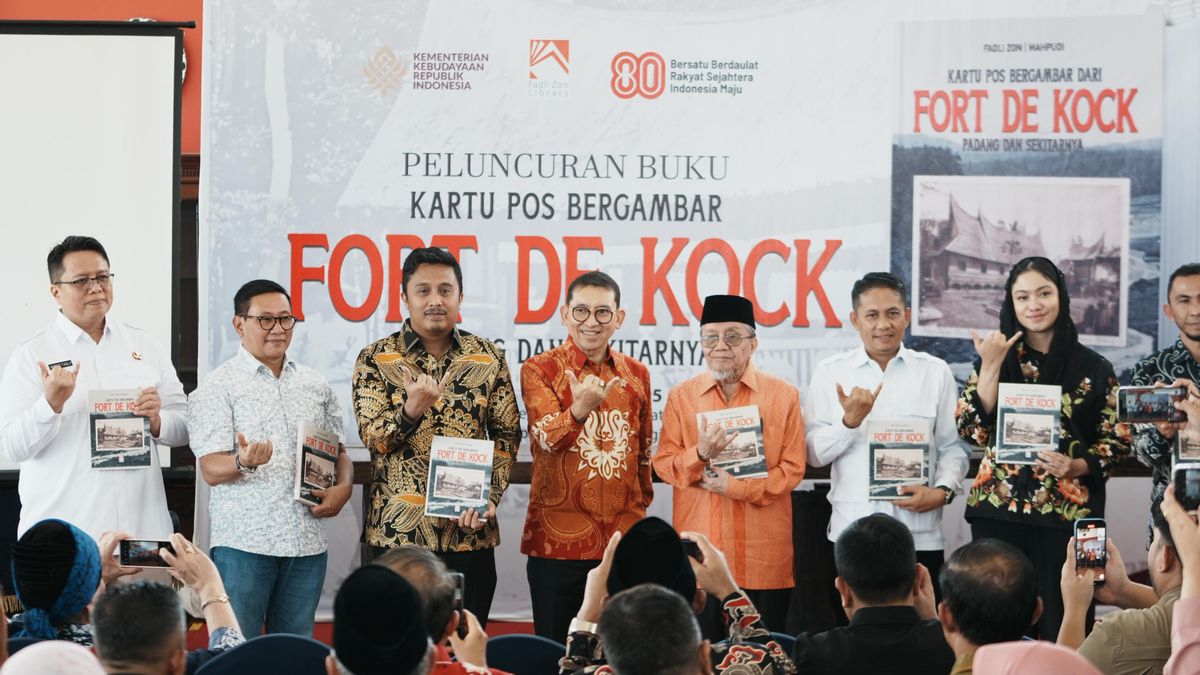


TANAH DATAR – Minister of Culture, Fadli Zon, launched the book "Illustrated Postcards of Fort de Kock, Padang and Surrounding Areas" at Aie Angek Cottage, Tanah Datar Regency, West Sumatra, on Saturday, August 2. This book is the second volume in the Illustrated Postcards of the Dutch East Indies series by Fadli Zon and Mahpudi, following the launch of "Buitenzorg" in March 2025.
The book contains 205 postcards from the Dutch East Indies era, depicting the landscape, life, and civilization of West Sumatra from 1890 to 1940. The main focus is the Fort de Kock area (now Bukittinggi), Padang, and other areas such as Payakumbuh, Sawahlunto, Solok, and Padang Panjang.
"These postcards used to be a way for people to say hello—short, visual, and full of stories. We knew where someone was, whether they were missing someone, or simply to say hello," said Fadli Zon at the launch.
Fadli explained that each image in the book is more than just an illustration. It contains a narrative of the past that helps readers imagine West Sumatra at the beginning of the 20th century, before the digital era erased the romanticism of visual communication.
Fadli explained that the name Fort de Kock itself comes from General de Kock—a colonial legacy that later became part of Bukittinggi's historical identity.
The book launch was highlighted by an exhibition of vintage photographs of Fort de Kock and its surroundings, organized by the Regional Cultural Preservation Center III. This exhibition reinforced the book's role as a medium for education and inspiration for historical exploration.
The event was attended by several prominent figures, including cultural figure Taufik Ismail, the Deputy Governor of West Sumatra, the Mayor of Bukittinggi, and representatives of academics and students. In addition to witnessing the launch, they also revisited historical fragments through small, meaningful images.
"We hope this book opens the door to re-exploring West Sumatra, not only physically but also through memory and culture," concluded Minister Fadli.
The English, Chinese, Japanese, Arabic, and French versions are automatically generated by the AI. So there may still be inaccuracies in translating, please always see Indonesian as our main language. (system supported by DigitalSiber.id)


