
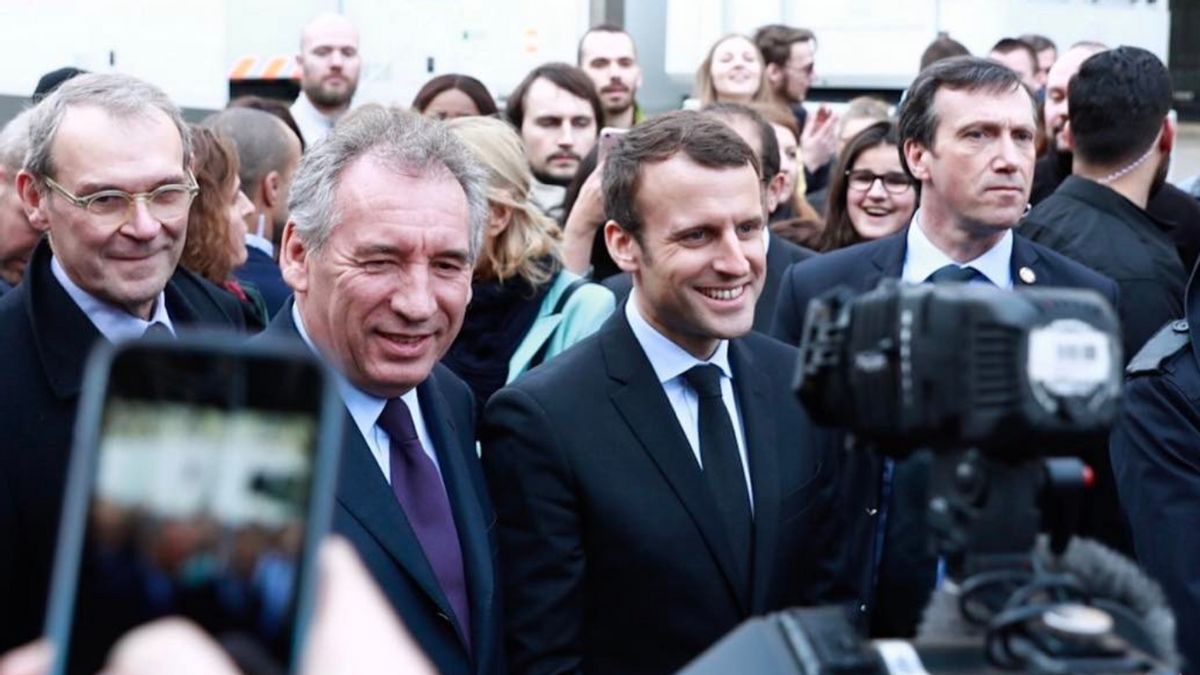


French Prime Minister Francois Bayrou will outline a 40 billion euro budget cuts on Tuesday, with opposition parties threatening to overthrow his minority government if they feel the budget cuts are too drastic.
President Emmanuel Macron has assigned Bayrou to improve public finances with a 2026 budget, after his move to hold an impromptu legislative election last year resulting in a divided parliament so as not to be able to cope with a surprising surge in tax spending and deficits.
While Bayrou had previously tried to warn France of great sacrifices was inevitable, although the defense budget would be allowed to upgrade next year.
The pressure, which will be explained in detail, will likely include freezing most of the social benefits while some tax breaks are likely to be limited.
Bayrou, a veteran, must persuade opposition ranks in the split French parliament to at least tolerate cuts in its budget or risk facing a disbelieving motion as it toppled its predecessor in December over the 2025 budget.
When announcing a new increase in the defense budget on Sunday, Macron urged lawmakers not to trigger a no-confidence motion, saying the December motion had cost the company and hampered defense development by delaying the 2025 budget.
"The vote has postponed the defense budget. Now the government must allocate the necessary funds on time so that we can continue to innovate more quickly, to produce faster," Macron said.
The left-wing parties are likely to reject the cuts in welfare, while the extreme far-right party warns of a broad budget freeze that is unfair to French nationals and could encourage them to oppose Bayrou's plans.
SEE ALSO:
-
 | BERITA
Israel Serang Suriah, Janji Lindungi Warga Druze dari Pasukan Pemerintah
15 Juli 2025, 18:47 -
 | BERITA
Terus Bertambah, Data PBB Catat 875 Orang Gaza Tewas Saat Antre Bantuan
15 Juli 2025, 17:11

In the last two years of his second term, the dramatic deterioration in public finance could tarnish Macron's legacy.
As an out-of-political person, he was first elected in 2017 on promises to divide the right and left sides and modernize the second-largest economy in the euro zone by cutting taxes and growth-friendly reforms.
The crisis that has occurred in a row starting from protests, COVID-19, and uncontrolled inflation have shown he has failed to change the country's overspending habits.
Bayrou is targeting a reduction in the budget deficit from 5.4% of GDP this year to 4.6% by 2026, and is ultimately targeting a 3% European Union fiscal deficit by 2029.
With interest payments potentially the largest budget spending, financial markets and rating agencies are eager to see if Bayrou can pass his plans in parliament without triggering another political collapse.
The English, Chinese, Japanese, Arabic, and French versions are automatically generated by the AI. So there may still be inaccuracies in translating, please always see Indonesian as our main language. (system supported by DigitalSiber.id)
Most Popular Tags
#Prabowo Subianto #donald trump #2026 World Cup #Febrie Adriansyah #8791Popular


