

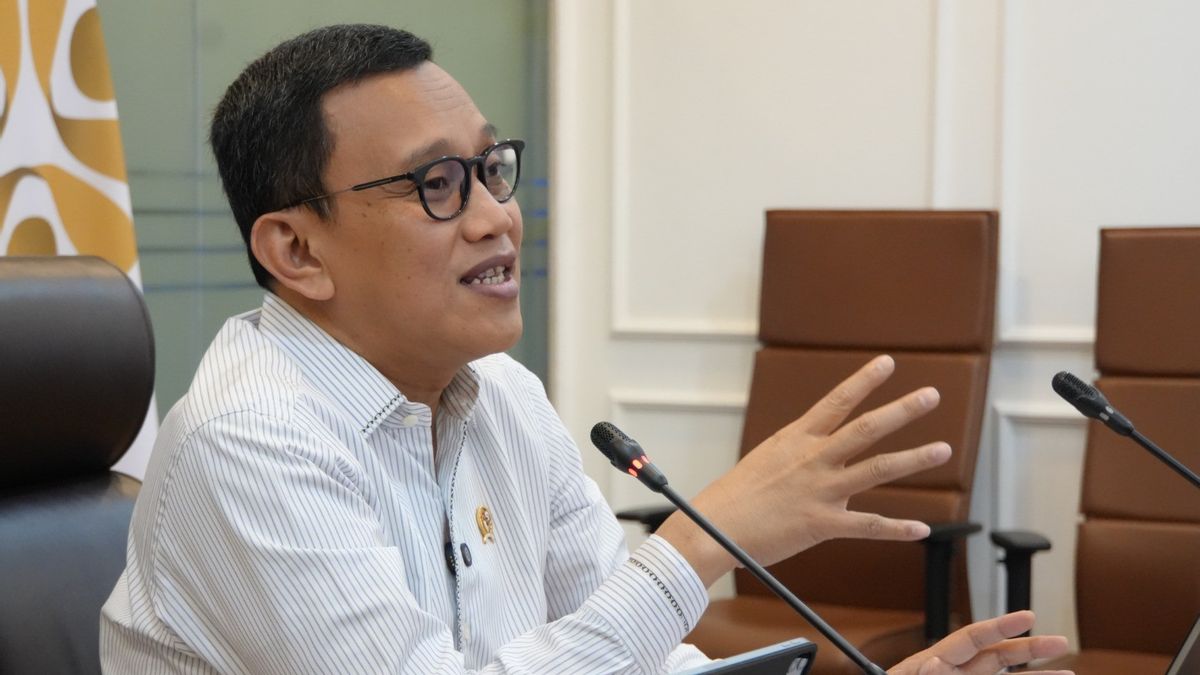


JAKARTA - Minister of Protection of Indonesian Migrant Workers (P2MI), Abdul Kadir Karding, encourages internship programs abroad to be regulated through a one-door scheme. The goal is to prevent the practice of placing undercover cheap workers.
"Because internships have been carried out all this time, without data collection. We don't know the quality of their preparation. So in the future, we will arrange it," said Karding when receiving a visit from the Founder of Bosowa Group, HM Aksa Mahmud, at the KemenP2MI office, Tuesday, July 15.
The matter of sending interns abroad is known to be under the authority of the Ministry of Manpower. Therefore, Karding has discussed with the Minister of Manpower to synergize the arrangement of the internship scheme.
This affirmation follows a number of cases of violations of the law involving Indonesian citizens (WNI) who are interns in Japan, including robbery of the elderly and theft at school.
The internship period which lasted for two to three years resembles a full working period, and is often used as a gap by companies in destination countries to earn cheap labor without official work contracts.
"Work and internships are different. If you work, the contracts are clear and the sales are better. Well, this is what we want to arrange so that there is no covert mode from the placement country," he said.
Even so, Karding has no intention of banning foreign internships. Only reorganizing the system so as not to be misused.
One of the schemes offered is to make internships a transitional route to formal work.
"For example, an internship was only a year ago appointed as a permanent worker who was registered as a migrant worker. Or return to Indonesia and work at a company that sends it," he explained.
KemenP2MI juga tengah mendorong kolaborasi dengan sektor swasta, termasuk Bosowa Grup, untuk meningkatkan kualitas sumber daya manusia (HR) yang akan ditempatkan di luar negeri.
So far, the majority of Indonesian migrant workers are domestic workers. Karding assessed that it was time for Indonesia to send more skilled workers who were trained professionally before leaving.
"We are very open if Bosowa wants to invest in HR training. This can be part of Bosowa's development as well, because after two years of working abroad, they can return and become an important part of the company," he said.
"So we change the paradigm: from internship to worker. The salary is better, and they come home with knowledge, skills, and new enthusiasm," said Karding.
The English, Chinese, Japanese, Arabic, and French versions are automatically generated by the AI. So there may still be inaccuracies in translating, please always see Indonesian as our main language. (system supported by DigitalSiber.id)
Most Popular Tags
#Prabowo Subianto #donald trump #Febrie Adriansyah #8791 #giias 2026Popular


