

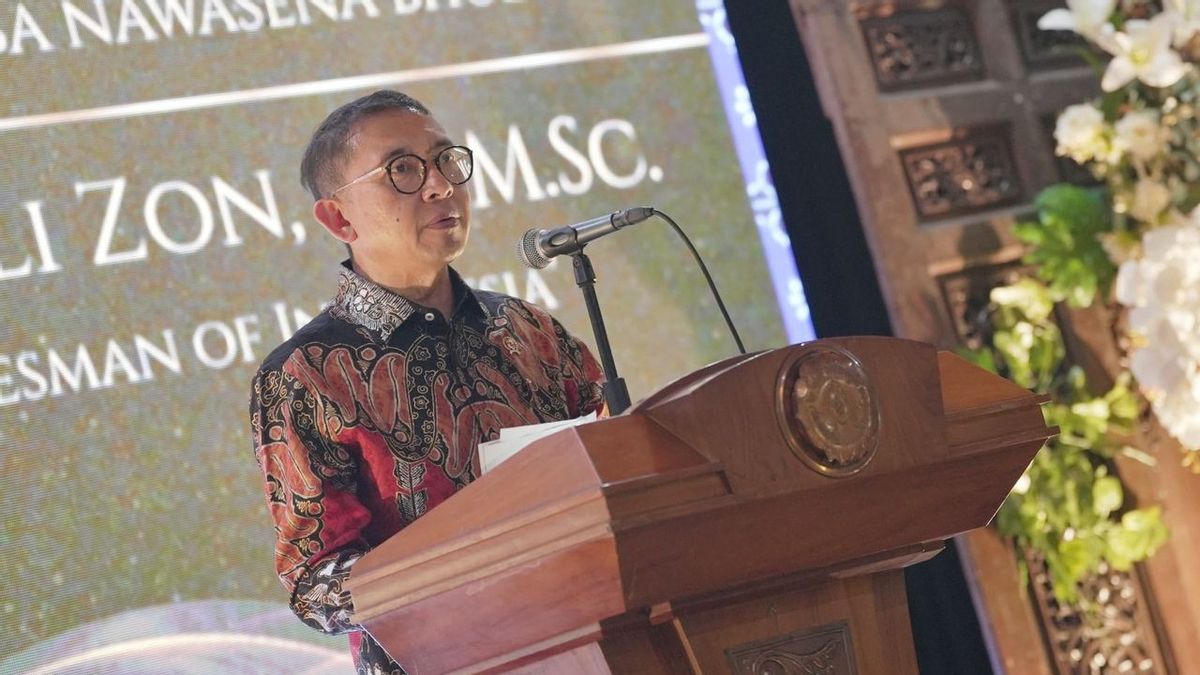


JAKARTA - The Minister of Culture, Fadli Zon expressed his appreciation to the public who are increasingly concerned about history, including the era of the reform transition in May 1998. According to him, the riots on May 13-14, 1998 did raise a number of disagreements and various perspectives including the presence or absence of mass rape. Even the investigative coverage of a leading magazine cannot reveal strong facts about this mass'.
Likewise, said Fadli, the TGPF report at that time only mentioned numbers without solid supporting data, both name, time, event, scene or perpetrator. This is where caution and accuracy are needed because it involves the truth and the good name of the nation. Don't let us embarrass the name of the nation itself.
"I certainly condemn and strongly condemn various forms of bullying and sexual violence against women that occurred in the past and are still happening today. What I convey does not negate various losses or eliminate the suffering of victims that occurred in the context of riots May 13-14, 1998," explained the Minister of Culture in a written statement received Monday, June 16.
Fadli further said, "On the other hand, all forms of violence and sexual bullying against women are violations of the most basic human values, and must be a serious concern for every stakeholder."
Menbud Fadli in a public interview highlighted specifically the need for accuracy and academic care framework in the use of the term mass rape, which can have serious implications for the nation's collective character and require strong fact-based verification.
This statement is not in order to deny the existence of sexual violence, but rather emphasizes that history needs to rely on the legal facts and evidence that have been tested academically and legally. It is important to always adhere to legally and academicly tested evidence, as is common in historical practices. Especially regarding numbers and terms that are still problematic.
According to him, the term 'masal' has also been the subject of debate among academics and the public for more than two decades, so that sensitivities around the terminology must be managed wisely and empathically. Various crimes occurred in the midst of riots May 13-14, 1998, including sexual violence. However, related to mass rape, caution is needed because the data on the incident has never been conclusive.
Responding to concerns regarding the disappearance of the women's narrative in the book History of Indonesia, Fadli said that the accusation was not true. On the contrary, one of the main enthusiasms for writing this book is to strengthen and affirm the recognition of the role and contribution of women in the history of the nation's struggle.
SEE ALSO:
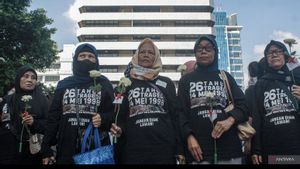


In the development of writing until May 2025, discussions on the movement, contributions, roles, and issues of women have been substantially accommodated in the structure of the narrative of history. The themes discussed include, among others,: the emergence of women's organizations during the national revival period, including the 1928 Women's Congress as well as the role of women's organizations as mass organizations; the contribution of women in diplomatic and military struggles; women's dynamics from time to time; the elimination of domestic violence, to empowerment and gender equality in the framework of sustainable development (SDGs).
Finally, Fadli also invited the public to be involved in dialogue in a healthy and constructive manner, as part of joint efforts to build a narrative of Indonesia's history that is civilized, just, reflective, and continues to grow. He also expressed readiness to have direct dialogue with various groups of people, to listen to further aspirations and inputs.
"The principle of openness, public participation, professionalism and accountability will certainly remain the basis for the preparation of history. We will hold open public discussions to receive input from various circles, including women's leaders and communities, academics, and civil society," said Menbud Fadli Zon.
'History is not only about the past, but also about our responsibilities in the present and future. Therefore, let's make it a common space for building learning, empathy, and unifying power,' he concluded.
The English, Chinese, Japanese, Arabic, and French versions are automatically generated by the AI. So there may still be inaccuracies in translating, please always see Indonesian as our main language. (system supported by DigitalSiber.id)
Most Popular Tags
#Prabowo Subianto #donald trump #2026 World Cup #Febrie Adriansyah #8791Popular


