
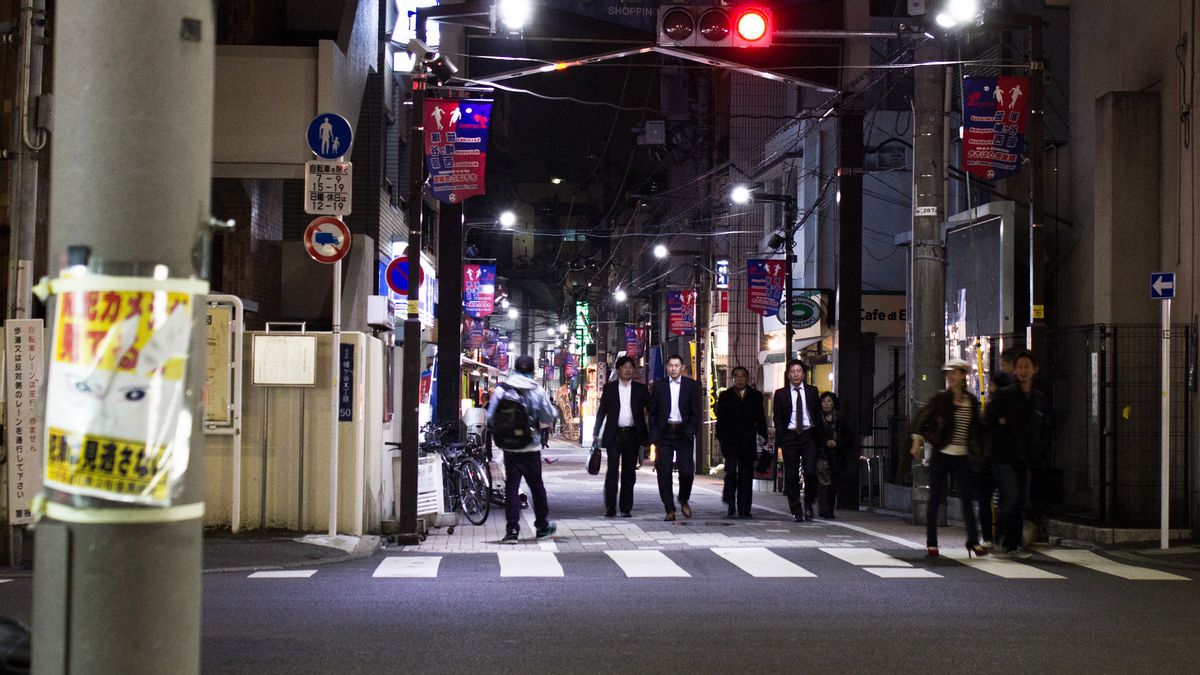


Four people were arrested for operating an OWN office too close to a library in Tokyo, Japan, last week.
The suspects, aged 55 to 77, "conspiracyed" to operate the office from June 2024 to February 2025, "although the area is within a radius of 200 meters around the library," police said in a statement.
The city has strict rules about where an office can operate, as part of their campaign to eradicate organized crime.
The oldest man, 77 years old, is a "member of an organization affiliated with the Sumiyoshi-kai organized crime syndicate," Japan's largest group said in a statement.
In Tokyo, jantung offices are not allowed to operate within 200 meters of schools, children's welfare centers, community halls, museums, experimental offices, and family courts and libraries.
Companies should not hiredic members as guards, offer rewards for their services, or sign any contracts with a chain that "encourages" their activities.
The impact of the increasingly stringent rules is the shrinking ofnic groups, which are currently mostly the main news for disbanding, pursuing a new law-abiding life, or pledging to behave well.
In April, Japan's largest hate crime syndicate Yamaguchi-gumi pledged to end its long-term war with rival factions after police stepped up surveillance and restricted their activities.
The three senior gang members handed over letters to police containing promises to "end all internal fights" and "would never cause trouble," police told CNN.
Known for its hierarchy and strict code of honor, why also known as boryokudan is involved in everything from extortion and money laundering to drug trafficking.
Far from underground organizations, many of them are registered with the police and have representative offices across the country.
The National Police Agency (NPA) even listed the business addresses of somemen's organizations on their websites; for example, Sumiyoshi-kai's main office is located in the luxurious Akasaka District of Tokyo, not far from the parliament building.
During his heyday in the 1960s, badminton operated internationally and had more than 184,000 members, according to NPA.
SEE ALSO:
-
 | BERITA
Maskapai Emirates Luncurkan Penerbangan Tambahan untuk Haji dan Iduladha
24 Mei 2025, 12:00




However, their numbers have continued to decline over the past few decades following police crackdowns to curb their activities.
While they are still legally allowed to exist, regulations make it difficult for gangsters to survive because it becomes illegal to recruitmen, pay them, or share profits with them. In fact, getting a cell phone contract and renting out apartments becomes more difficult.
In 2024, the number of organized crime syndicate members fell below 20,000 for the first time to a record low of 18,800, according to police data.
The English, Chinese, Japanese, Arabic, and French versions are automatically generated by the AI. So there may still be inaccuracies in translating, please always see Indonesian as our main language. (system supported by DigitalSiber.id)
Most Popular Tags
#Prabowo Subianto #donald trump #2026 World Cup #Febrie Adriansyah #8791Popular


