


Effective waste management is a challenge for many regions, including Kudus Regency, Central Java.
To overcome this problem, Sidorekso Village was used as a pilot in an effort to manage plastic waste by turning it into fuel oil (BBM) using pyrolysis technology.
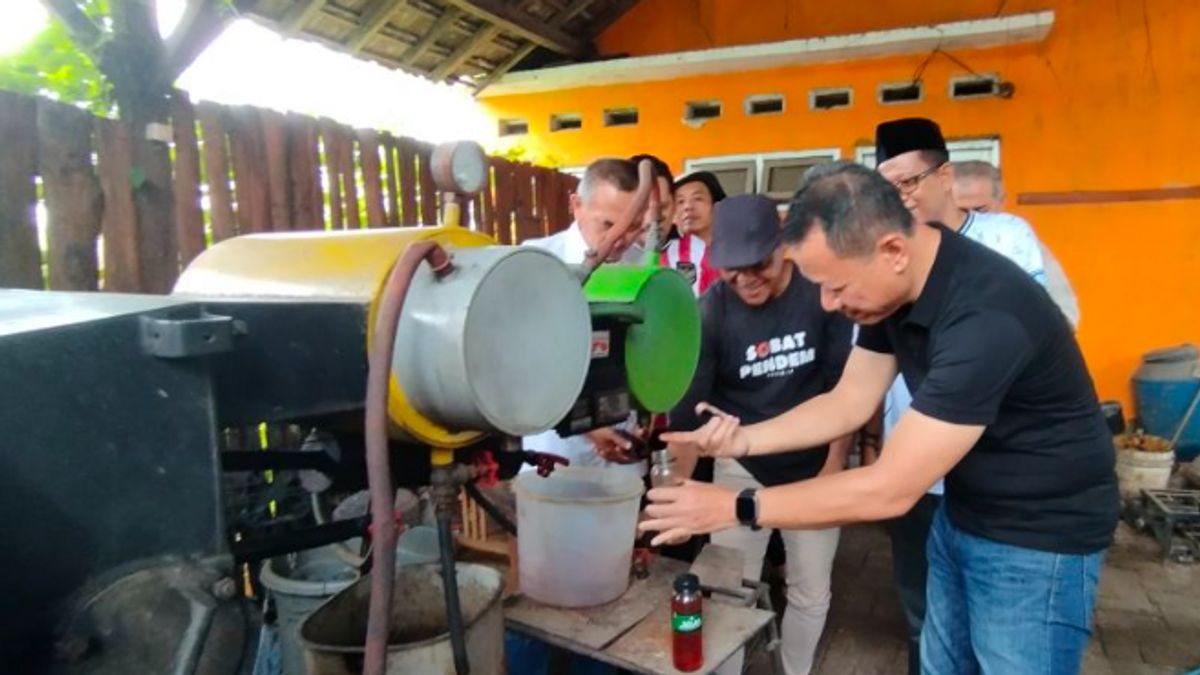
"We are committed to assisting villages in optimizing the use of this pyrolysis machine so that the benefits can really be felt, especially in reducing waste problems," said Kudus Regent Samani Intakiris when directly reviewing pyrolysis equipment in Sidorekso Village, Kaliwungu District, Kudus Regency, as quoted by ANTARA.
Accompanied by the Kaliwungu sub-district head Satria Agus Himawan and the Sidorekso village head, the Regent said that if this program is proven effective, a similar tool can be applied in other villages to process plastic waste into fuel.
However, continued Samani, the success of this program really depends on the willingness of the community to sort waste before processing. Therefore, support from various parties is needed.
As a form of commitment, the Sidorekso Village Government has implemented rules in the form of sanctions for residents who do not sort waste. Residents who do not follow this rule will not get a waste collection service.
SEE ALSO:

With the application of pyrolysis technology, the volume of waste that previously reached 3.5 tons per day can be reduced by about 20 percent because plastic waste is processed into fuel.
"For organic waste, it has collaborated with PT Djarum Kudus to be processed into organic fertilizer. Meanwhile, the residual waste that cannot be processed is only about 20 percent left," he explained.
In the future, the Kudus Regency Government plans to apply for assistance to the central government to obtain tools with a larger capacity so that plastic waste processing in this area can be more optimal.
Sidorekso Village Head, Mochamad Arifin, emphasized that the success of this program depends on public awareness in sorting waste into plastic, organic, and residual categories before being disposed of.
With the presence of pyrolysis machines, villages can also save operational costs because the resulting diesel can be used to move village waste sorting machines.
This tool has a processing capacity of about 50 kilograms of plastic waste per day and is capable of producing around 30-35 liters of fuel.
The oil produced from the pyrolysis process is in the form of kerosene, which can then be further processed into gasoline or diesel. Before being used, this fuel must go through a process of clarity using soil bentonites or minerals to remove dirt and thick substances that are still contained in it.
The English, Chinese, Japanese, Arabic, and French versions are automatically generated by the AI. So there may still be inaccuracies in translating, please always see Indonesian as our main language. (system supported by DigitalSiber.id)


