


JAKARTA - The latest flagship SUV from Lynk & Co, namely 900, has successfully passed a series of multiple hit tests broadcast live on CCTV, China's largest state television station. The hit test of a six-passer car specifically designed for this family is focused on the safety of the third row, an area often occupied by children.
Lynk & Co 900, which is scheduled to launch at the end of March, is a flagship SUV with a plug-in hybrid powertrain. This car was first introduced in China in January 2025. With a power of 630 kW (845 hp), Lynk & Co 900 is also the first mass production car to use Nvidia Drive Thor SoC with a computational capability of 1,000 TOPS.
It was reported that CarNewsChina, March 19, Lynk & Co 900 underwent two very challenging collision tests. First, a test of the back collision with a speed of 100 km / h, far exceeding the C-NCAP standard of only 80 km / h. This car managed to absorb collision energy 1.56 times the standard set. Second, a third-line side-braking test with a speed of 100 km / h, where this car was able to withstand the collision energy four times the C-NCAP standard which was only 50 km / h.
The results are evident if the car structure remains sturdy, the passenger safety room is maintained, and there is no risk of a fire. This hit test was carried out and passed by the China Automotive Engineering Research Institute (CAERI). This success cannot be separated from the Spa Evo platform, the result of a collaboration between Lynk & Co and Volvo, which is now owned by Geely.
SEE ALSO:
-
 | OTOINFO
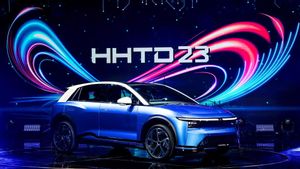
Foxconn Berencana Bangun 4 Kendaraan Listrik Baru, 2 Model dari Merek Jepang
19 Maret 2025, 15:18

Please note, Lynk & Co was previously a combined brand between Geely and Volvo. However, in 2025, Geely's Zeekr Technology acquired Volvo shares. Thus, Lynk & Co no longer has a formal relationship with the Swedish car manufacturer.
It should also be noted that statistical data on car accidents in China shows that the death rate of third-line passengers reached 34 percent, 5.7 times higher than the average. Severe injury rates also reached 62 percent. This makes third-line safety a major concern, especially in six-passenger cars widely used by families with two children, the number of which continues to increase in China after the elimination of the one-child policy.
The English, Chinese, Japanese, Arabic, and French versions are automatically generated by the AI. So there may still be inaccuracies in translating, please always see Indonesian as our main language. (system supported by DigitalSiber.id)
Most Popular Tags
#Prabowo Subianto #donald trump #Febrie Adriansyah #8791 #giias 2026Popular


