



JAKARTA - The Joko Widodo (Jokowi) government often talks about agrarian reform. The desire is so that land ownership in Indonesia is not owned by the rich. This step is seen as being able to make farmers and indigenous people have land to support their livelihoods.
Jokowi also tried to direct the division of land to a wider segment. He targeted the division of state land to ormas and pesantren. A step fully supported by the Indonesian Ulema Council (MUI).
Agrarian reform is a thing that is often discussed in the Jokowi era. The narrative is even contained in Jokowi's Nawacita program. He wants land ownership and use to not only belong to the wealthy.
Those who belong to indigenous people, groups, businesses, and farmers - especially agricultural workers - cannot taste it. This condition makes the government want to move to reduce land inequality and provide legal certainty (certification) of land.
Jokowi also thought about giving state land to be managed by the community. He revealed that the government has 12.7 million hectares of forest land that can be used by the community since 2016. He wants to immediately distribute these lands.
"12.7 million hectares that we will continue to share with the community, with the people, with farmers, with indigenous people, so that the people really enjoy the wealth of our forests. What we are giving now is indeed in terms of a very small number."
"Because what is in my pocket is 12.7 million hectares. I emphasize that the state is present to protect the original values of our nation, the state is present on the side of the community, to the people who are weak in their bargaining position, especially the customary law community," said Jokowi as quoted by the lamankompas.com, December 30, 2016.
Land distribution was initially focused on indigenous people. He considered this effort as part of the state's presence in recognizing the traditional rights of indigenous people. This step is supported by many parties.
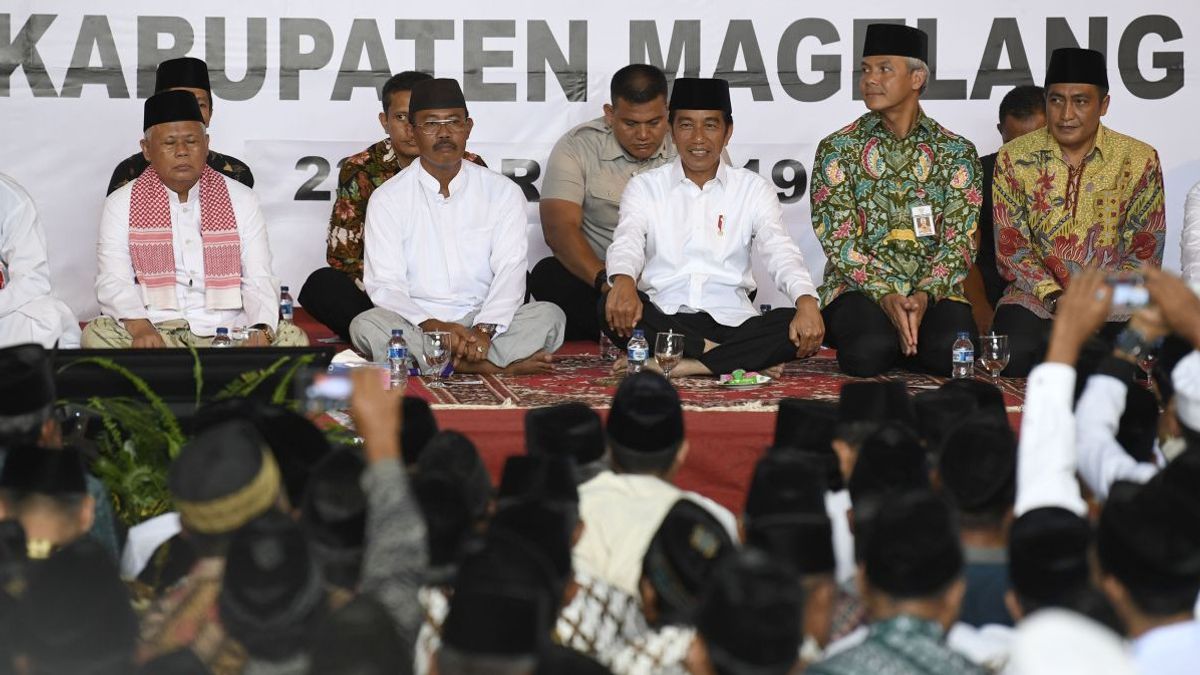
Jokowi also tried to direct the plan to provide land to a wider segment. Jokowi plans to provide land to ormas and pesantren. Jokowi considers this a form of the state being present in the improvement of the economy of the people. He does not want state land to be used only by large corporations.
The narrative is considered unfair. Later, the government can provide land of 10 thousand hectares to 15 hectares to each organization and pesantren. However, Jokowi emphasized that all of them are aimed at building the economy of the people, not for other things.
MUI's blessingJokowi's plan to distribute land to organizations and pesantren has its pros and cons. Those who are against it feel that the government should focus on distributing to farmers and communities in other areas such as the indigenous people in Papua.
Those who support organizations and pesantren can get no less land. MUI is one of them. MUI considers Jokowi's move as a surefire step in reducing social inequality in Indonesia. This narrative can make Muslims empowered.
MUI also asked the government not only to provide land from former corporations. However, the government is expected to also provide sleeping land such as Perhutani's to be managed by mass organizations, boarding schools, and others.
MUI also supports the government's move to invite mass organizations and pesantren to collaborate with national entrepreneurs. This condition can create a profitable partnership. As a result, everyone can feel the benefits of the government's goodness.
At its peak, MUI stated its readiness to facilitate mass organizations and pesantren who want to cooperate with national entrepreneurs. The narrative is so that Jokowi's program can run well. Even though in its implementation it has not been fully realized.
"MUI welcomes and is happy with President Jokowi's plan to distribute 12.7 million hectares of land for organizations, pesantren and others. To succeed in this program, there needs to be a strategic partnership and a big effort. A partnership that needs each other. "
"According to MUI, it is no longer time to dichotomize between indigenous and non-indigenous people. It is time for us to be determined to unite our strength for the success of the Unitary State of the Republic of Indonesia (NKRI). MUI will also facilitate Islamic organizations and national entrepreneurs to work together," said Chairman of the MUI Central Economic Empowerment Commission, M Azrul Tanjung as quoted by ANTARA, April 25, 2017.
The English, Chinese, Japanese, Arabic, and French versions are automatically generated by the AI. So there may still be inaccuracies in translating, please always see Indonesian as our main language. (system supported by DigitalSiber.id)
Most Popular Tags
#Prabowo Subianto #donald trump #firearm #8791 #giias 2026Popular


