

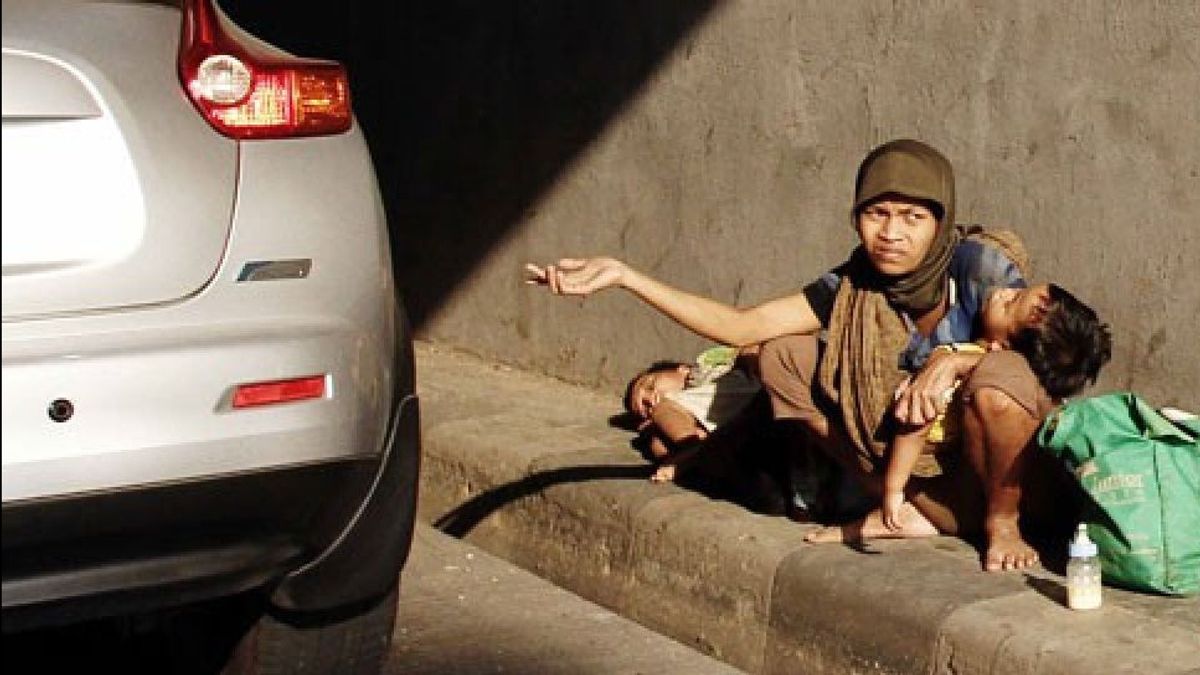


JAKARTA Memories of today, four years ago, October 30, 2021, the Indonesian Ulema Council (MUI) of South Sulawesi (Sulsel) issued a fatwa against giving money to beggars. The fatwa came out because the habit of giving money to beggars on the streets could fertilize laziness.
Previously, the emergence of beggars on the streets of big cities in Indonesia, especially Makassar, became the concern of many people. His presence is considered evidence that the government is not working well. This condition made the South Sulawesi MUI demand that the government empower beggars.
The mandate of Article 34 Paragraph 1 of the 1945 Constitution cannot be underestimated. This article confirms that the poor and neglected children are cared for by the state. This means that the state has a big responsibility in maintaining the poor to meet their basic needs.
In fact, he said otherwise. The presence of the Pangemists is a grim portrait of the face of the capital city. It is a sign that the local government is not working well. They asked for money on the streets and tarnished the face of the city.
Not to mention some of them don't care about safety so they endanger themselves and other motorists. The narrative also appears in Makassar, South Sulawesi. The portrait of people begging on the streets seems to have become a daily sight.
The local government has been confused. The Makassar City Government has issued special regulations for the development of beggars and street children. Or more completely present at the Makassar City Regulation Number 2 of 2008.
Isi emphasized that beggars are prohibited from begging, let alone carrying the names of orphanages and the like in order to get money. The regional regulation also asks the security forces to ensure that there are no more residents who give money to street children.
The giving of money is seen as not educating. Those who want to help beggars live deserve to be asked to hand over their assistance to social institutions.
SEE ALSO:
-
 | MEMORI
Mahfud MD Bela Prabowo Subianto Jadi Menhan dalam Memori Hari Ini, 25 Oktober 2019
25 Oktober 2025, 12:30



All because beggars on the streets will be more comfortable and lazy if they are given continuous money. The poor will not think about fighting and finding a decent job.
Every person or group of people is prohibited from begging on behalf of social institutions or orphanages and beggars who use tools in public places that can threaten their safety, security and smooth use of public facilities," contains Article 48 paragraph 1 of the Makassar City Regulation Number 2 of 2008.
The presence of the Regional Regulation did not really make Makassar free from beggars. The effectiveness of the regulations from year to year is questioned. The South Sulawesi MUI also tried to take it seriously. The group of South Sulawesi clerics finally agreed to issue a haram fatwa to those who gave money to beggars on October 30, 2021.
The fatwa was present in the MUI Fatwa Number 01 of 2021. MUI prohibits people from giving money to beggars because they are considered not educating good characters. Beggars will tend to be lazy and do not want to move to find other jobs because they are satisfied with beggars.
The presence of the haram fatwa also contains demands that the government immediately empower those who beg, as mandated by the 1945 Constitution. The government must know that the presence of beggars on the streets is the fruit of the failure of local governments to prosper the community.
First, it is forbidden to exploit people to beg. Second, for givers, it is forbidden to give to beggars on the streets and public spaces because they support those who exploit beggars and do not educate good characters. If there are beggars on the road, it is a sin for the government. There should be no view of beggars on the streets," said the General Secretary of the South Sulawesi MUI, Muammar Bakri as quoted by the muisulsel.or.id page, October 30, 2021.
The English, Chinese, Japanese, Arabic, and French versions are automatically generated by the AI. So there may still be inaccuracies in translating, please always see Indonesian as our main language. (system supported by DigitalSiber.id)
Most Popular Tags
#Prabowo Subianto #donald trump #firearm #8791 #giias 2026Popular


