

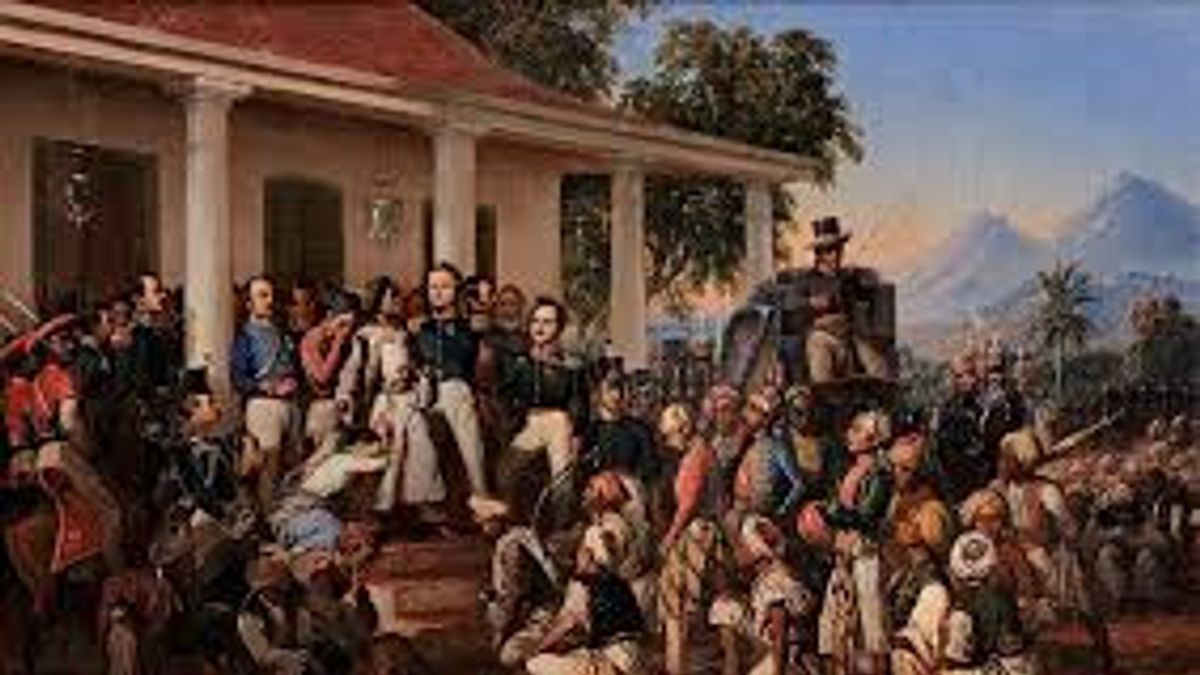


YOGYAKARTA - The Dutch colonialism in the archipelago was colored by various forms of people's resistance that reflected the spirit to achieve independence and justice. The resistance led by Prince Diponegoro became one of the monumental.
This resistance not only reflects resistance to colonial rule, but also resistance to injustice, and destruction of cultural values of the Javanese people.
The Diponegoro war lasted from 1825 to 1830. This war is often referred to as the Javanese War because it not only occurs in Yogyakarta but also extends to many areas in Java. But before discussing the cause of the Diponegoro War, we need to first know the figure of Prince Diponegoro.
Prince Diponegoro was born with the names Bendara Raden Mas Mustahar on November 11, 1785. He is the son of Sultan Hamengkubuwono III and RA ManANGkawati. Despite having royal lineages, Diponegoro is known as a person who prefers simple, religious, and away from the palace's political intrigue.
Since he was young, he spent more time outside the palace, precisely in Tegalrejo, a place he considered calm and more in line with Javanese Islamic and cultural values which he upheld.
Prince Diponegoro's spiritual life and simplicity have made him a figure who is highly respected by the people. He is known as a leader who is wise, intelligent, and cares deeply about the suffering of the people due to colonial policies that oppress him.
In May 1825, the Dutch Resident for the Yogyakarta region, Anthonie Hendrik Smissaet ordered the construction of a road passing through the Tegalrejo area. Without permission, Dutch workers installed wooden stakes across the tomb area of Prince Diponegoro's ancestors.
This action is considered a major insult, not only to Diponegoro individuals, but also to Javanese cultural values that have great respect for ancestral graves. Prince Diponegoro ordered the people to revoke the stakes.
However, this action was replied to by Residen Smissaert by re-mounting the stakes. As a form of symbolic resistance, Diponegoro's followers then revoked the stakes and replaced them with spears, marking their readiness to fight. This incident triggered the outbreak of the Diponegoro War.
Apart from the particular reasons above, Diponegoro's resistance in general is an accumulation of deep dissatisfaction with colonialism, injustice, and insults to cultural values committed by the Dutch colonialists.
The Dutch are increasingly daring to interfere in the internal affairs of the palace, ranging from the appointment ofpatih to the appointment of the king. When a small Hamengkubuwono V took the throne, the Dutch formed a Trustees Council that carried out more power based on colonial interests. There was polarization between pro-Dutch groups and groups that rejected foreign influence, including Prince Diponegoro.
In addition, the Dutch-style hedonistic lifestyle began to penetrate the palace. Liquor, parties, and irregularities from customs are becoming common among aristocrats. This has caused anxiety among scholars and religious leaders, including Diponegoro, who strongly uphold Islamic values.
SEE ALSO:
-
 | TEKNOLOGI
AS Ancam Lanjutkan Larangan TikTok Jika China Tidak Hentikan Tuntutan Tarif dan Teknologi
16 September 2025, 02:05


Not only that, the Dutch colonial policy added to the suffering of the people by implementing various burdensome taxes such as house transfer taxes, land taxes, livestock taxes, and tax on the number of doors. In difficult economic conditions, these taxes are very suffering for the small people.
Seeing the circumstances above, the Diponegoro War became a symbol of the Javanese people's resistance to the arbitrariness and injustice of Dutch colonial colonialism. Prince Diponegoro's struggle was recorded as one of the greatest forms of resistance in the history of the Indonesian nation.
The English, Chinese, Japanese, Arabic, and French versions are automatically generated by the AI. So there may still be inaccuracies in translating, please always see Indonesian as our main language. (system supported by DigitalSiber.id)
Most Popular Tags
#Prabowo Subianto #donald trump #firearm #8791 #giias 2026Popular


