

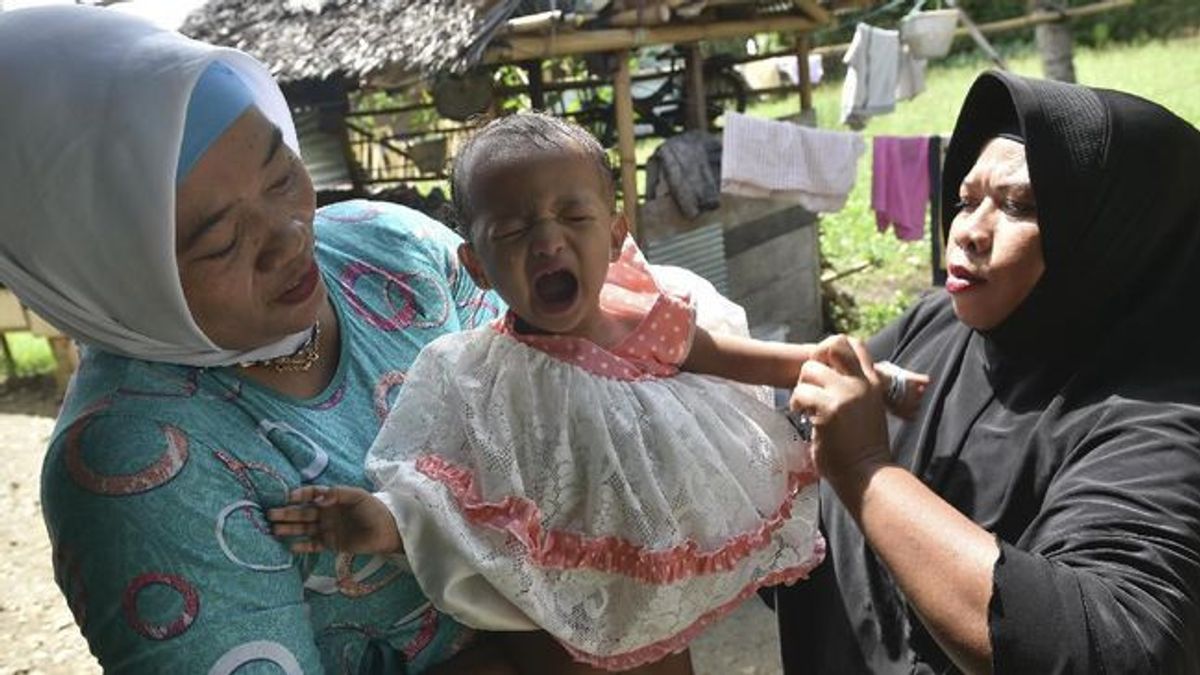


JAKARTA Memories of today, 12 years ago, January 20, 2013, the Indonesian Ulema Council (MUI) confirmed that women's endings (sunates) are makah rumah. This means that women's endings are considered recommended worship. This condition confirms that women's endings cannot be prohibited in Indonesia.
Previously, many countries in the world began to ban the practice of women's finals. This practice is considered to bring many harm and no benefit. Recently, the Ministry of Health (Kemenkes) wanted to prohibit the practice of women's finals in Indonesia.
The practice of women's circumcision is often pros and cons. Religious groups consider khitan to have abundant benefits, from health to fertility. Medical groups are different again. Khitan women are considered to have no benefits at all. The disadvantage is actually hoarding.
Khitan is believed to be able to interfere with psychological, sexual health, and women's reproduction. The big disaster then became the background of the United Nations (UN) to promote the prohibition of women's final practices.
The United Nations called the practice of women's circumcision to be part of genital mutilation (Female Genital Mutilation: FGM) in 2010. The world was asked to prohibit women's final practices. Indonesia is asked to take a stand. The discourse on prohibiting women's circumcision began to be discussed everywhere.
However, the discourse on banning was increasingly blurred when the Minister of Health, Endang Rahayu Setyaningsih, issued Permenkes No. 1636/2010. It contained procedures and technique and only what part could be cut.
Since then it is believed that the practice of circumcision has increased. People think that this practice has been approved by the government. Everything changed when Nafsiah Mboi became Minister of Health from the 2012-2014 era. He considered the existence of women's circumcision practices to be unjustified.
The practice of women's circumcision does not bring benefits. Women are considered victims. He wanted to prohibit the practice of female circumcision.
"In principle, it is clear that we object to FGM. It is unacceptable. More symbolic. Some are placed on a knife or what is just scratched. As far as we know, no one really circumcises women's genitals," said Nafsiah as quoted on the BBC Indonesia website, November 26, 2012.
The discourse on banning women from being criticized by MUI. The ulama institution considers that the prohibition against women's circumcision is considered to violate the 1945 Constitution. An important product of the Indonesian nation which guarantees citizens to practice their respective religious teachings, including women's endings.
SEE ALSO:
-
 | MEMORI
Memori Pantai Indah Kapuk dan Berkurangnya Hutan Bakau di Pesisir Utara Jakarta
18 Januari 2025, 07:45 -
 | MEMORI
Ahok Tegaskan ISIS Ajaran Setan dalam Memori Hari Ini, 17 Januari 2016
17 Januari 2025, 16:00 -
 | MEMORI
Dari Emil Salim ke Rizal Ramli: Kisah Pejabat Penolak Proyek Reklamasi Pesisir Jakarta
17 Januari 2025, 08:20


MUI emphasized that the legal woman's ending was makah (the recommended place of worship) on January 20, 2013. However, the practice of saktan was not excessive. It only removes the membranes that cover the clitoris section.
"The legal women's relatives are between mandatory, sunnah and makah. Especially for women's endings, including the motherland, namely the recommended worship. There are several countries that are excessive, but what we are doing is not excessive. Therefore, we strongly reject the prohibition of women's endings because they violate the law. "
"What we reject is the prohibition of the sentence, because no one cleric prohibits the sentence. The trick is only a few skins, indeed there are those who are thrown away, that is what is being questioned like in Africa, but in Indonesia it is in accordance with the hadith of the Prophet," said the Chairman of the MUI Fatwa Commission, Ma'ruf Amin as quoted on the detik.com page, January 20, 2013.
The English, Chinese, Japanese, Arabic, and French versions are automatically generated by the AI. So there may still be inaccuracies in translating, please always see Indonesian as our main language. (system supported by DigitalSiber.id)
Most Popular Tags
#Prabowo Subianto #donald trump #firearm #8791 #giias 2026Popular


