


JAKARTA - Now more and more restaurants are not only offering delicious dishes, but also bringing stories or concepts that you never expected.
One of them is a restaurant concept that involves the elderly, a figure who is often looked down upon to provide a more warm and family-like dining atmosphere like at grandma's house.
Departing from this spirit, Uma Oma Group presents Uma Oma Heritage in the Menteng area, Central Jakarta. Continuing the foundation that has been built through Uma Oma Cafe in Blok M, this restaurant serves Nusantara dishes in the guise of a more elegant, comfortable, and meaningful dining experience.
From the beginning, Uma Oma was known for its typical Nusantara dishes that are familiar to the tongue and present elderly workers as part of a warm and personal experience.
At Uma Oma Heritage, the concept is developed deeper, blending into every aspect from taste, service, to the atmosphere offered to visitors.
"We continue from what we have built before. We want to bring this feeling that is close to many people into a stronger and more tangible form, both in terms of culinary and the experience felt by guests," said Firhan Salam, Co-Founder of Uma Oma Group in his presentation in Jakarta, Thursday, April 2.
Through exploration of various regions in Indonesia, this restaurant rearranges home recipes passed down from the kitchens of "Grandmothers" in various parts of the archipelago. Each dish is processed by maintaining the authenticity of traditional taste and cooking techniques, presenting a sensation like enjoying home cooking, but with a more classy presentation.
Some of them are ayam betutu, itiak lado mudo which is a processed duck with typical Minangkabau green sambal, typical Cirebon empal gentong, authentic Oma black squid, to swamp flower kangkung.
"From the taste of food, to the warmth of Oma's greeting for her beloved grandchildren (a term for visitors), this place is designed so that visitors can feel emotional closeness, while enjoying a well-curated culinary experience in the city center," said Firgan.
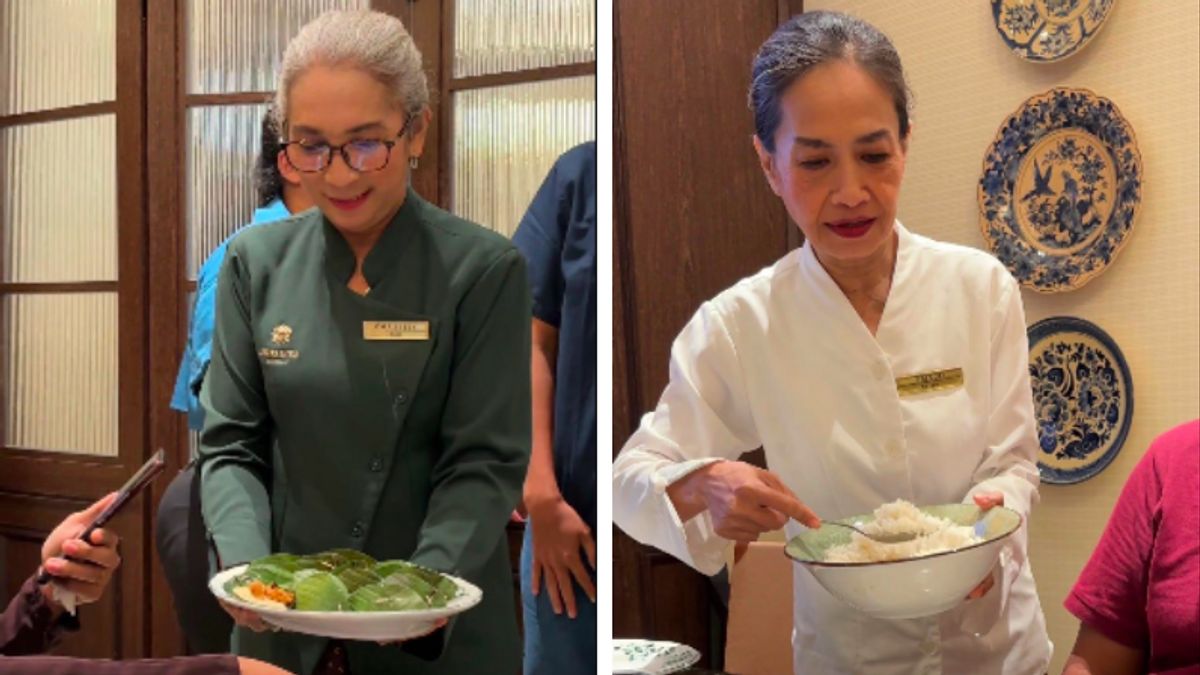
Uma Oma Heritage looks different with the presence of elderly workers who are familiarly called Oma. They are not just part of the operation, but become the face of hospitality that guests feel directly through warm interactions, sincere attention, and life stories they share.
More than that, the presence of the elderly is not only about food tastes, but also about empowerment.
"We want to show that Oma can also rise in class with us. Not only the food we raise, but also the opportunity for them to learn, contribute, and remain active in a more professional hospitality environment," he added.
This initiative is a continuation of the commitment that has been built since Uma Oma Cafe. Empowering the elderly is an important part of the brand's identity, which is now strengthened as a sustainable social movement. This approach shows that inclusion is not just an additional concept, but part of the way they operate.
This is also in line with the changing demographic conditions of Indonesia. Data from the Central Statistics Agency projects that the number of elderly will reach around 65 million by 2045. This condition opens up a great opportunity to create a more inclusive space, where the elderly can still play an active role in society.
"For us, this is not just a momentary step, but a long-term commitment. We believe that when given the right space, Oma has so much to share, and their presence enriches the guest experience," said Firhan.
The presence of the Oma also brings a real story that inspires. Oma Masliah now plays the role of a hostess and rediscovers the spirit to interact with many people.
Oma Juwita, who was previously active in the social sector, still brings the same warmth in serving guests. Meanwhile, Oma Lauren, a former badminton athlete, brings new energy in every greeting.
"Here we not only work, but also continue to learn and grow. We feel valued, trusted, and can share back what we have, both through cooking and stories," said Oma Lauren.
The dining experience with Oma-Oma is also enriched with interactive elements such as Oma's Kitchen. Here, visitors can witness the process of making traditional cakes and snacks from the archipelago.
This interaction creates a closeness that is rarely found in modern restaurants, while strengthening the relationship between taste, process, and story. More than just a place to eat, Uma Oma Heritage is part of a grand vision through the development of the Oma Foundation, an initiative focused on training and empowering the elderly so that more and more individuals can remain active and independent.
Through these various implementations, this restaurant also tries to present an experience that not only indulges the tongue, but also touches the heart. Now, Uma Oma Heritage has officially opened to the public, inviting the community to briefly feel the warmth of Grandma's house.
The English, Chinese, Japanese, Arabic, and French versions are automatically generated by the AI. So there may still be inaccuracies in translating, please always see Indonesian as our main language. (system supported by DigitalSiber.id)
Popular


