
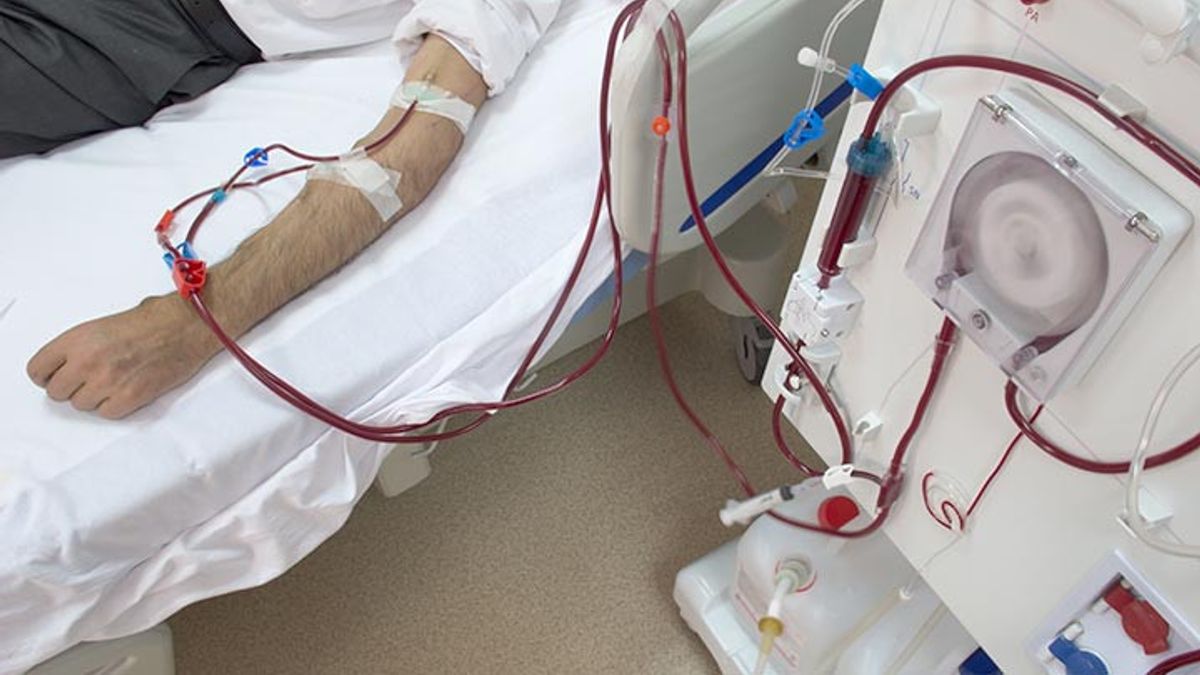


YOGYAKARTA - Every Muslim who has met the requirements is required to perform the fasting during the month of Ramadan. Therefore, it is important for every Muslim to understand the things that can invalidate fasting. One question that often arises is whether undergoing blood transfusion or hemodialysis can invalidate fasting.
To answer this question, the explanation needs to be seen from the perspective of fiqh while considering the patient's health condition. Here is the explanation.
Does Washing Blood Cancel Fasting?In the study of fiqh, there are several things that are explicitly said to be able to break the fast. In one of the studies that aired on the Al Bahjah TV YouTube channel, Al Bahjah Dakwah Development Agency Caretaker KH Yahya Zainul Ma'arif or Buya Yahya explained that there are nine things that can break the fast.
One of them related to bloodletting is to deliberately put something into the five holes of the body, namely the mouth, nose, ears, and two drainage channels.
Buya Yahya explained that blood cleansing does not invalidate fasting because the process is carried out through the blood vessels in the arm with the help of medical equipment, not through the five body holes mentioned above.
However, this issue cannot be seen only from the perspective of the law of breaking the fast. In Islam, a person's health condition is also an important consideration in carrying out worship. Islamic law provides relief for those who are sick or have physical difficulties.
The patient's body condition is generally weak after undergoing blood purification and requires regular intake of fluids and nutrients. Therefore, fasting for some patients can actually worsen their health condition.
In this situation, Islam gives relief to the sick person not to fast. If fasting has the potential to endanger health or doctors advise against fasting, then a person is allowed to leave fasting.
Buya Yahya explained that patients who are already in the stage must undergo dialysis are no longer required to fast. He emphasized that a person does not need to force himself if his health condition does not allow it and the day follows the doctor's instructions.
"If people are in the blood-washing class, they are not obliged to fast. Don't fast, it's not a sin either because you're in the blood-washing class. Maybe he wants to fast, yes, don't force him to fast if he shouldn't fast. Follow the doctor's instructions. We have to obey the doctor, the doctor's fatwa is a matter of health. Don't pretend to want to worship, this is Ramadan worship, but if the doctor forbids it, you will even sin," explained Buya Yahya.
Furthermore, Buya Yahya explained that patients can replace the fasting that was left on another day if the condition improves at some point. This replacement of fasting is known as qadha. This is done when a person is able to carry out fasting well again.
However, if the disease experienced is chronic and does not allow him to fast throughout his life, then there are other provisions in the sharia. In this case, a person is enough to pay fidyah as a substitute for fasting that was left behind. Fidyah usually takes the form of feeding one poor person for each fasting day that was not carried out.
So that's the discussion about the law of blood washing while fasting, follow other interesting articles at VOI.ID. So as not to miss the latest news, follow and monitor our social media accounts!
The English, Chinese, Japanese, Arabic, and French versions are automatically generated by the AI. So there may still be inaccuracies in translating, please always see Indonesian as our main language. (system supported by DigitalSiber.id)
Most Popular Tags
#Prabowo Subianto #donald trump #firearm #8791 #giias 2026Popular


