
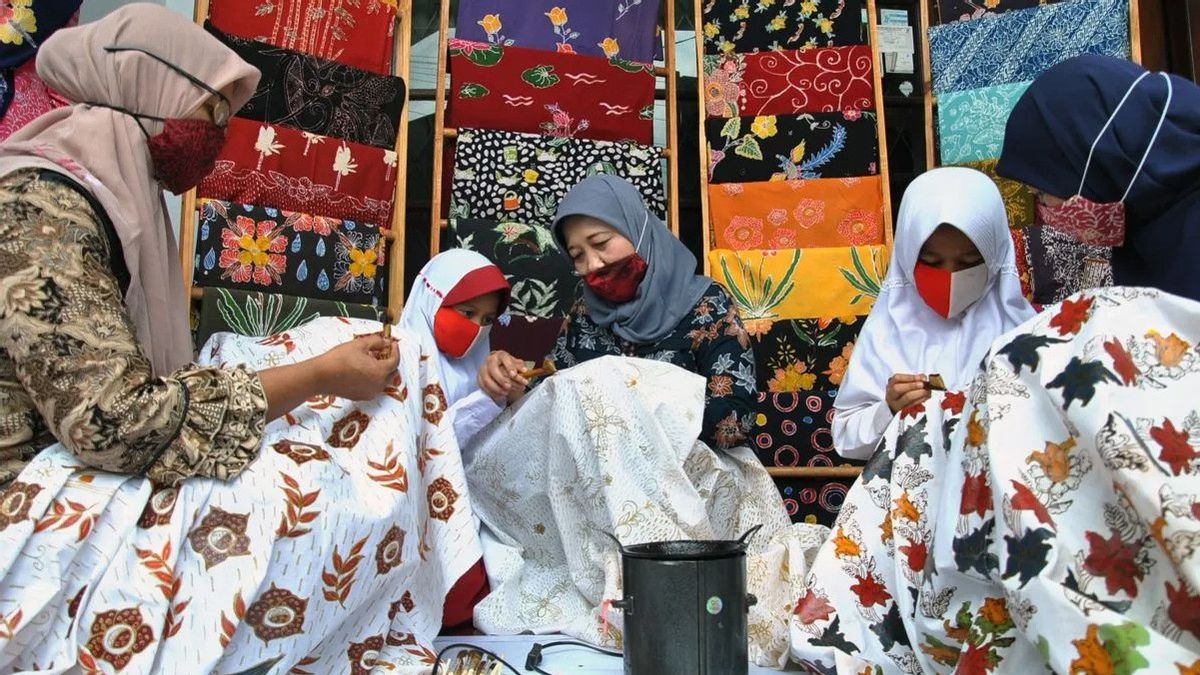


YOGYAKARTA - Natural dyes for batik are the favorite choice of batik craftsmen because they come from natural materials, are environmentally friendly, and are able to produce distinctive colors with high artistic value.
In the midst of increasing environmental awareness, the use of natural-based dyes is back in vogue, especially in hand-painted batik and cap batik which prioritize quality and authenticity of color.
Knowing Natural Dyes for BatikNatural dyes or Natural Colorants (ZWA) are pigments obtained from natural sources such as plants, animals, and minerals without synthetic materials.
Unlike chemical dyes, natural dyes are safer for humans and the environment and produce distinctive color nuances that are difficult to imitate synthetically.
Reported by VOI from the website of the Central Handicraft and Batik Center, there are several main advantages of natural dyes, among others:
safe for skin and environment, produces soft and aesthetic colors, supports the production of sustainable batik which is increasingly in demand by the market. Types of Natural Dyes for BatikIn addition, there are several types of natural dyes that can be categorized based on their sources, as follows:
PlantsThe pigments from the plant parts are very commonly used:
The wood of the red-colored bright red, the skin of the jalawe fruit produces a greenish yellow, the indigo paste gives a dark blue color.In addition, coal leaves, suji leaves, and teak leaves are also often used to add color variation.
AnimalsThen there are some dyes derived from small organisms such as cochineal, which produce red or purple colors.
MineralsPigments from minerals such as tungstite (ferrous sulfate) can produce a dark or blackish color.
Sources of Common Natural Coloring AgentsInterestingly, Indonesia is rich in natural dyes that are spread in various regions, including:
Wood: dark reddish brown Mahogany wood: yellowish red brown Fruit seeds: reddish orange Jalawe skin: greenish yellow Indigo paste: dark blueRead also the article History of National Batik Day: From UNESCO Recognition to a Symbol of National Pride
All the materials mentioned above provide flexible color variations for batik designs.
Equipment and Process of Natural Batik Dyeing Basic EquipmentTo batik, you need several tools that are needed, including:
brushes, buckets, basins and dipping tools for dyeing, auxiliary tools such as canting, cap, and gawangan for the batik process. How to Make Natural DyesWell, to make natural dyes on the batik you are going to make, follow these steps:
Soak the dye material overnight to facilitate extraction. Boil the ingredients until boiling for about an hour. Filter the solution to be used as a dye. Repeat the process for a more concentrated color. Dyeing Process for Fabric Soak the mori fabric in the wetting solution. Dip into the natural dye solution, repeat according to the desired color intensity. Use the final mordant solution to make the color more durable. Rinse and dry the fabric. The Role of Mordan in Natural DyeingMordant is a substance that helps the dye stick more firmly to the fabric fibers. There are several types of mordants known, including:
Tawas (alum): neutral yellowish, Lime (gypsum): gives a reddish red, Tunjung (ferrous sulfate): dark color.The choice of natural dyes is not just aesthetics, but part of the environmentally friendly textile industrialization that is being encouraged. Natural sources reduce dependence on synthetic dyes that have a negative impact on water and soil.
In addition, natural dyes are also part of the principle of eco-fashion (sustainable fashion) and support traditional cultural values that are increasingly appreciated in the global market.
Thus, using natural dyes to batik not only enriches the color and art value of batik cloth, but also supports sustainable textile production.
The English, Chinese, Japanese, Arabic, and French versions are automatically generated by the AI. So there may still be inaccuracies in translating, please always see Indonesian as our main language. (system supported by DigitalSiber.id)


