
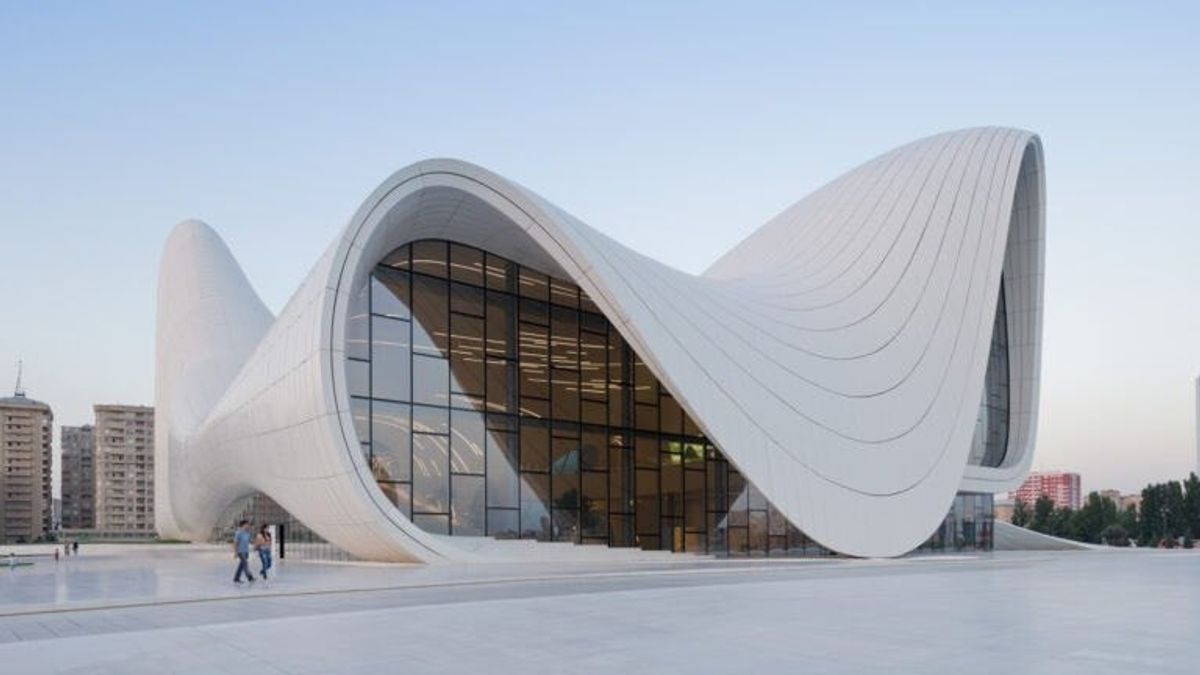


YOGYAKARTA - When it comes to building construction, the selection of materials is an important factor that affects the strength, aesthetics, and efficiency of the project. One of the materials that are now widely used is GRC walls. This material is known to be lightweight but still strong and flexible in design.
Many office buildings, shopping centers, and public buildings rely on GRC as a facade and interior element. Although it has many advantages, GRC walls also have a number of limitations that building owners need to know. Reported by Sound-Rite, here is the discussion.
What is GRC?Glass Fiber Reinforced Concrete or GRC is a special type of concrete reinforced with alkali-resistant glass fibers. This glass fiber serves as the main reinforcement that increases the tensile and bending strength of the material. Unlike traditional concrete, GRC does not rely on steel reinforcement.
GRC is generally used for non-structural applications such as facade walls, interior panels, and decorative elements. This material is designed for architectural needs that emphasize aesthetics and shape details. Therefore, GRC is very popular in modern buildings with complex designs.
Another advantage of GRC is its much lighter weight than conventional concrete. Despite being lightweight, its durability is still high so it is suitable for long-term commercial projects. It is this combination of strength and flexibility that makes GRC increasingly popular.
6 Advantages of GRC WallsMany architects choose GRC for several reasons that are difficult to find in other materials:
Lightweight with High StrengthGRC walls weigh up to 75 percent lighter than precast concrete. This light weight reduces the overall load of the building structure. However, the tensile strength and flexibility are maintained thanks to the glass fiber.
This advantage makes GRC ideal for multi-storey building facades and renovation projects. The transportation and installation process is also easier. This efficiency has a direct impact on construction time and costs.
Various Aesthetic FinishingGRC can be produced with various textures, colors, and surface patterns. From the appearance of natural stone to a subtle modern design, everything can be realized. This flexibility gives architects and designers great freedom.
The ability to print in detail makes GRC suitable for unique designs. The end result remains consistent without reducing the strength of the material. This makes GRC superior in aesthetics.
Good Crack ResistanceThe glass fiber in GRC serves to control microcracks. Small cracks can be minimized so that the appearance remains neat in the long term. This is important for buildings that are exposed to extreme weather changes.
This crack resistance also increases the service life of the material. GRC walls tend to be more stable than ordinary concrete. Long-term maintenance is also lighter.
Flexible in Design and ShapeGRC is easy to form following complex molds. Curvatures, sharp corners, and intricate details can be made with high precision. This is difficult to achieve using conventional concrete.
This flexibility makes GRC a favorite in modern architecture. Innovative designs can be realized without many technical limitations. The aesthetics of the building also become more prominent.
More Environmentally FriendlyThe lightweight weight of GRC reduces transportation and installation energy. In addition, its high durability reduces the need for material replacement. This helps reduce construction waste.
Several GRC products also use recycled materials. This use supports the concept of green buildings. GRC is also in line with the principles of sustainable construction.
Faster InstallationGRC panels are generally pre-fabricated in a factory. This process improves material quality control. On the project site, installation can be done quickly and efficiently.
Shorter construction time reduces labor costs. The risk of project delays can also be suppressed. This advantage is very important in large-scale projects.
4 Disadvantages of GRC WallsOf course, there is no perfect material. There are several aspects that need to be considered before deciding to use GRC:
Higher Initial CostThe price of GRC walls per square meter tends to be more expensive than ordinary concrete. This cost includes more complex materials and production processes. This is often a major consideration in budget planning.
However, the high initial cost is often comparable to the long-term benefits. The efficiency of installation and minimal maintenance can offset the initial investment. Therefore, GRC remains attractive for long-term projects.
Requires Skilled LaborThe installation and production of GRC requires special expertise. Errors in mixing or drying can reduce the quality of the material. Quality control is a very important aspect.
Without experienced personnel, the risk of material defects will increase. Therefore, choosing the right contractors and suppliers is very crucial. This can affect the final result of the project.
Not for Load-bearing StructureGRC is not designed to withstand major structural loads. This material is only used for non-structural architectural elements. Improper use can endanger the building.
Elements such as supporting columns or fixed foundations require conventional reinforced concrete. GRC should be functional according to its provisions. This understanding is important in the design planning stage.
Quality Can Be InconsistentThe quality of GRC is highly dependent on the production process. Uneven fiber distribution can cause weak points. In addition, incomplete drying can cause visual defects.
This problem usually arises if production standards are not maintained. Therefore, working with trusted manufacturers is highly recommended. Consistency of quality is the key to the success of using GRC.
So that's the discussion of the advantages and disadvantages of GRC walls, follow other interesting articles on VOI.ID. So as not to miss the latest news, follow and monitor our social media accounts!
The English, Chinese, Japanese, Arabic, and French versions are automatically generated by the AI. So there may still be inaccuracies in translating, please always see Indonesian as our main language. (system supported by DigitalSiber.id)
Most Popular Tags
#Prabowo Subianto #donald trump #2026 World Cup #Febrie Adriansyah #8791Popular


