
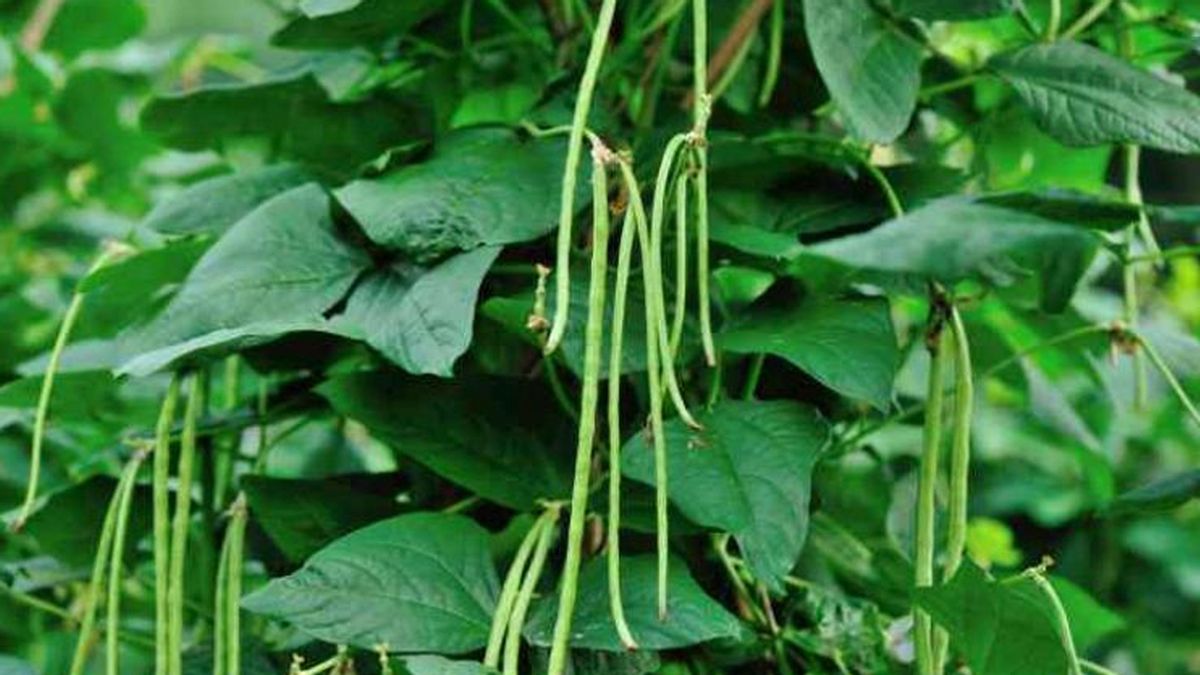


YOGYAKARTA - Long beans are one of the most popular vegetable plants in Indonesia. This plant is easy to find in various regions and is often used as the main or complementary ingredients in various traditional dishes, such as stir-fries, stir-fries, to lodeh vegetables. In addition to its delicious taste and crunchy texture, long beans are also rich in nutrients, such as vitamin A, vitamin C, vegetable protein, and fiber that are good for digestion. No wonder many people are interested in growing their own long beans, whether in agricultural land, home yards, or small-scale gardens. Planting long beans is relatively easy, as long as it is done with the right techniques and consistent care.
How to Plant Long BeansQuoted from the Mitra Tani website, the procedure for planting string beans is as follows:
Prepare the SeedsSeeds are one of the most important factors in growing broad beans. The selection of seeds must be done properly. Quality seeds are usually characterized by full filling, high germination, no damage, no pests and diseases. Make sure to check the expiration date before planting it when buying broad bean seeds at a farm store.
Land ProcessingImmediately process the land that will be used for planting after getting the best seeds. Dig the soil to a depth of 20-30 centimeters and leave it open for three to four days. Then sprinkle agricultural lime if the soil pH is less than 5. Don't forget to make planting beds and drainage channels. Next, mix the manure with the soil in the bed. Finally, cover the bed with plastic mulch and make planting holes.
PlantingHow to plant peas begins with digging a planting hole four to five centimeters deep. Put two peas seeds in one hole, then cover with a thin layer of soil. Set a string from a bamboo half that is 150-200 cm when the plant is two weeks old or when the plant is 25 cm tall.
Plant MaintenanceSeveral types of carrot plant maintenance that can be done to support growth and productivity include:
Replace dead plants or plants that do not grow well with better new plants.
Watering:Do watering using a watering can or drain water in the drainage channel.
Weeding:Clean the weeds that grow around the cultivation area. Weeding is usually done twice, namely after the plants are three weeks and six weeks old.
Pruning:Pruning is done to make the green bean plants not too bushy because too bushy plants can inhibit flowering.
Follow-up fertilization:Follow-up fertilization is given at 12 HST, 25 HST, and 35 HST. At 12 HST, NPK fertilizer 150 kg is given, at 25 HST, NPK fertilizer 100 kg and Urea 50 kg, and at 35 HST, NPK fertilizer 50 kg and Urea 100 kg.
Pest and Disease ControlPest and disease control can be done by means of integrated control, namely using superior varieties, mechanical, biological, and chemical control.
Harvest and Post-HarvestString beans can be harvested when they are 3.5 to five months old or according to their variety. Ready-to-harvest string bean plants usually have characteristics such as the size of the pod is maximum, easy to break, and the seed pod is not prominent. Harvesting can be done by cutting the fruit stalk with a sharp knife. After that, collect it in a special place and choose the best quality string beans. The most ideal harvest time is in the morning or afternoon.
Planting string beans is a relatively easy and profitable activity, both for personal consumption and as a farming business. Proper planting techniques and routine care will make string bean plants grow well and produce abundant harvests. Therefore, understanding how to plant string beans correctly is an important step for those who want to try gardening or farming vegetables independently.
That's the review of how to plant string beans. Hopefully useful. Visit VOI.id for other interesting information.
The English, Chinese, Japanese, Arabic, and French versions are automatically generated by the AI. So there may still be inaccuracies in translating, please always see Indonesian as our main language. (system supported by DigitalSiber.id)
Most Popular Tags
#Prabowo Subianto #donald trump #2026 World Cup #Febrie Adriansyah #8791Popular


