
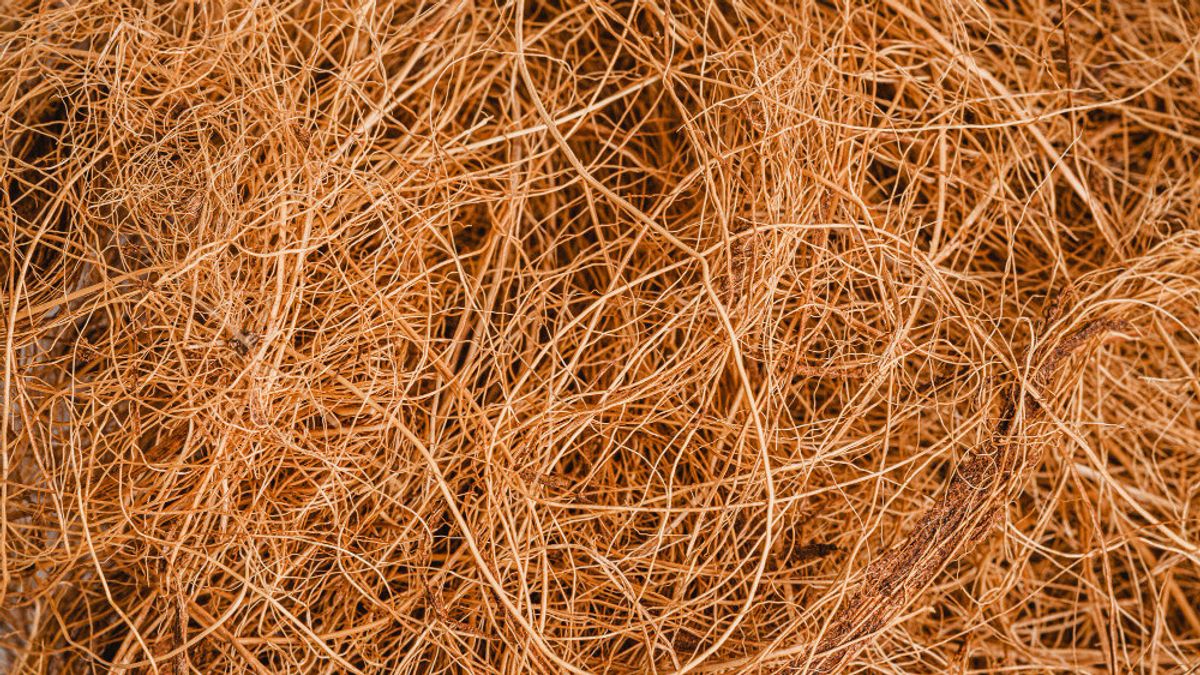


YOGYAKARTA - The creative industry is now starting to look at the use of natural fiber materials from plants as the main environmentally friendly material. In addition to its unique texture, this fiber provides high aesthetic value to every product.
Many people are not aware that the stems, leaves, and seeds of plants can be processed into functional products. The use of this organic material is a smart solution in maintaining the sustainability of our nature.
What is Natural Fiber from Plants?Reported by VOI from the BOSTON Scrub page, technically plant fibers are thick walled tissues that are widespread in seeded plants. The cells are slender with pointed ends and strong secondary walls.
The main function of natural fibers in plants is as a mechanical support so that plants can stand upright.
Interestingly, nature produces about 100 billion tons of cellulose every year, which makes it a much larger figure than the reserves of petroleum. Unfortunately, the potential of natural fiber materials from these plants has not been fully utilized optimally in the modern industrial biological cycle.
Types of Natural Fiber Materials Based on Their SourcesYou need to know, not all parts of plants produce the same type of fiber. Here are some of the main types that you need to know:
Bast FibersThese fibers are found in the stems of dicotyledonous plants. Popular examples are hemp, flax (linen), jute, and mulberry tree stem fibers. These fibers are separated through the process of soaking (retting). Its characteristics are very strong, so it is often used for high-quality clothing, ropes, to industrial fabrics.
Hard FibersDerived from the petiole or vein of the leaf, this fiber is usually more rigid and contains high lignin, such as sisal fiber. Due to its resistance to corrosion, leaf fibers are often processed into ship ropes, protective nets, to carpets.
Fruit Skin Fiber (Peel Fiber)The most common example is coconut coir. Although its texture is rough and not soft, this fiber has extraordinary physical strength. Currently, the fruit skin fiber is widely used for geotextiles (erosion control), sofa mattresses, to car interiors.
Also read the article discussing Secrets Revealed: The Group That Is the Seed Plant and Changes the World!
Seed FiberThese are the types most familiar to our daily lives, such as cotton and cotton. Cotton fiber is the most important civilian textile material in the world, while cotton is more commonly used as a filler material (furniture).
Wood and Root FiberWood from pine or poplar trees is often processed into pulp to make regenerated cellulose fibers. Meanwhile, root fibers, such as those from iris plants, although limited in quantity, are often used for the manufacture of industrial brushes due to their hard nature.
Advantages and Future of Natural FibersThe question is, why should we switch to natural fibers? In addition to the health aspect because it does not contain harmful chemicals, plant fibers offer comfort that synthetics do not have.
With technological advances, the limitations of traditional production are now beginning to be overcome. The trend of "back to nature" or back to nature also encourages new innovations in processing natural fiber materials from plants to be more efficient while maintaining ecological balance.
Natural fiber materials from plants are a historical legacy that is the key to the future of the green textile industry. From the roots to the seeds, every part of the plant offers a strong, beautiful, and most importantly: not harming the earth.
The English, Chinese, Japanese, Arabic, and French versions are automatically generated by the AI. So there may still be inaccuracies in translating, please always see Indonesian as our main language. (system supported by DigitalSiber.id)


