
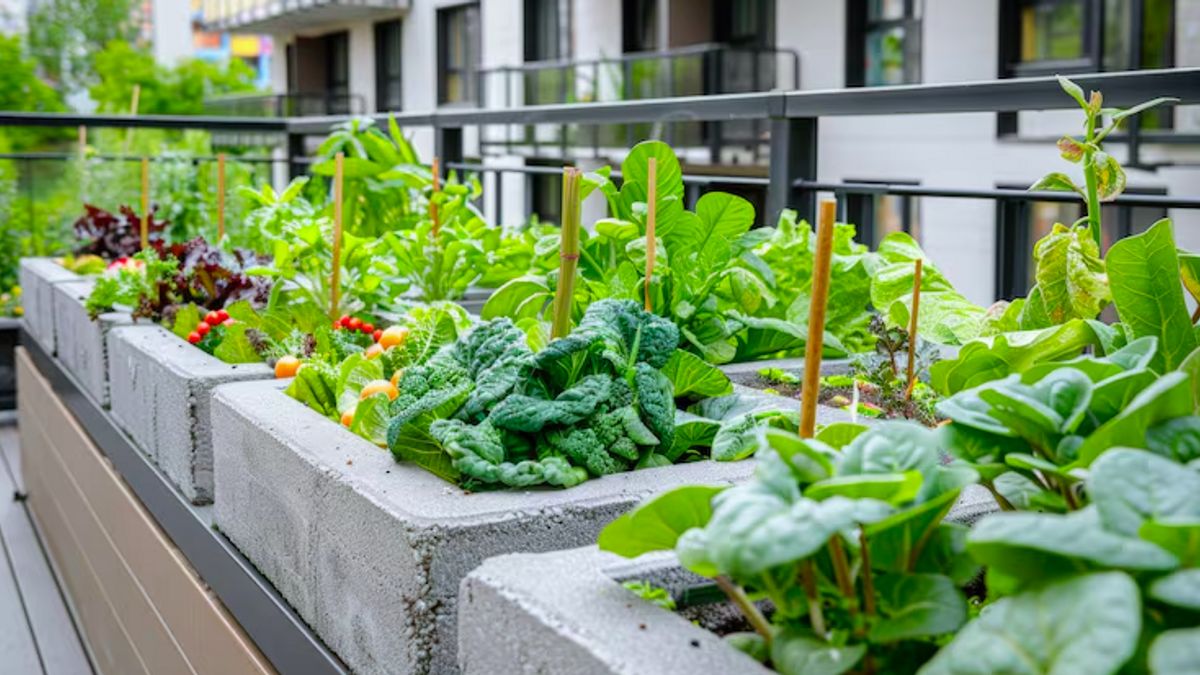


JAKARTA - Urban farming is actually not a complicated thing. In the midst of urban land constraints, the public still has many options to start planting, both in narrow yards, house terraces, balconies, to building roofs.
With creativity and the use of existing space, urban gardening activities can be carried out simply without requiring large capital.
In concept, the United Nations Development Programme (UNDP) defines urban farming as the production, processing, and marketing of food products intended to meet the needs of urban and metropolitan communities.
This activity utilizes land and resources available in and around the city, including waters and urban waste, with relatively intensive production methods to produce various agricultural and livestock products.
A similar view was expressed by Luc Mougeot (2001) who referred to urban farming as an agricultural activity that takes place in urban areas, suburban areas, and metropolitan areas.
The focus is on producing, processing, and distributing food materials by utilizing resources and materials in urban environments.
On the other hand, urban areas are currently experiencing an increase in population. This density has created various challenges, one of which is related to efforts to maintain food security for city residents.
Until now, cities tend to rely on food supplies from rural areas. This dependence has the potential to cause serious problems when there are disruptions in production due to drought, climate change, or distribution barriers.
In such conditions, urban areas become the most vulnerable areas to experience a food crisis.
On this basis, urban farming is seen as one of the strategic solutions to strengthen food security in urban areas. Unfortunately, there is still a perception that urban farming practices can only be carried out by those who have large land and large capital.
The assumption is not entirely correct. Urban farming can be run by anyone, including households and individuals, by utilizing limited land and relatively affordable costs. The terrace of the house, narrow yard, to the roof of the building can be a productive space to grow various food commodities. In fact, with the availability of more land, the potential for urban farming development is certainly greater.
The English, Chinese, Japanese, Arabic, and French versions are automatically generated by the AI. So there may still be inaccuracies in translating, please always see Indonesian as our main language. (system supported by DigitalSiber.id)
Most Popular Tags
#Prabowo Subianto #donald trump #firearm #8791 #giias 2026Popular


