


YOGYAKARTA - Boer goats are one of the most famous meat-producing goat breeds in the world. This breed is in high demand because it has fast growth and superior meat quality. It is not surprising that Boer goats are the main choice of farmers.
As the need for animal protein increases, interest in Boer goat breeding continues to grow. The following will discuss Boer goats, from history to its advantages as a meat-producing goat.
History of Boer GoatsAs reported by Grazing with Leslie, Boer goats were first bred by Dutch farmers in South Africa. The word "boer" comes from the Dutch language which means farmer. From the beginning, this breed was dedicated to meat production.
Boer goats began entering the United States in 1993. At that time, the US government lifted restrictions on the import of live goats and sheep from South Africa. The presence of Boer goats immediately caught the attention of farmers.
Compared to other meat goat breeds that existed at that time, Boer goats have a larger body frame and a more docile nature. Its ability to gain weight quickly makes it grow quickly and is popular until now.
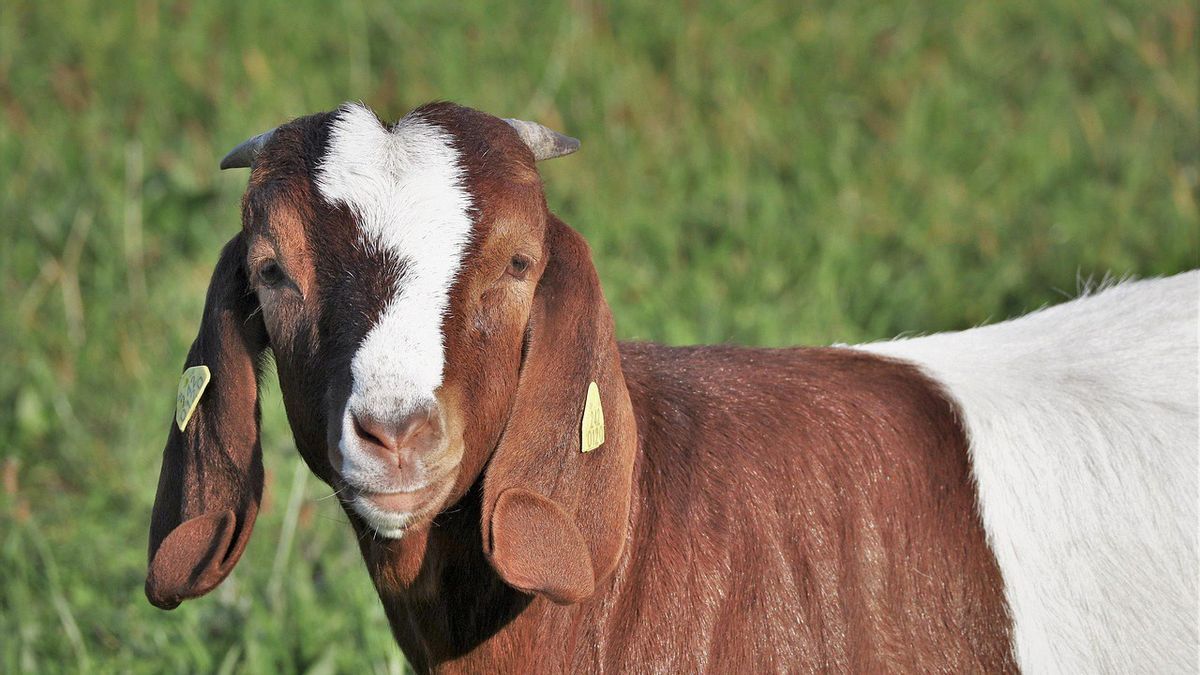
Getting to Know Boer GoatsBoer goats have very distinctive and easily recognizable physical characteristics. Their traditional color is a reddish brown head with a short-haired white body. This color combination is the main identity of Boer goats.
In addition to classic colors, the color variations in Boer goats are also quite diverse. Some individuals are completely red, have a black head, and even some are completely black or white spots. This variation does not affect the quality of its production.
In terms of size, Boer goats are among the largest goat breeds. They have a large body frame, deep chest, and well-developed muscles. Boer goat growth is known to be fast and their weight is relatively high.
Adult male Boer goats can reach a weight of between 200 to 340 pounds or about 90-154 kilograms. Meanwhile, adult female goats generally weigh 100-175 pounds or about 45-79 kilograms. This weight makes them ideal as meat goats.
Boer goats are one of the best meat-producing goats in the world. Boer goat meat is known to be low in saturated fat and cholesterol. The good quality of the meat makes it more popular with consumers.
In addition to its large body, Boer goats also have large horns that curve backwards. The shape of the horns adds a sturdy impression to its appearance.
Another easily recognizable feature is the long and drooping ears of Boer goats. These ears fall to the side of the face and are below the horns. Unlike many other goat breeds that have erect ears, these drooping ears make Boer goats distinctive.
Boer goats are known to have a docile and calm nature. This character makes it easy to handle, even for novice farmers. Its non-aggressive nature also reduces the risk of stress in livestock.
Because of its friendly nature, Boer goats are suitable for being raised in intensive and semi-intensive cage systems. These goats are also often used in livestock exhibitions. Their attractive appearance is a plus in itself.
However, this docile and calm nature still needs to be balanced with good management. A comfortable cage environment will help maintain its productivity and health.
Maintenance and Maintenance ChallengesIn general, Boer goats are easy to maintain. However, because genetic selection focuses on growth and meat production, their immune system is not as strong as some other breeds. This is a challenge for farmers.
Boer goats tend to be more susceptible to internal parasites. When compared to the Kiko or Savanna breeds, Boer goats require more attention in terms of health. The cleanliness of the barn and the quality of the feed are very influential.
The implementation of a rotational grazing system can help reduce parasite problems. With proper management, the risk of disease can be suppressed and goat growth remains optimal.
So that's the discussion about Boer goats, follow other interesting articles on VOI.ID. So as not to miss the latest news, follow and monitor our social media accounts!
The English, Chinese, Japanese, Arabic, and French versions are automatically generated by the AI. So there may still be inaccuracies in translating, please always see Indonesian as our main language. (system supported by DigitalSiber.id)
Most Popular Tags
#Prabowo Subianto #donald trump #2026 World Cup #Febrie Adriansyah #8791Popular


