
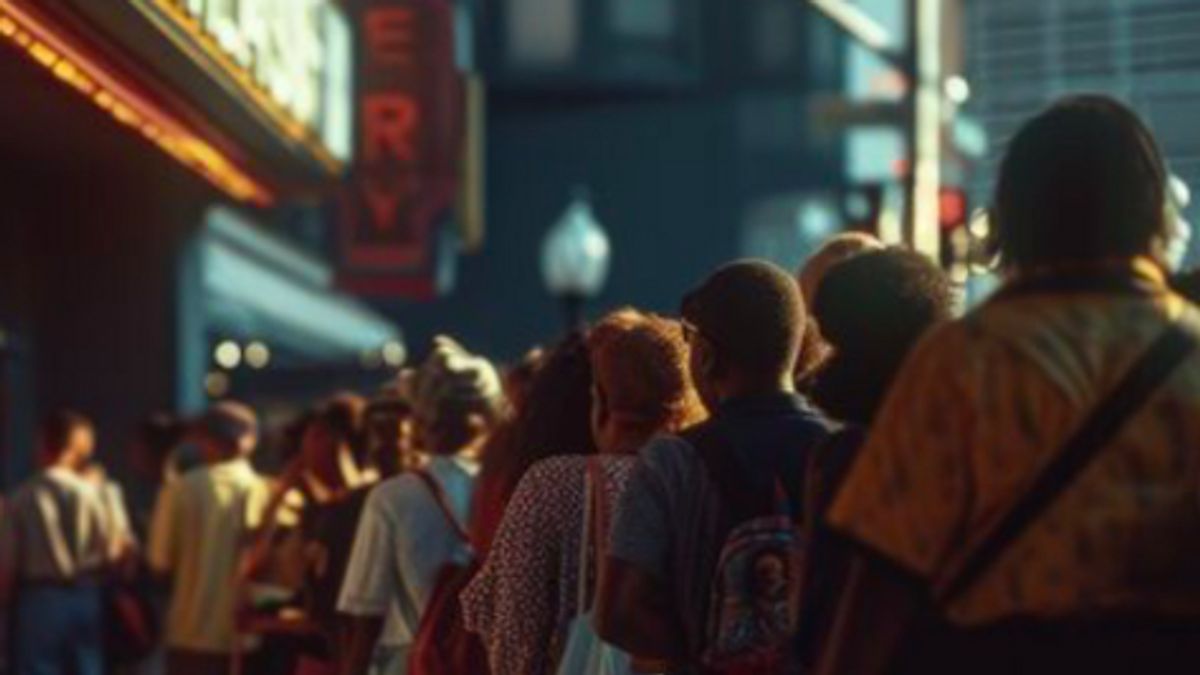


JAKARTA - The phenomenon of long queues for viral food is now no longer a rare thing in big cities in the world. From the FabelFriet fries in Amsterdam to Japanese donuts that went viral in New York, tourists are willing to wait hours to get a trending culinary experience.
According to Rachel S. Herz, professor of psychiatric and human behavior at Brown University, long lines trigger fear of being left behind or FOMO.
"When people see other people lining up, it makes something they're waiting for look more attractive and trigger FOMO," he explained.
"If we continue to look at people lining up over and over again, this behavior feels normal and even expected and smoothly affects the way we respond," said Cathrine Jansson-Boyd, professor of consumer psychology at Anglia Ruskin University, quoted from the BBC website.
More than just waiting for food, many tourists are now recording themselves in line for social media.
"Social media gives tourists a stage to show their vacation," Sara Dolnicar, professor at the University of Queensland.
From stuopwafel to French fries, posts on TikTok or Instagram make the queue experience part of the holiday show itself.
This phenomenon is reinforced by influencers and celebrities who continue to look for new viral places, while their followers imitate this behavior.
"The tendency of imitating this is the root of a recurring pattern of travel, where people go to the same bakery, the same donut shop, or the same burger shop," said Stefan G\"ossling, professor at Linnaeus University.
SEE ALSO:
-
 | LIFESTYLE
Eksklusif Celine Evangelista: Antara Tanggung Jawab Profesional dan Panggilan Hati
14 November 2025, 10:10 -
 | LIFESTYLE
Budaya Kerja Sehat yang Bikin Karyawan Betah dan Semakin Produktif
28 Agustus 2025, 19:35


But rapid popularity also has an impact on local communities.
"Making tourist hotspots hotter rarely brings benefits. There is a risk of negative community reactions because the quality of life of the population decreases," said Dolnicar.
In fact, some Amsterdam residents are now demanding a review of the store's license which is the center of the viral queue due to the problem of overtourism.
Even so, crowds rarely dampen the interest of tourists. Seeing other people queuing gives them confidence.
Even when tourists find out the queue is triggered by hype, they keep coming. This shows, for many people, waiting has become as important as the food." said G\"ossling.
The phenomenon of viral food queues is not just a matter of taste, but also about social experiences, status, and performance culture that have shaped the way we travel in the era of social media.
The English, Chinese, Japanese, Arabic, and French versions are automatically generated by the AI. So there may still be inaccuracies in translating, please always see Indonesian as our main language. (system supported by DigitalSiber.id)


