
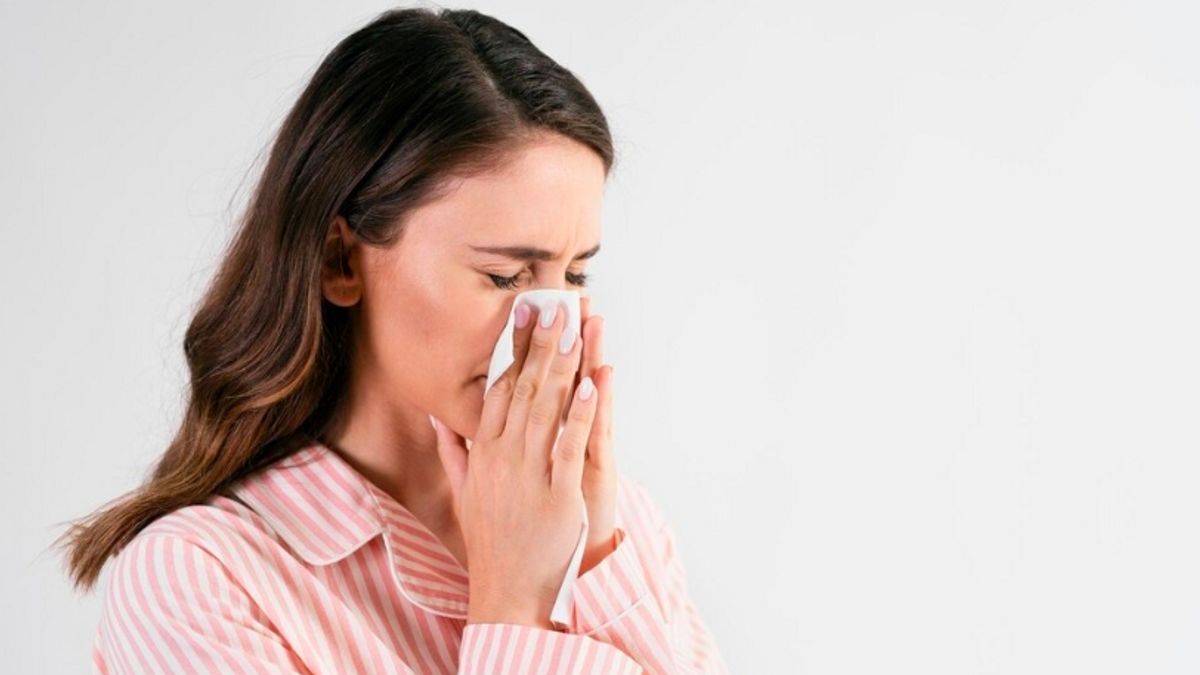


JAKARTA - Have you ever wondered why when you sneezing, our eyes automatically close? Maybe it looks trivial, but actually this is part of a very important body mechanism.
Sneering itself is a natural reflex of the body to clean the nose and respiratory tract from irritation such as dust, pollution, or viruses.
"Sneering is a strong and explosive airflow coming out of the nose and mouth. Sneering occurs unconsciously, in a reflexary response to irritation in the nose or membrane of mukosa," explained Dr. Andrew Lane, THT specialist and Johns Hopkins Sinus Center Director to TODAY.com.
This nasal layer has sensory fibers. When written, this fiber stimulates trigeminal nerves, the main chiral nerve that regulates sensations and movements in the face. This nerve then sends a signal to the brain so that the body emits air quickly. That's what causes sneezing. The sneezing process involves several stages.
SEE ALSO:
-
 | LIFESTYLE
Konsumsi Teh Hijau dengan Tiga Bahan Ini Tiap Pagi Dapat Bikin Kulit Cerah
10 November 2025, 19:55 -
 | LIFESTYLE
Biar Tidak Lengket dan Sehat, Ikuti 8 Tips Merawat Kulit Saat Musim Hujan
14 November 2025, 15:47 -
 | INFO SEHAT
Kutu Air di Tangan Tak Kunjung Sembuh, Apa yang Harus Dilakukan?
01 November 2025, 09:55 -
 | INFO SEHAT
Tak Dipencet Tapi Tetap Berbekas? Penjelasan Ahli Jerawat Soal Munculnya Flek Hitam
04 November 2025, 18:55

1. The lungs pull the air in.
2. The sound band temporarily closes, building pressure on the chest and throat.
3. The sound band opened suddenly so that the air came out through the nose and mouth at high speed, up to about 160 km/hour
4. The eyes close when sneezing is actually a protective reflex.
The eyes close automatically during sneezing because this is part of the reflex arch. The body wants to protect the eyes from sudden air pressure and particles that are thrown out of the nose," said Dr. Lane.
In addition, the muscles around the eyes (orbicularis oculi) are stimulated along with other muscles involved in sneezing. This makes closing the eyes automatic, without the need for conscious control. If the eyes are opened when sneezing, the air pressure or particles that come out can enter the eyes, thereby risk irritation or infection.
Closing your eyes is not just a habit, but it is important to:
- Protecting the eyes from dust, germs, or foreign particles.
- Preventing injuries due to high air pressure sneezing.
- Coordination of reflex bodies, because sneezing involves many muscles on the face and chest.
Safe Sneering Tips
In addition to understanding the mechanism, it is also important to know how to sneezing properly:
- Let it sneezing out, don't hold it.
- Cover your mouth and nose with tissue or elbows.
- Throw tissue and wash your hands after sneezing.
In this way, sneezing remains effective in cleaning the nasal tract while maintaining the health of the eyes and those around you.
The English, Chinese, Japanese, Arabic, and French versions are automatically generated by the AI. So there may still be inaccuracies in translating, please always see Indonesian as our main language. (system supported by DigitalSiber.id)
Most Popular Tags
#Prabowo Subianto #donald trump #firearm #8791 #giias 2026Popular


