
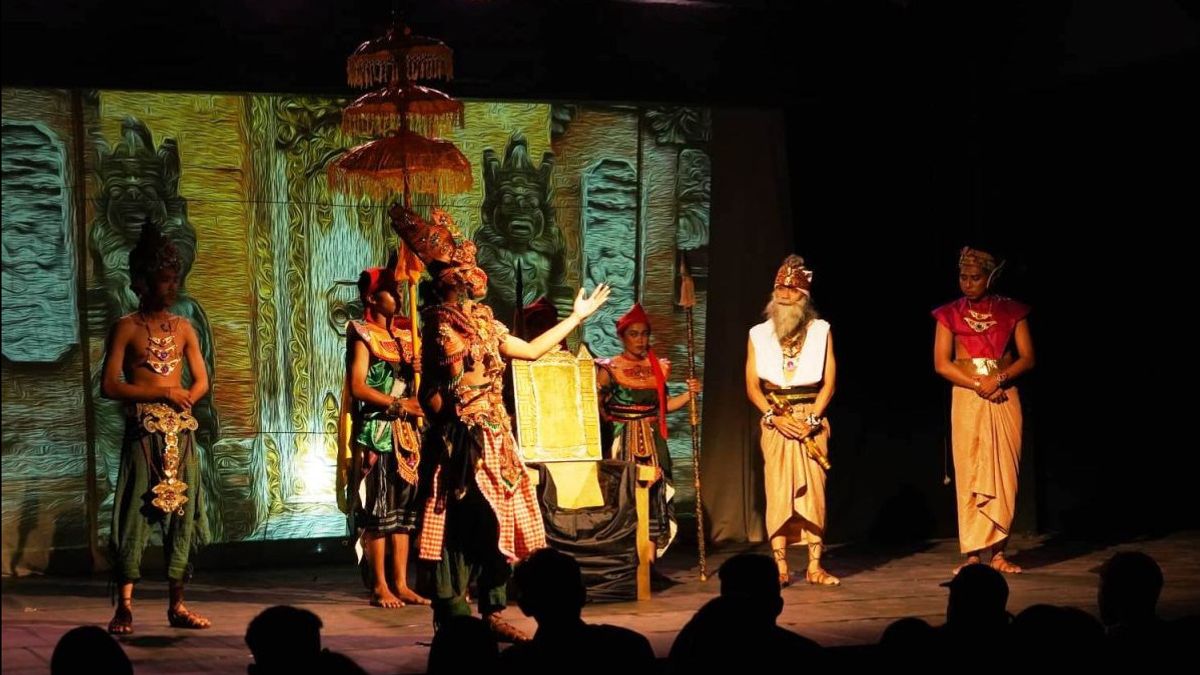


YOGYAKARTA - In simple terms, the intrinsic element of a drama is the composition of the work from within. This element is very important to support the integrity of a work. To understand more about the intrinsic element in the drama, see the explanation below.
The Intrinsic Elements of DramaIn the SMA Indonesian Language Learning Module compiled by Sutji Harijanti, M.Pd., it is explained that drama is a literary work written in the form of dialogue with the intention to be presented as a performance. The performance of the drama is carried out by the players who are called actors.
In the Analysis of the Intrinsic Elements of the Kanekes Drama Script by Dc Aryadi (Siti Jaoharotul Kholishoh:2025) in the Journal of Literary, Theatrical and Cinematic Studies, Tonil is explained to be a unity, the drama is composed of several elements from within which is called intrinsic. The following are the intrinsic elements of the drama in a simple way.
Plot or PlotPlot is a series of events in the script of a drama, while the plot is a series of stories. Both elements are very important because they support that the story can form a unity. Without a plot and a plot, the drama will not develop into a story and a performance.
PenokohanThe characters presented in stories or dramas can be interpreted as individuals who have certain traits or characters. Each individual will interact with the audience through their dialogues and words. Meanwhile, the characters in the drama can be divided into several categories, namely as follows.
The protagonistThe protagonist is the main character who gets support from additional characters. This character is usually the focus of attention in a story.
AntagonistThis character is usually opposite the protagonist but both steal the spotlight in a story. Usually an antagonist is always clashed with the protagonist or moral standard.
Supporting figuresThis character is outside the main character. The presence of supporting characters to sweeten the story. Usually supporting characters are also called tritagonists.
DialogueDialogue in a drama has a very important position. Without dialogue, the drama may not work. So important is the dialogue, many experts argue that without dialogue a drama will not be carried out. This element is indeed very important because it is related to communication.
Background or SettingThis element refers to the location or time. A drama must have a place and a time period to be able to be associated with the reality of events. For example, the background of the Diponegoro War drama takes place in Yogyakarta, with the colonial era. With the background and setting, the audience will find it easier to imagine the reality that is going on.
ThemeThe theme can be said to be the big topic carried by the story. Usually the theme is related to the whole story. Examples of themes commonly found in dramas are romance, struggle, heroism, royal Chinese drama, and so on.
AmanatAmanat can be interpreted as a moral lesson contained in the entire drama story. This moral message can be taken after completing the entire series of stories. The moral message conveyed through the drama can be positive or negative, depending on the perspective of each audience.
Those are some of the intrinsic elements of the drama. Visit VOI.id for other interesting information.
The English, Chinese, Japanese, Arabic, and French versions are automatically generated by the AI. So there may still be inaccuracies in translating, please always see Indonesian as our main language. (system supported by DigitalSiber.id)


